-
 Welcome to Huaxing Technology
-
 Email us: [email protected]


 中文简体
中文简体

What Is Micro Fiber?
Content
- 1 What Makes Micro Fiber Different From Standard Polyester Fiber
- 2 Technical Specifications of Micro Fiber Products
- 3 Related Polyester Staple Fiber Product Range
- 4 Why Micro Fiber Competes With Natural Down
- 5 How the Hollow Structure Improves Insulation
- 6 Typical Applications Across Industries
- 7 Choosing the Right Micro Fiber Specification
- 8 Frequently Asked Questions
Micro Fiber is an ultra-fine polyester staple fiber engineered at roughly 1.2 denier, far below the 3D-15D range of standard polyester fiber. Its slim diameter creates a dense microporous structure that delivers a down-like soft touch, strong loft recovery, and reliable warmth retention, which is why it has become a mainstream substitute for natural down in bedding, apparel, and outdoor gear filling.
What Makes Micro Fiber Different From Standard Polyester Fiber
Conventional filling fibers such as 3D or 7D HCS Polyester Staple Fiber already provide loft and warmth, but Micro Fiber pushes fineness much further, down to 1.2 denier, roughly one third to one sixth the diameter of common 3D-7D fibers. A smaller diameter means more individual filaments pack into the same weight of material, which raises the specific surface area and multiplies the number of tiny air pockets trapped inside the filling. This is the physical reason Micro Fiber feels softer under the hand and traps heat more efficiently than coarser polyester fiber at an equal fill weight.
The fiber also carries a hollow cross-section, so each strand is lighter than a solid fiber of the same diameter while still keeping the tensile strength and shape recovery that polyester is known for. In practice this combination allows a sleeping bag or comforter filled with Micro Fiber to reach a warmth level close to 600-fill-power down, while remaining machine washable and far less prone to allergic reactions than natural feather-based fill.
Technical Specifications of Micro Fiber Products
Ningbo Huaxing Technology currently produces two core Micro Fiber specifications built around the same 1.2D fineness, differing mainly in cut length to suit different filling behaviors.
| Specification | Fineness | Fiber Length | Key Characteristic | Best Suited For |
| 1.2D x 25MM Micro Fiber | 1.2D | 25MM | Very fine, even distribution after filling, delicate down-like touch | Premium comforters, pillows, static bedding products |
| 1.2D x 32MM Micro Fiber | 1.2D | 32MM | Stronger fiber-to-fiber cohesion, resists clumping after repeated compression | Down jackets, sleeping bags, sportswear that flexes often |
As a general rule, the shorter 25MM cut suits products that sit mostly still, such as a folded quilt, because the shorter fibers settle into a fine, even layer. The longer 32MM cut is the better pick anywhere the filling gets compressed and released repeatedly, since the extra length lets fibers interlock and hold their position instead of migrating into lumps.
Related Polyester Staple Fiber Product Range
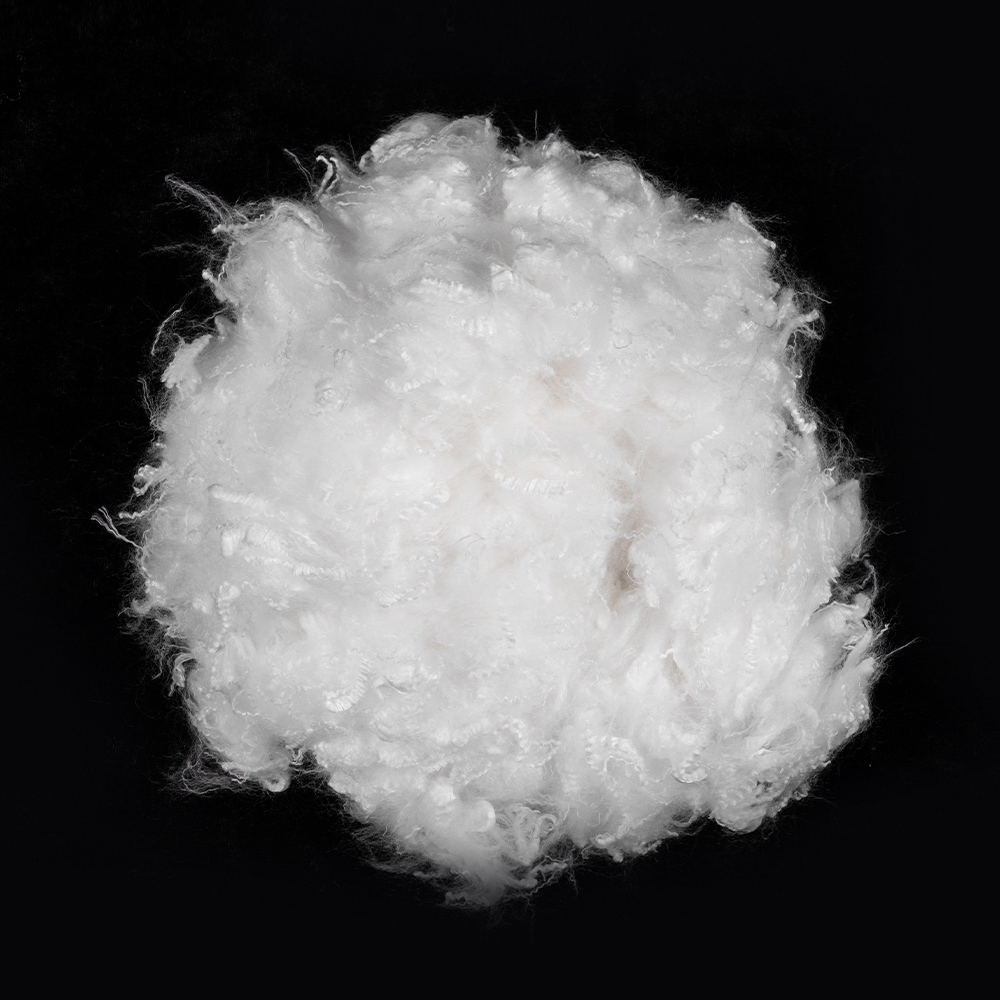
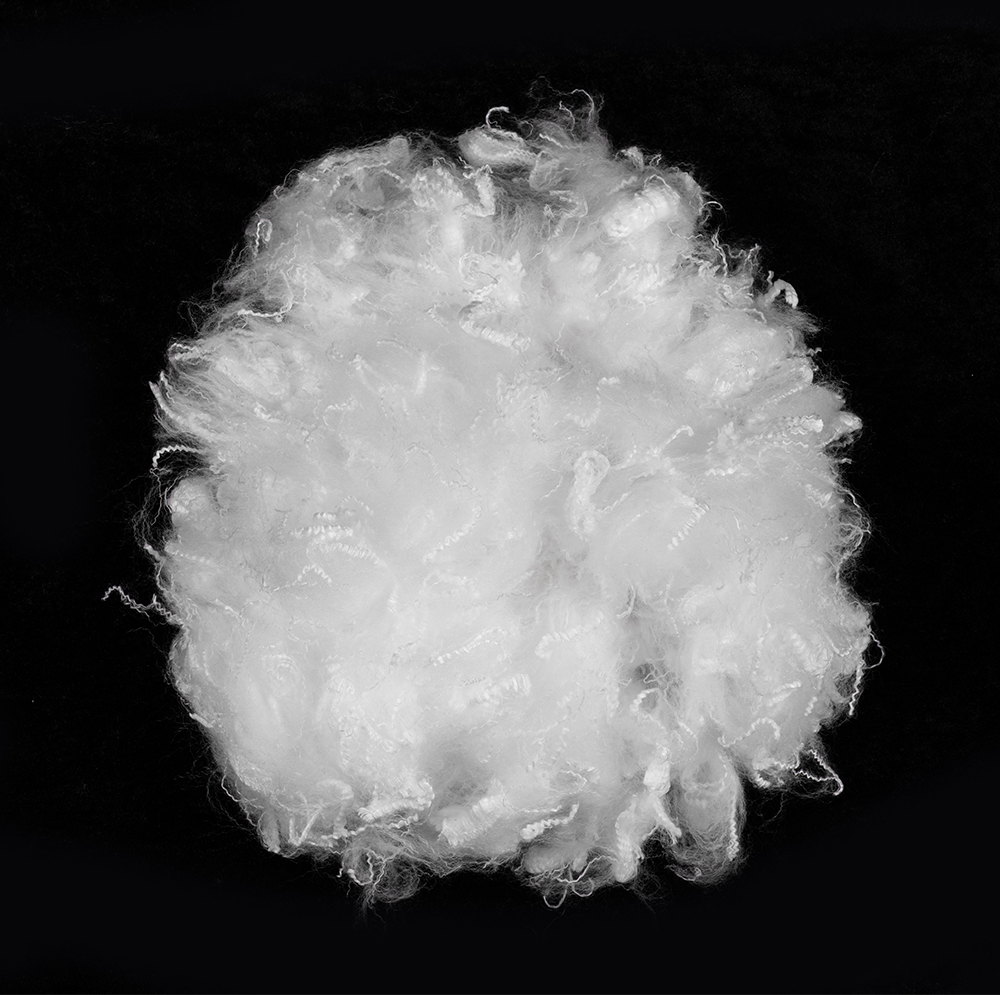
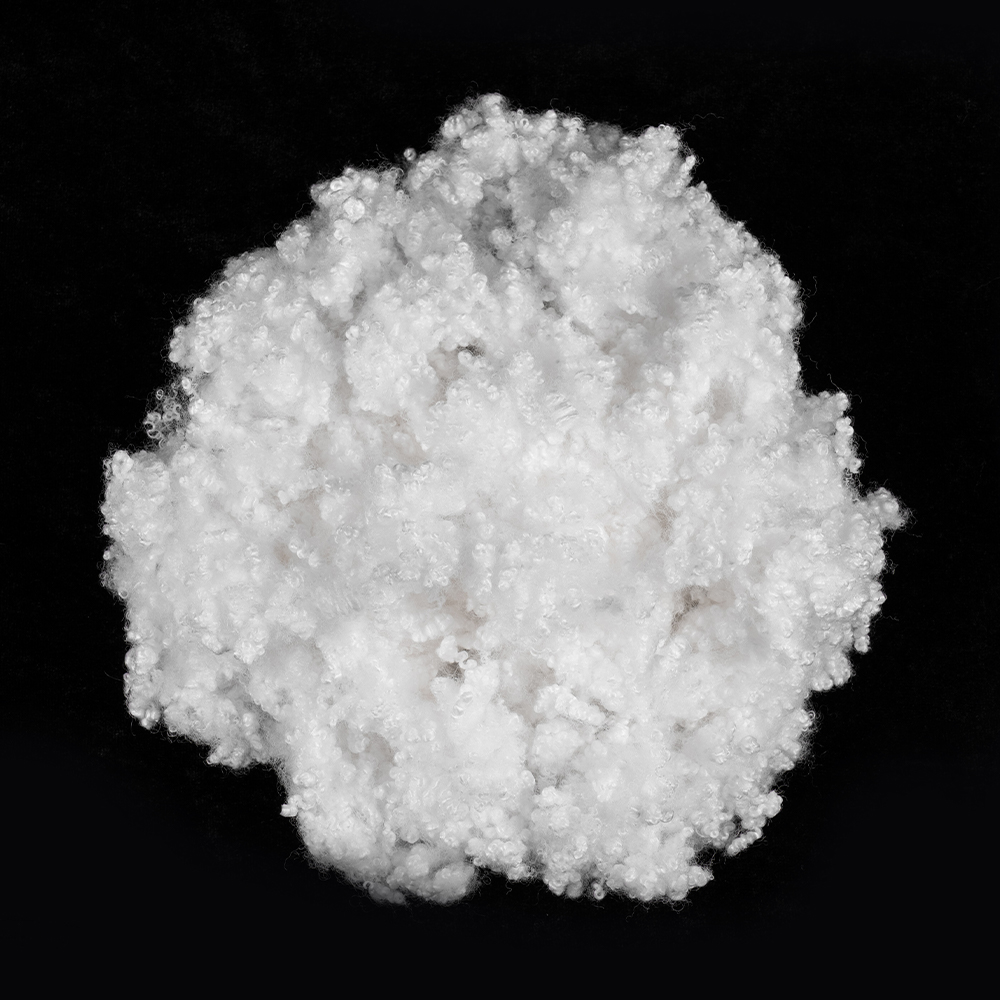
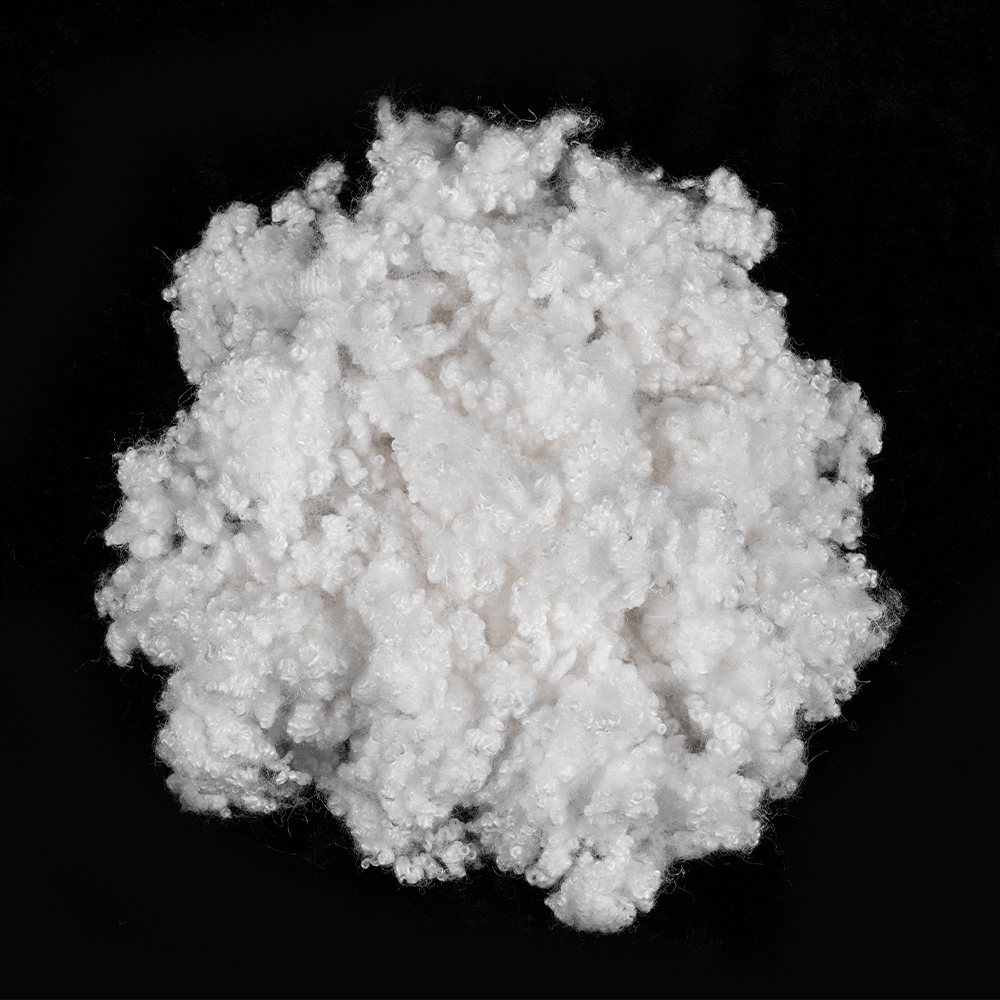
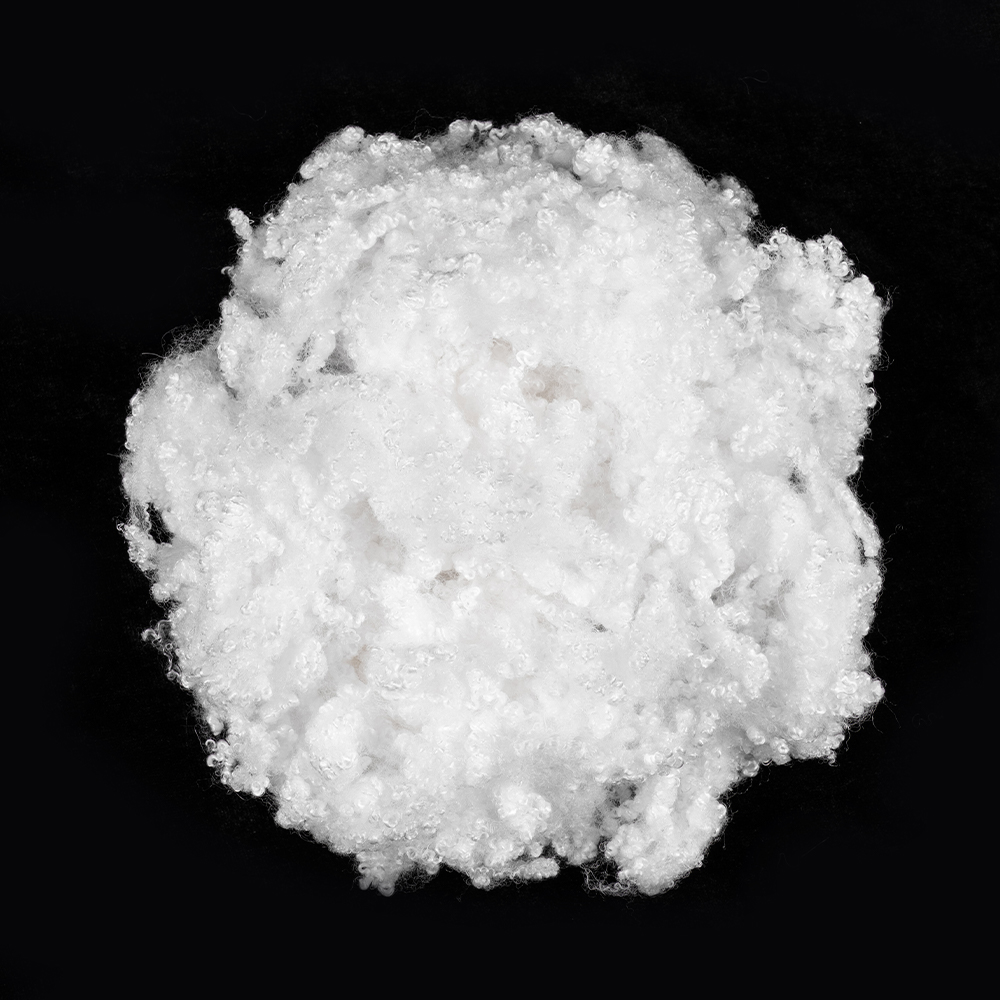
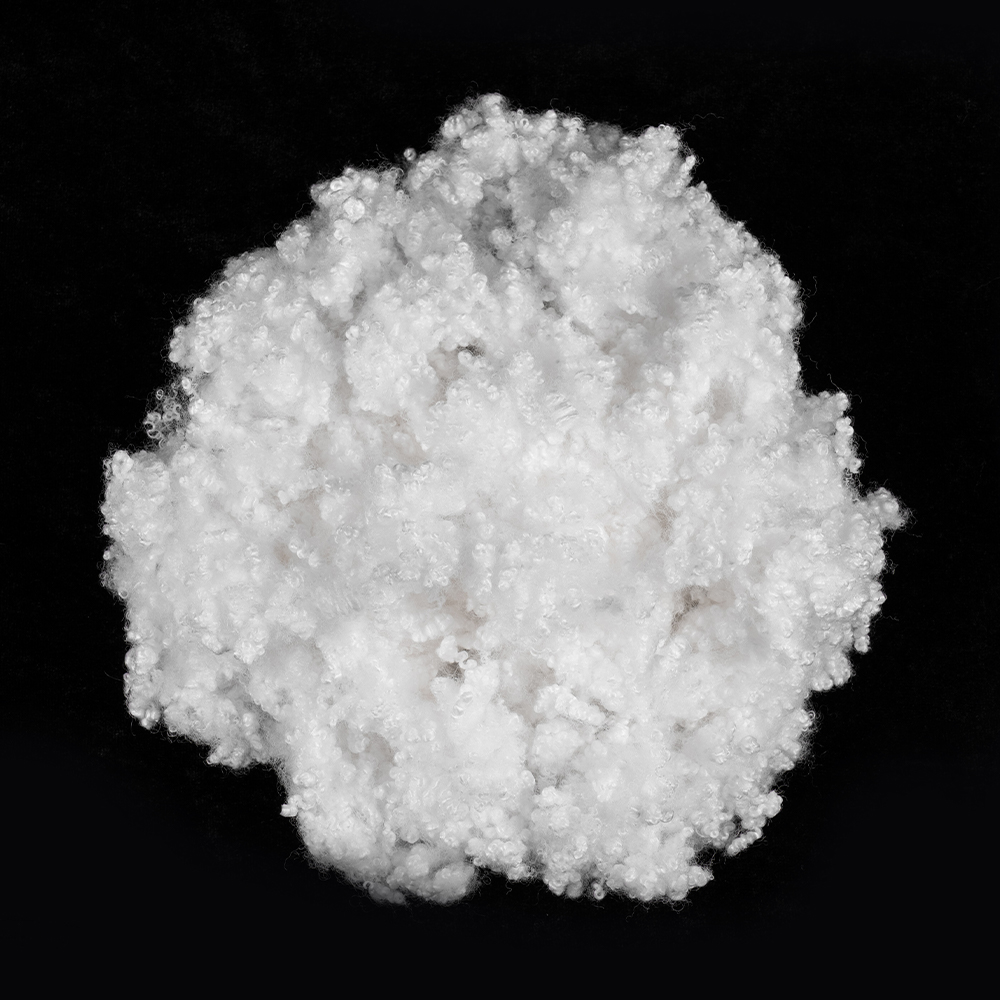
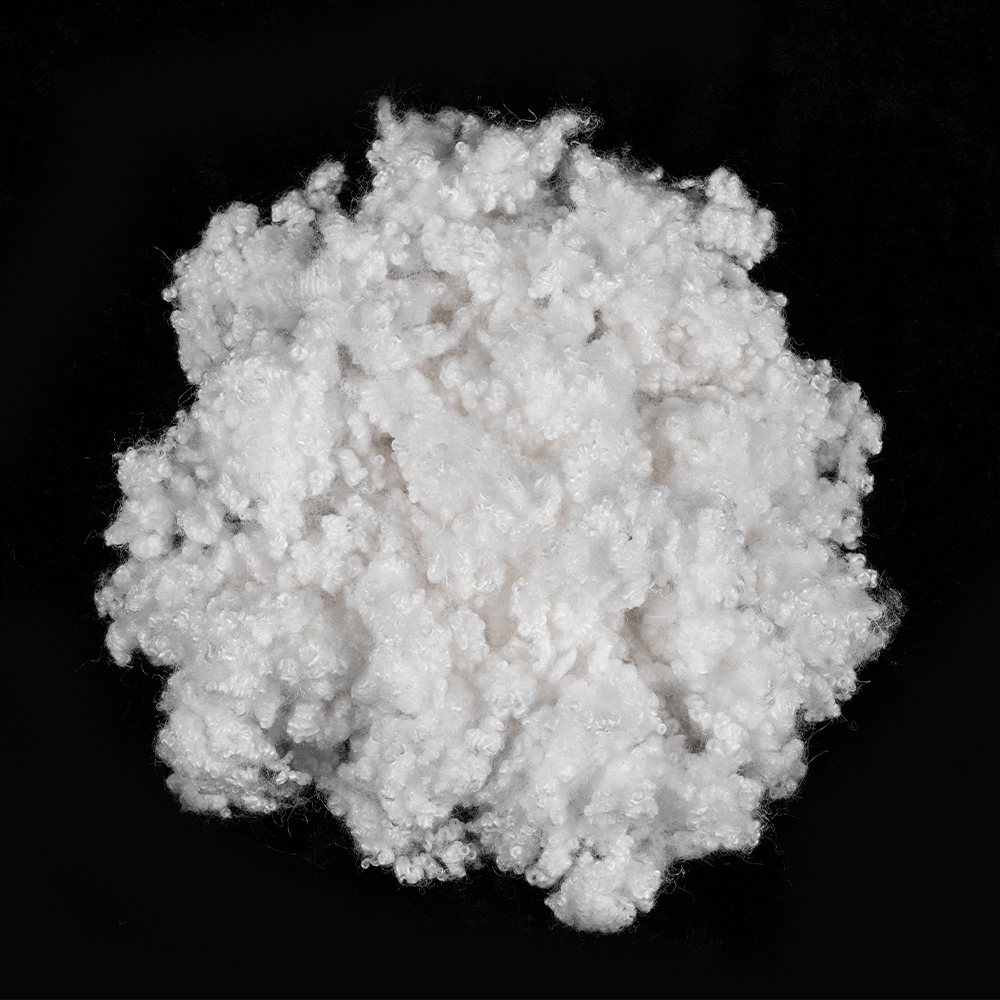
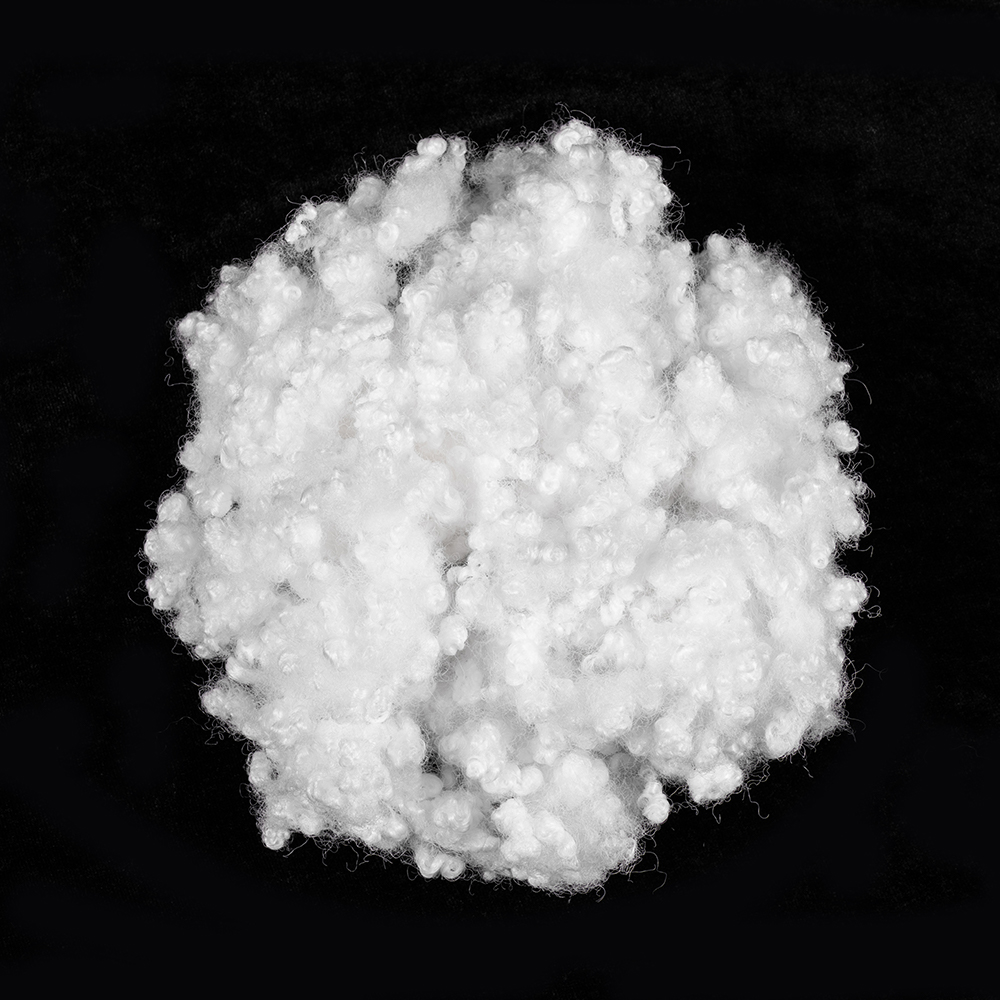
Beyond Micro Fiber, Ningbo Huaxing Technology produces a full family of polyester staple fiber specifications for filling, thermal bonding, and industrial use. The lineup below shows how Micro Fiber fits alongside coarser HCS and HC fiber grades.
Why Micro Fiber Competes With Natural Down
Buyers of premium bedding and outdoor gear have long faced a tradeoff between the feel of natural down and its practical drawbacks. Micro Fiber closes most of that gap through its structural advantages:
- Allergy-Free: polyester carries no protein components, so it will not trigger the reactions common with feather-based down.
- No Leakage: the fibers are processed to resist migration through fabric seams, unlike loose down quills.
- Stable Supply and Cost: natural down prices swing with poultry markets and seasonal supply, while Micro Fiber production stays consistent.
- Wet-Condition Performance: Micro Fiber keeps most of its loft when damp, while down collapses and loses warmth quickly once wet.
- Easy Care: Micro Fiber filled products are machine washable and dry quickly, cutting long-term maintenance cost.
Independent performance testing on sleeping bags filled with 1.2D Micro Fiber shows warmth ratings approaching those of 600-fill-power down at comparable fill weight, which is a strong data point for brands weighing synthetic fill against natural alternatives.
How the Hollow Structure Improves Insulation
Warmth in any filling material comes down to trapping still air, since air itself is the true insulator. Because Micro Fiber strands are so thin, a given weight of material contains far more individual fibers than the same weight of 3D or 7D fiber, which means more micro air chambers form between the strands. This denser network lengthens the path that heat has to travel through the filling, which slows down both conduction and convection losses.
The 32MM length variant plays an added role here. Longer fibers tangle with their neighbors more thoroughly, so after a sleeping bag is compressed into a stuff sack and then unpacked, the fiber network springs back into a uniform layer instead of leaving thin, cold patches where the filling has shifted. This behavior is one of the main reasons the 32MM specification is favored for gear that gets folded and unfolded repeatedly.
Typical Applications Across Industries
| Sector | Example Products | Role of Micro Fiber |
| Apparel Filling | Down jackets, ski wear, thermal underwear | Down alternative with lightweight warmth and a soft feel |
| Home Textile Filling | Comforters, pillows, cushions | Fluffy, washable filling with even loft |
| Outdoor Equipment | Sleeping bags, camping insulation | Warmth that holds up in humid or wet conditions |
| Industrial Use | Precision wiping cloths, cleanroom fabrics | High surface area for fine adsorption and cleaning |
| Filtration Media | Air and liquid filters | Microporous structure for fine particulate capture |
Choosing the Right Micro Fiber Specification
Matching the correct grade to an end product avoids both wasted cost and underperforming filling. A few practical points to check before ordering:
- Fineness vs loft balance: 1.2D delivers the softest touch, but confirm the fiber length works with how the finished product will be handled.
- Compression recovery: products that get folded or squeezed often, such as sleeping bags, should lean toward the 32MM cut for better rebound.
- Target warmth rating: calculate fill weight against the intended temperature range rather than relying on denier alone.
- Fabric compatibility: verify the fiber works cleanly with the shell fabric, coatings, or bonding agents used downstream.
- Supplier reliability: work with a Micro Fiber Manufacturer that can sustain consistent output to avoid supply gaps.
Frequently Asked Questions
Is Micro Fiber as warm as natural down?
At an equal fill weight, 1.2D hollow Micro Fiber can reach warmth performance close to 600-fill-power down. It also keeps its loft in humid conditions, which is where natural down tends to fall short.
Should I pick the 25MM or 32MM version?
Choose 25MM for products with a fixed shape, such as pillows and comforters, where an ultra-fine touch matters most. Choose 32MM for gear that is compressed and released often, like sleeping bags or jackets, where fiber cohesion prevents clumping.
Can Micro Fiber filled items go in the washing machine?
Yes, since it is polyester-based it tolerates machine washing and quick drying, with low-to-medium heat and a couple of dryer balls helping the filling regain its loft.
Does Micro Fiber suit people with allergies?
Yes, it contains no protein material and offers a degree of resistance to dust mites, making it a common choice for allergy-sensitive users.
How long does Micro Fiber filling last in sleeping bags?
Under normal use and care, a sleeping bag filled with 1.2D x 32MM Micro Fiber typically holds effective insulation for about 5 to 8 years, outperforming standard hollow conjugate fiber fillings in repeated compression tests.
Ningbo Huaxing Technology Co., Ltd.
-
3D HCS Polyester Staple Fiber
-
7D HCS Polyester Staple Fiber
-
15D HCS Polyester Staple Fiber
-
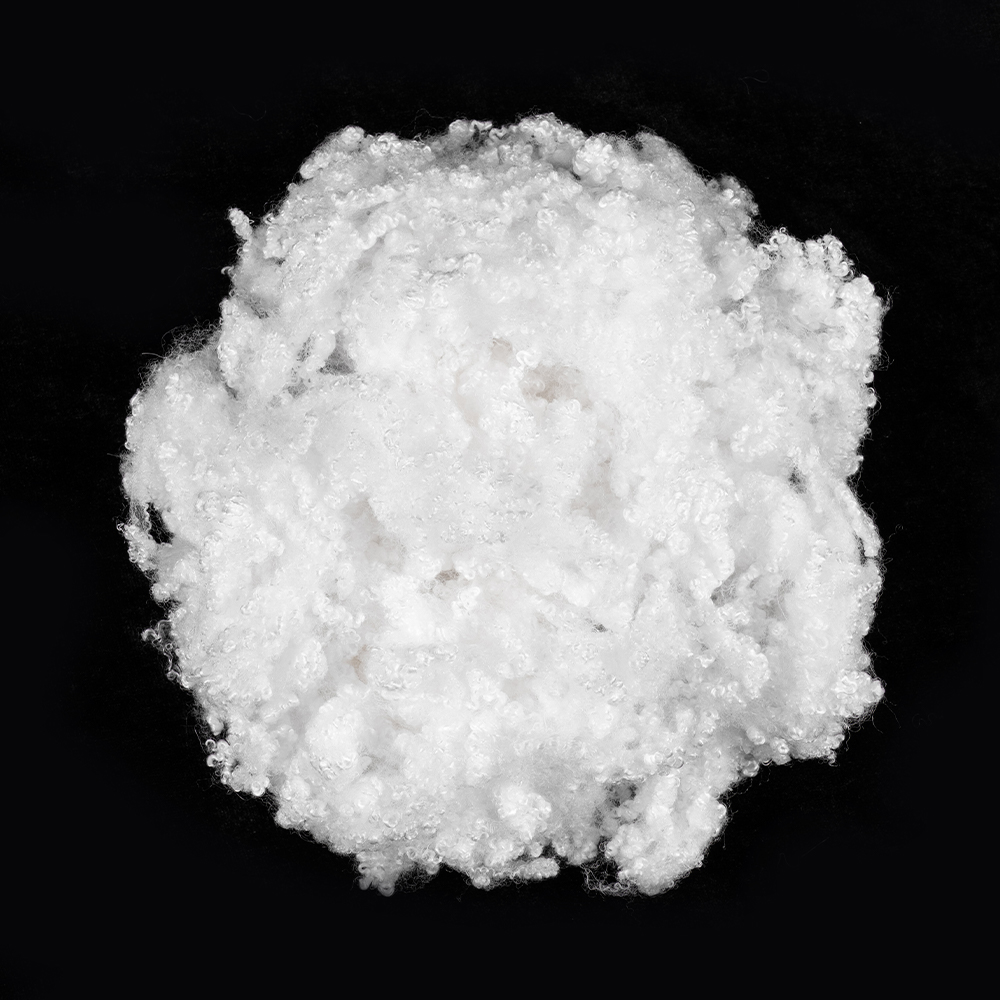
3D*64MM HC Polyester Staple Fiber
-
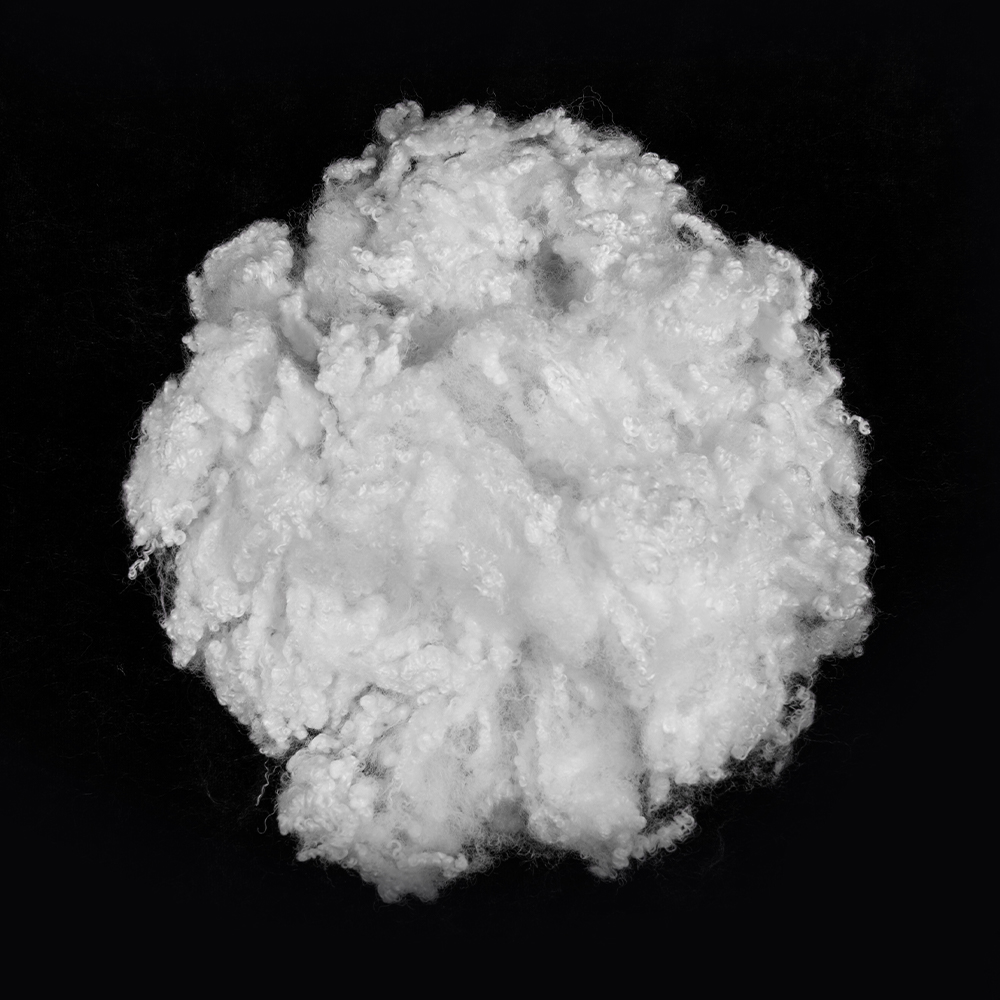
7D*64MM HC Polyester Staple Fiber
-
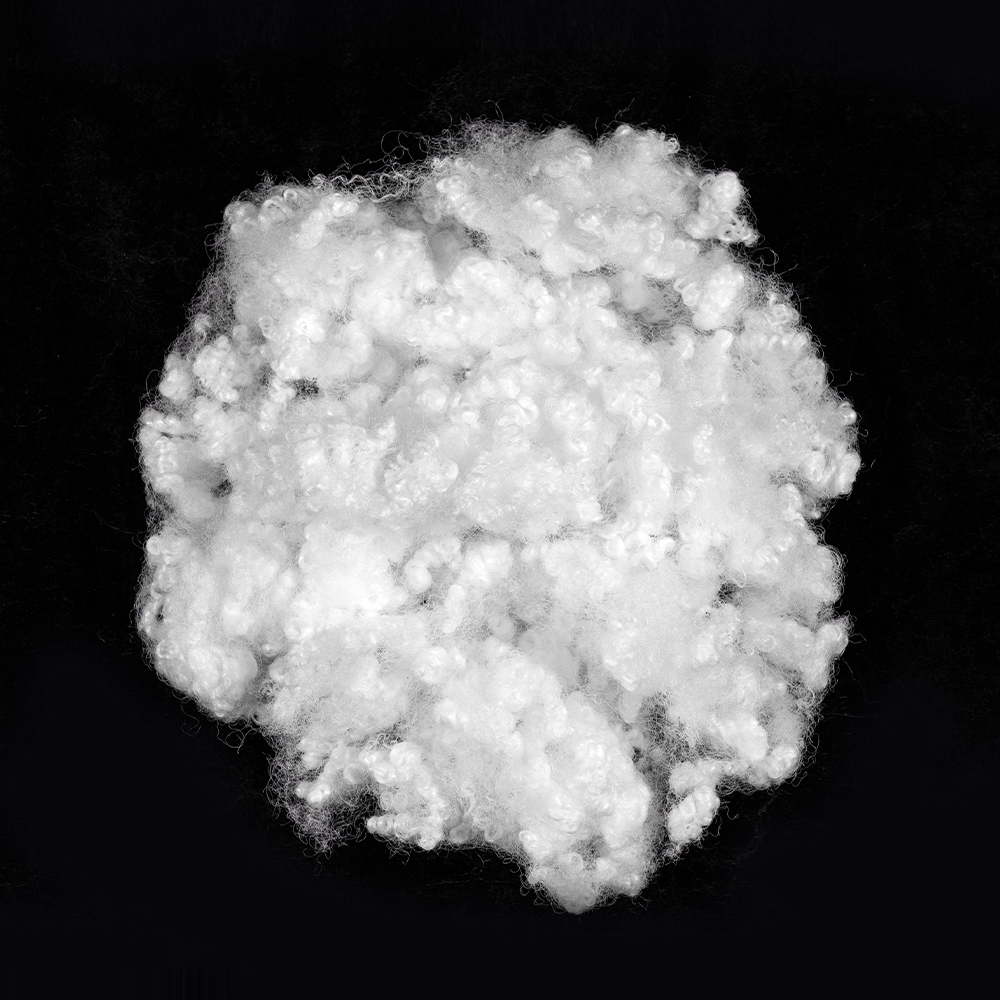
15D*64MM HC Polyester Staple Fiber
-
Quick Links
Home About Us Products FAQ News Contact Us -
Product Links
Polyester Staple Fiber Pre-oriented Yarn/POY Polyester Chip/PET Chip -
About Us
About Us Factory Honor FAQ -
Get In Touch
E-mail:
[email protected]Phone:
+86-130 8198 6637Tel:
+86-0574-63732888Address:
Haidianrong Village, Longshan Town, Cixi City, Ningbo, Zhejiang Province, China.
