-
 Welcome to Huaxing Technology
-
 Email us: [email protected]


 中文简体
中文简体
What Is Pre-Oriented Yarn (POY)?
Content
- 1 How POY Is Made: Process and Technical Principles
- 2 POY Luster Types and Specification Coverage
- 3 Related Polyester Staple Fiber Products
- 4 POY's Position in the Differentiated Polyester Filament Chain
- 5 Where POY Goes After Spinning
- 6 POY's Role in High Pilling Resistance Fiber
- 7 Quality Control Checkpoints for POY
- 8 Storage and Transport Guidelines for POY
- 9 Frequently Asked Questions
Pre-oriented Yarn (POY) is a partially drawn polyester filament yarn spun at high speed from PET melt, used as the direct raw material for DTY texturing, FDY drawing, and draw-warping. It is not a finished fabric yarn on its own — it is the intermediate building block that downstream mills stretch and texture into the polyester filament that ends up in apparel, home textiles, and Differentiated Polyester Filament products.
How POY Is Made: Process and Technical Principles
POY production starts with purified terephthalic acid (PTA) and ethylene glycol (MEG), which react through esterification and polycondensation to form polyethylene terephthalate (PET) melt. The melt is extruded through spinnerets, cooled by cross-flow air, and wound at high speed before full molecular orientation is complete. This partial orientation is exactly what gives POY its name and its purpose: it leaves enough residual draw potential for downstream texturing machines to stretch and crimp it further.
As a direct spinning POY manufacturer, Ningbo Huaxing Technology Co., Ltd. runs an integrated polymerization-to-spinning line, which cuts out the intermediate chip-remelting stage and reduces the quality drift that can occur between separate polymer and spinning batches.
| Technical Parameter | Typical Range | Unit |
| Denier Range | 50 - 600 | D |
| Filament Count | 24 - 288 | F |
| Birefringence (delta n) | 0.040 - 0.070 | — |
| Moisture Regain | 0.4 | % |
POY Luster Types and Specification Coverage
Downstream customers select POY luster based on the optical effect they want in the finished fabric. Ningbo Huaxing Technology Co., Ltd. covers four major luster types across its Pre-oriented Yarn / POY line, each suited to a different segment of apparel, home textile, or automotive interior production.
Semi-Dull
Contains TiO2 delusterant for a soft, natural luster. Suited to general apparel fabrics and home textiles.
Bright
Round or trilobal cross-section giving a bright, shiny appearance. Used in decorative and silk-like fabrics.
Full-Dull
Higher delusterant content produces a matte texture, common in sportswear and outdoor textiles.
Dope-Dyed Black
Black masterbatch added before spinning removes the need for post-dyeing. Used in dark fabrics and automotive interiors.
Fine denier POY (such as 50D/24F or 75D/36F) works best for lightweight apparel fabrics, while coarse denier POY (300D/144F, 600D/192F) is chosen for home textiles and industrial textiles. Spinning position configurations can be adjusted to match specific order requirements for stable downstream texturing.
Related Polyester Staple Fiber Products
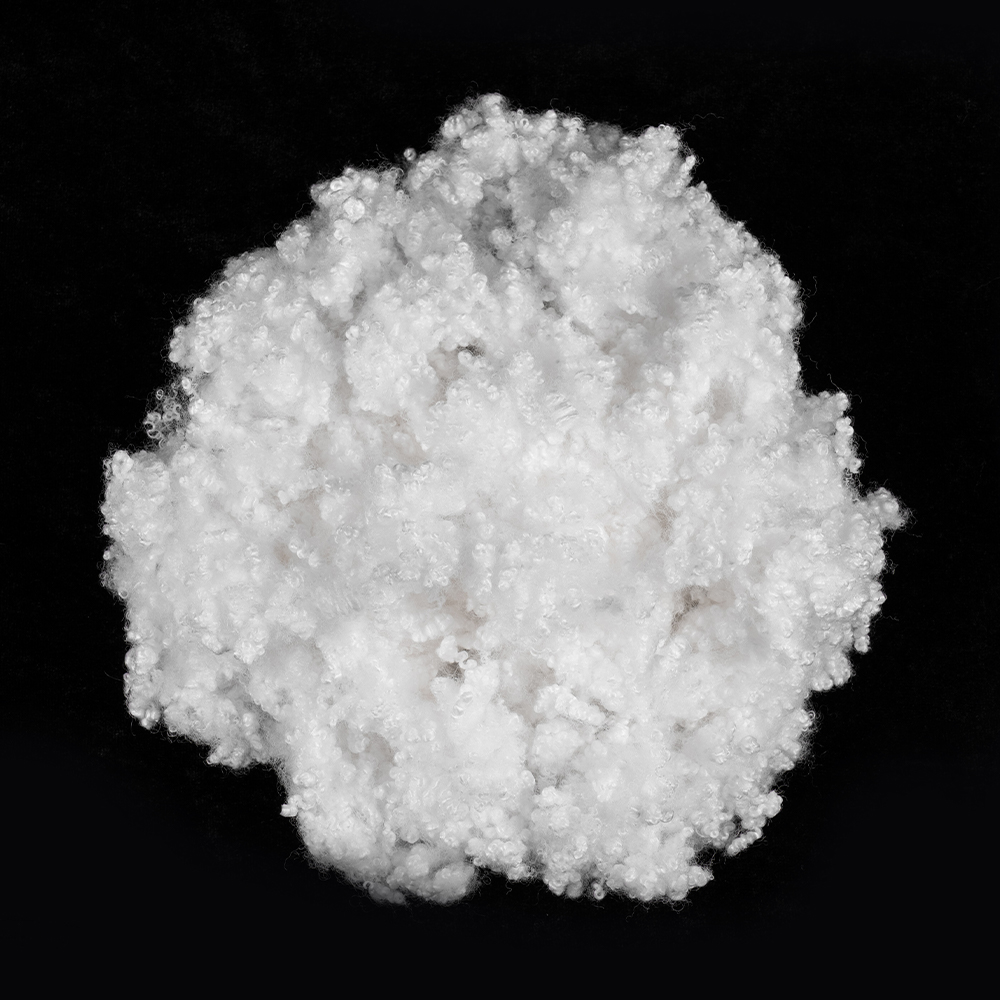
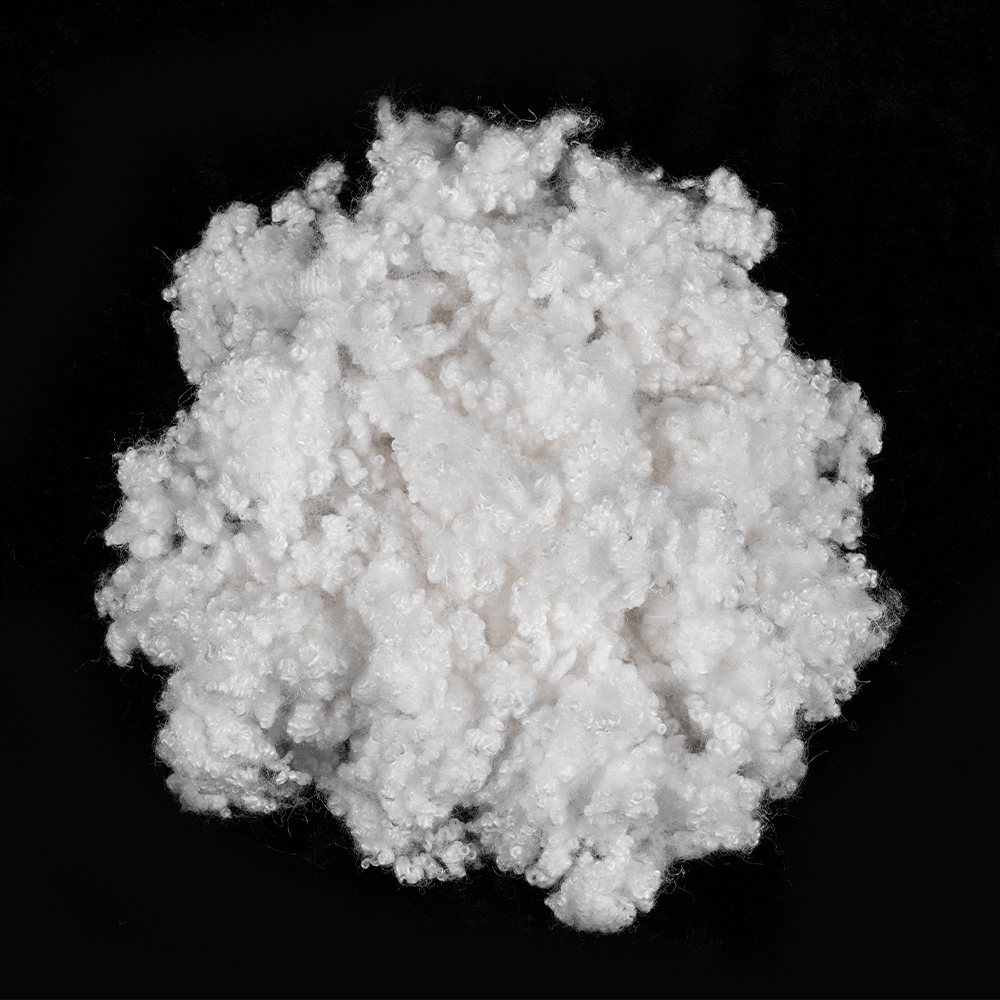
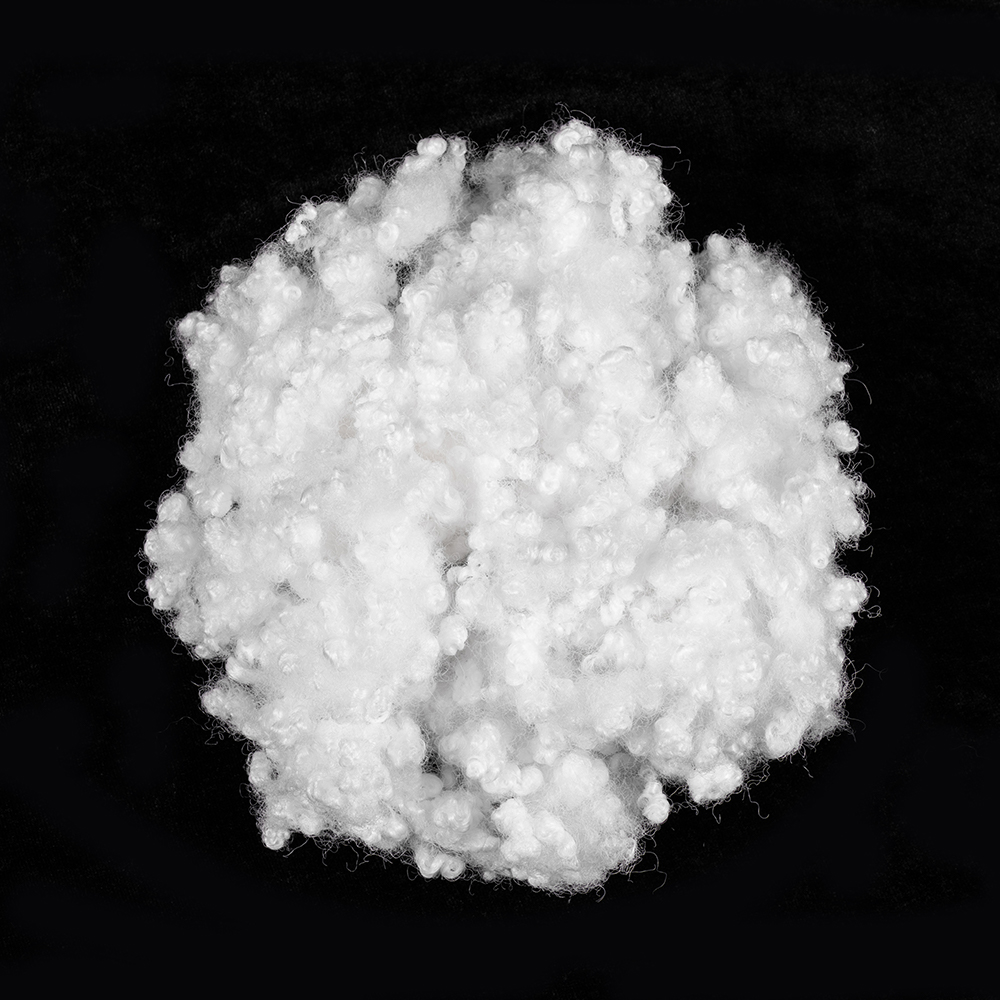
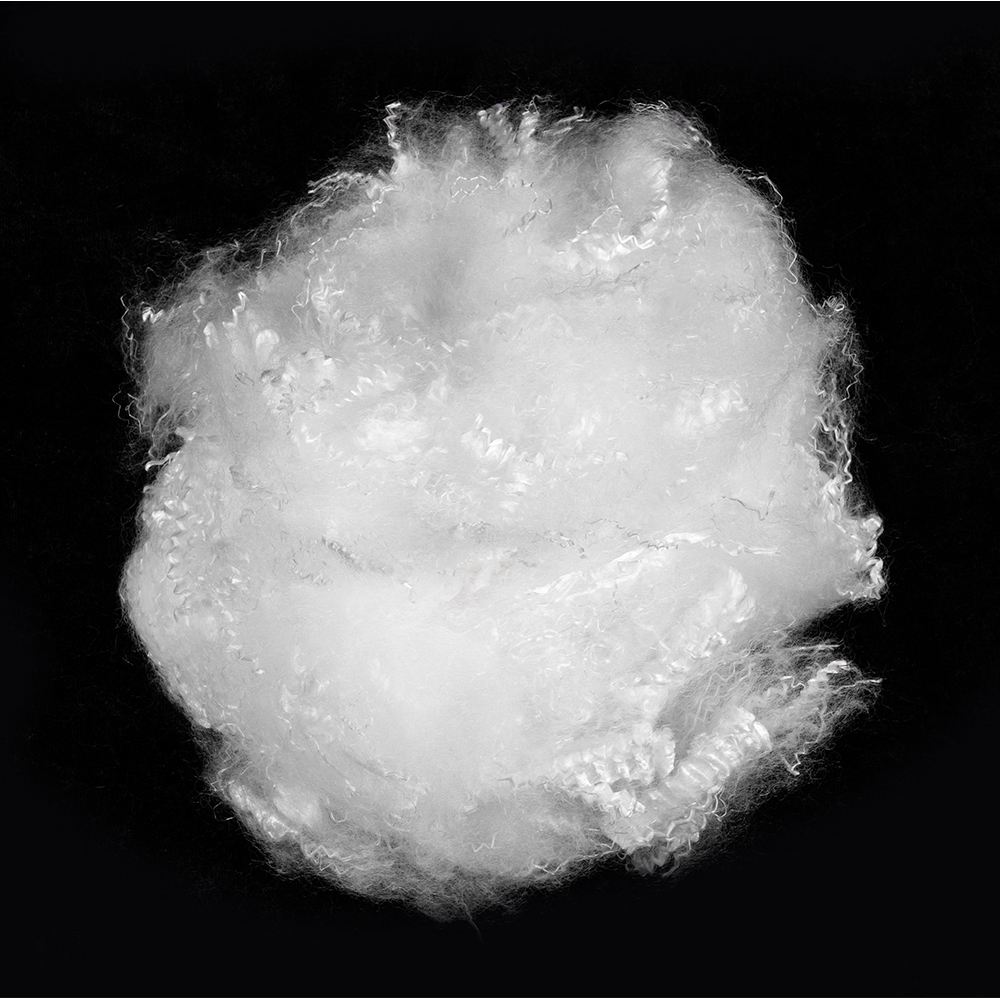
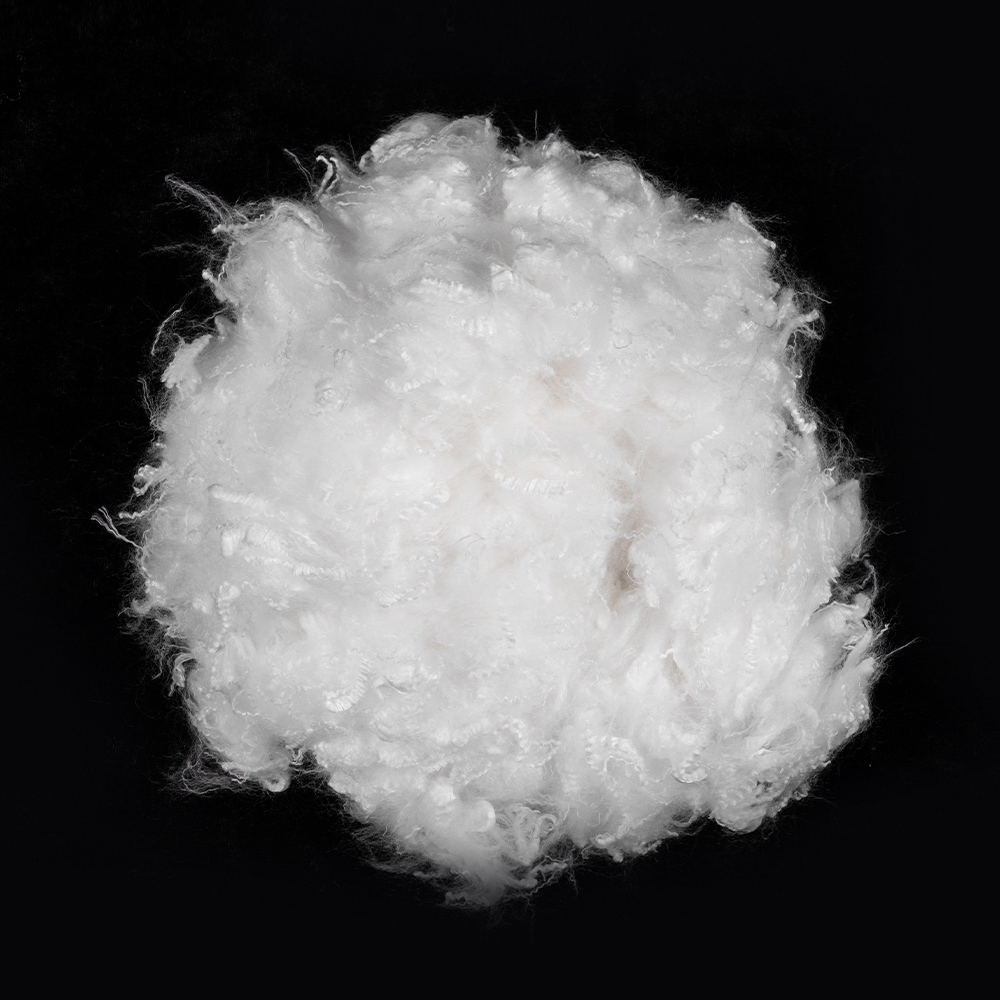
Alongside Pre-oriented Yarn, Ningbo Huaxing Technology Co., Ltd. produces a broader Polyester Staple Fiber range used in filling, thermal bonding, and microfiber applications. These fibers share the same PET raw material base and are frequently specified together in home textile and apparel supply chains.
POY's Position in the Differentiated Polyester Filament Chain
POY sits in the midstream of the polyester filament value chain. Upstream, PTA and MEG suppliers feed PET chip production; downstream, DTY and FDY processors convert POY into finished filament that weaving and knitting mills turn into fabric. Because POY's molecular orientation uniformity and linear density CV value carry through every later step, its quality effectively sets a ceiling on what downstream Differentiated Polyester Filament can achieve.
With 9 independent patents and an in-house engineering technology center, Ningbo Huaxing Technology Co., Ltd. focuses on molecular structure design at the POY stage, which shows up downstream as fewer breaks and more even dyeing during texturing.
Where POY Goes After Spinning
- DTY texturing
- FDY drawing
- Draw-warping
1. DTY Textured Yarn
The primary outlet for POY, taking over 80% of total output. False-twist texturing machines stretch and heat-set the filament, forming a permanent crimp that gives fabric a soft, fluffy hand feel. This is the route into knitted T-shirts, sportswear, and home textile blankets.
2. FDY Fully Drawn Yarn
Some POY is re-stretched and heat-set into FDY for plain weave and twill fabrics, useful for specialty specifications or smaller batch orders even though one-step spin-draw dominates modern FDY production.
3. Draw-Warping
A smaller share is draw-warped directly for weaving flat, evenly lustrous fabrics, skipping false-twist texturing entirely. This route is common for linings, interlinings, and lightweight fashion fabrics.
POY's Role in High Pilling Resistance Fiber
High Pilling Resistance Fiber depends heavily on how the source POY is engineered. The anti-pilling result is not a finishing step added at the end — it is largely built into the POY matrix before texturing even starts.
- Low-elongation POY matrix: POY with elongation held between 100% and 120% produces DTY with lower residual elongation, cutting down on fiber slippage and entanglement from friction.
- Profiled cross-section design: Trilobal or cross-shaped spinneret holes raise inter-fiber cohesion and lower the odds of surface fuzz forming.
- Composite spinning: Co-spinning high- and low-viscosity PET into skin-core or side-by-side structures creates self-crimp through differential shrinkage.
- Functional masterbatch: Anti-pilling modifiers added into the POY melt improve fiber surface smoothness before it ever reaches a texturing machine.
Quality Control Checkpoints for POY
Because POY is an intermediate product, its quality checks need to cover both spinning stability and how well it will behave on a downstream texturing machine.
| Test Item | What It Reflects | Downstream Impact |
| Elongation at Break | Molecular orientation degree | Sets draw ratio on texturing machines; wide variation causes dyeing streaks |
| Uster Evenness (CV%) | Linear density uniformity | High CV% shows up as periodic barre defects on fabric |
| Oil Pick-Up (OPU) | Spin finish adhesion | Uneven OPU causes tension fluctuation on friction discs |
| Package Hardness | Winding tension control | Excess hardness raises break risk during unwinding |
| Birefringence (delta n) | Orientation uniformity | Batch variation shows up as DTY color difference |
Ningbo Huaxing Technology Co., Ltd. runs an ISO9000 quality management system across the full production sequence, from raw material inspection through melt delivery, spinning, and winding to final packaging.
Storage and Transport Guidelines for POY
POY's partially oriented molecular structure is sensitive to how it is stored. Poor conditions can relax the molecular chains, lower elongation, and shift OPU — all of which hurt downstream processing.
The global customs code for POY is HS 5402.46. Based near Ningbo's Beilun deep-water port, Ningbo Huaxing Technology Co., Ltd. can move POY efficiently to textile clusters across Southeast Asia, the Middle East, and South America.
Frequently Asked Questions
What is the core difference between POY and FDY
POY reaches roughly 55% to 65% molecular orientation with low crystallinity and high elongation at break (110% to 160%), so it needs further stretching or texturing before use. FDY reaches 85% to 95% orientation with low elongation (20% to 40%) and can go straight into weaving or knitting. POY spins around 3,000 to 4,000 m/min, while FDY completes full orientation through a faster integrated spin-draw process.
Can POY be used directly for weaving
Generally not recommended. POY's high elongation and low orientation make it prone to dimensional instability and uneven tension during weaving. It is designed as an intermediate raw material that should be converted to DTY or FDY first, with draw-warping standing as a narrow exception.
How is POY denier range classified
POY typically spans 50D to 600D. 50D to 150D is fine denier for lightweight apparel fabrics, 150D to 300D is medium denier for conventional apparel and home textiles, and 300D to 600D is coarse denier for heavy home textiles, decorative fabrics, and industrial textiles.
What are the advantages of dope-dyed POY
Dope-dyed POY mixes color masterbatch into the melt before spinning, giving even pigment dispersion through the fiber. Compared to post-dyeing, it can cut water use by roughly 90%, lower energy use by about 60%, and deliver stronger wash and light color fastness.
What package specifications does POY come in
POY is usually packaged in cheese form, with individual packages generally weighing 8 kg to 16 kg depending on denier and customer needs. Density and traverse settings are controlled closely to prevent ribboning and keep tension stable during high-speed unwinding.
How to judge whether a POY supplier is stable
Look at production capacity and equipment level, quality management certification such as ISO9000, technical reserves like patents and an engineering technology center, proximity to port logistics, and whether the supplier can adjust elongation and OPU to match specific texturing requirements.
-
Quick Links
Home About Us Products FAQ News Contact Us -
Product Links
Polyester Staple Fiber Pre-oriented Yarn/POY Polyester Chip/PET Chip -
About Us
About Us Factory Honor FAQ -
Get In Touch
E-mail:
[email protected]Phone:
+86-130 8198 6637Tel:
+86-0574-63732888Address:
Haidianrong Village, Longshan Town, Cixi City, Ningbo, Zhejiang Province, China.
