-
 Welcome to Huaxing Technology
-
 Email us: [email protected]


 中文简体


Thermal Insulation Filling: How Hollow Conjugate Polyester Traps Warmth
Content
- 1 Warmth Is Trapped Air, Not Fiber Weight
- 2 How Hollow Conjugate Polyester Filling Holds That Air
- 3 Comparing Thermal Insulation Filling Options
- 4 Reading a Filling Specification Without Guesswork
- 5 Matching the Filling to the Finished Product
- 6 Five Checks That Protect Loft, and Your Margin
- 7 Frequently Asked Questions
Two quilted jackets can carry the same 200 gsm fill weight and still sit at opposite ends of the warmth scale. One stays plump and springy after a season of use; the other goes flat after three washes. The filling in both may come from the same polymer family, so the gap is rarely about the material name. It is about how much still air the structure can hold, and how well it keeps holding it.
That gives the practical rule for anyone sourcing thermal insulation filling: agree loft and loft retention first, and treat weight as the second conversation. Weight tells you how much material you paid for. Loft tells you how warm the end user will feel, and how the product will be described in reviews six months later.
One clarification before the technical detail. In textile purchasing, thermal insulation filling usually means a loose fill or a carded batt that traps air inside a quilt, jacket, blanket or mattress pad. In construction, the same phrase describes wall and roof insulation. This article covers the textile side, where the material runs through a carding line rather than a spray rig.
Warmth Is Trapped Air, Not Fiber Weight
Heat moves through a quilt in three ways: conduction along the fibers, convection through the air gaps, and radiation across the surface. A filling material really has one job, which is to break the air into cells small enough that it cannot circulate. Still air is the insulator. The fiber is only the scaffold that keeps that air in place.
This is why two fillings of equal weight behave differently. A dense, heavily crimped batt with many small voids resists convection well. A batt of the same weight made from straight, tightly packed fiber has larger connected air paths, and warm air rises straight through them. The measured difference appears as thermal resistance, often reported as clo or tog in textile testing, and it falls faster in the second batt once the product is washed and compressed.
For a buyer, the useful translation is simple: compare fillings by loft per unit weight, by recovery after compression, and by stability after laundering. Those three figures predict perceived warmth far better than a grams-per-square-metre number on its own.
How Hollow Conjugate Polyester Filling Holds That Air
Hollow conjugate polyester staple fiber is the workhorse grade behind most thermal insulation filling sold into bedding and outerwear. Two design features do the work.
A hollow core inside each filament
Each filament carries a longitudinal void. That void adds volume without adding much weight, and it interrupts the conduction path along the solid polymer. A 7D hollow filament occupies noticeably more space per gram than a solid filament of the same denier, which is exactly what a filling needs.
A spiral crimp that keeps the batt open
Conjugate spinning combines two polymers with different shrinkage behaviour inside one filament. When the fiber is relaxed and heat-set, that difference makes it curl in three dimensions instead of a flat zigzag. The result is a springy, open network that resists compression and recovers its thickness after a night under a duvet, or after being rolled and shipped.
Silicone and non-silicone finishes change how it runs
The same fiber is supplied with and without a silicone oil finish, and the choice matters more on the production line than in the finished article. A silicone-treated grade opens more easily in the carding machine, generates less fly and gives a smoother hand. A non-silicone grade suits processes where downstream bonding, printing or coating needs a clean surface, or where the buyer prefers to control the finish in-house. Neither is better; they solve different problems, and mixing the two in one batch is a common cause of drifting batt weight.
Comparing Thermal Insulation Filling Options
The table below lines up the common textile options on the points that actually decide a purchase: how the material behaves on the line, what it delivers in the finished product, and where it fails.
| Filling type | Typical specs | Strength | Watch out for | Typical end use |
|---|---|---|---|---|
| Hollow conjugate polyester staple | 3D, 7D and 15D; 64 mm; silicone or non-silicone | High loft per gram, resilient three-dimensional crimp, fast drying | Coarser deniers give a firmer, less drapey hand | Quilts, blankets, carpets, padded outerwear |
| Low-melt polyester staple | 2D 51 mm, 4D 51 mm H, 4D 64H mm | Bonds fibers at low activation temperature, replaces latex binder | Narrow processing window; overheating collapses the batt | Mattress pads, bonded batts, moulded cushions |
| Micro polyester staple | 1.2D 25 mm, 1.2D 32 mm | Soft hand, dense fine-pore structure in a thin profile | Low resilience when used alone | Lining layers, acoustic and filtration batts |
| POY polyester filament | Fiber-grade chip and pre-oriented yarn | Smooth hand, drape, stable colour as a shell or backing fabric | Not a filling material | Outer fabric, blanket backing |
| Down and feather | Graded by fill power | Best warmth-to-weight ratio | Cost, wet collapse, slower cleaning | Premium outerwear, high-end duvets |
Two takeaways. First, hollow conjugate polyester is rarely beaten on cost per unit of loft, which is why it dominates volume bedding. Second, low-melt fiber is not a competitor to it; the two are usually blended, with the low-melt fraction acting as the adhesive that holds the hollow fiber network in place without latex.
Reading a Filling Specification Without Guesswork
Most specification sheets for thermal insulation filling use the same shorthand, and most sourcing mistakes come from reading that shorthand loosely.
- Denier (D) describes filament thickness: 1 D means 9,000 metres of filament weigh one gram. Lower denier gives a finer, softer, denser structure with more air cells per gram but less spring. Higher denier gives firmer bulk and better recovery, which is why 7D and 15D hollow grades appear in blankets and carpets rather than in light duvets.
- Cut length of 25, 32, 51 or 64 mm has to match the carding and blending equipment. A length that is too long wraps around the cylinder; too short, and the fibers fail to interlock, so the batt sheds and loses cohesion.
- Letter suffixes such as H, HC and HCS vary between mills. Ask for the definition in writing before you approve a sample, and attach that definition to the purchase order.
- Tolerances matter as much as the nominal value. Agree acceptable ranges for denier, cut length, moisture content, finish level and crimp, then state the test method for each.
If you are narrowing down a hollow conjugate grade for bedding, this guide on how to choose hollow conjugate fiber filling materials walks through the same criteria from the product side.
Matching the Filling to the Finished Product
The right grade follows from the product, not from the price list.
- Quilts, duvets and padded outerwear: 3D to 7D hollow conjugate at 64 mm, silicone-treated if the line needs clean opening and a soft hand.
- Blankets and carpets: 7D to 15D hollow conjugate, where the extra denier supplies the bulk and compression recovery the surface needs, with POY filament bringing the smooth hand, drape and colour stability these products are judged on.
- Mattress pads and bonded batts: hollow conjugate blended with 4D low-melt fiber, so the batt can be oven-bonded and keep its thickness without a latex binder.
- Fine-surface and barrier layers: 1.2D micro fiber, which builds a dense, soft structure in a thin profile.
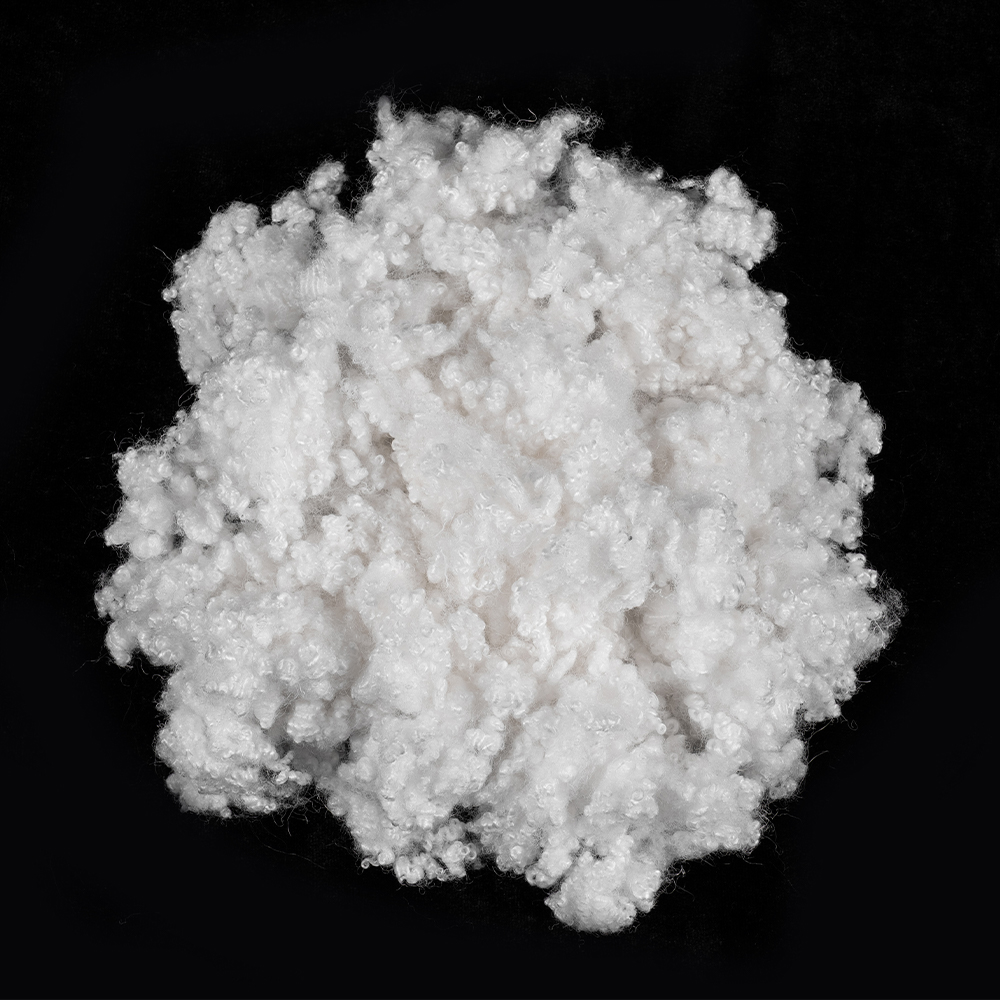 7D HCS Polyester Staple FiberA general filling grade with moderate thickness, softness and loft for quilts, sofas, pillow cores and toys; compare with 3D HCS for cost and comfort.View Product →
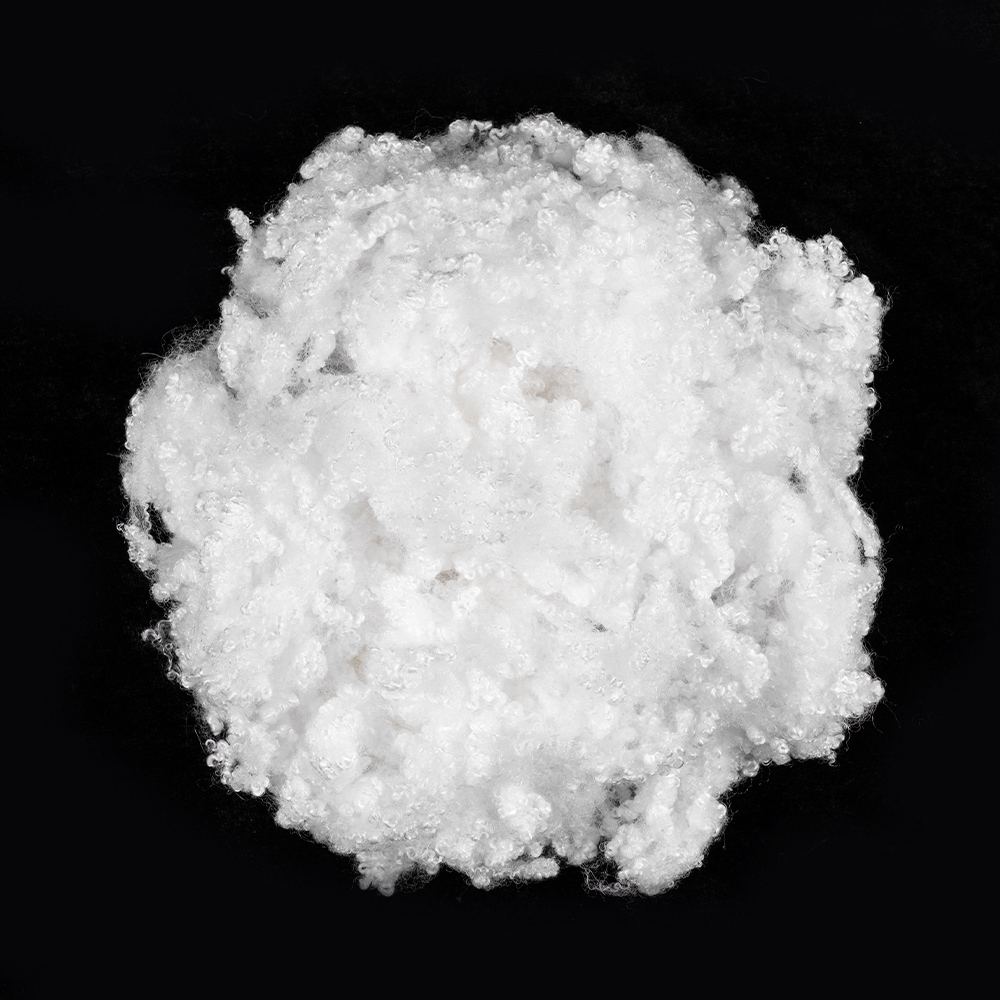 3D*64MM HC Polyester Staple FiberNon-silicone-oil hollow conjugated fiber emphasizing loft, warmth, cohesion and shape stability for premium quilts, pillow cores and outdoor clothing fillings.View Product →
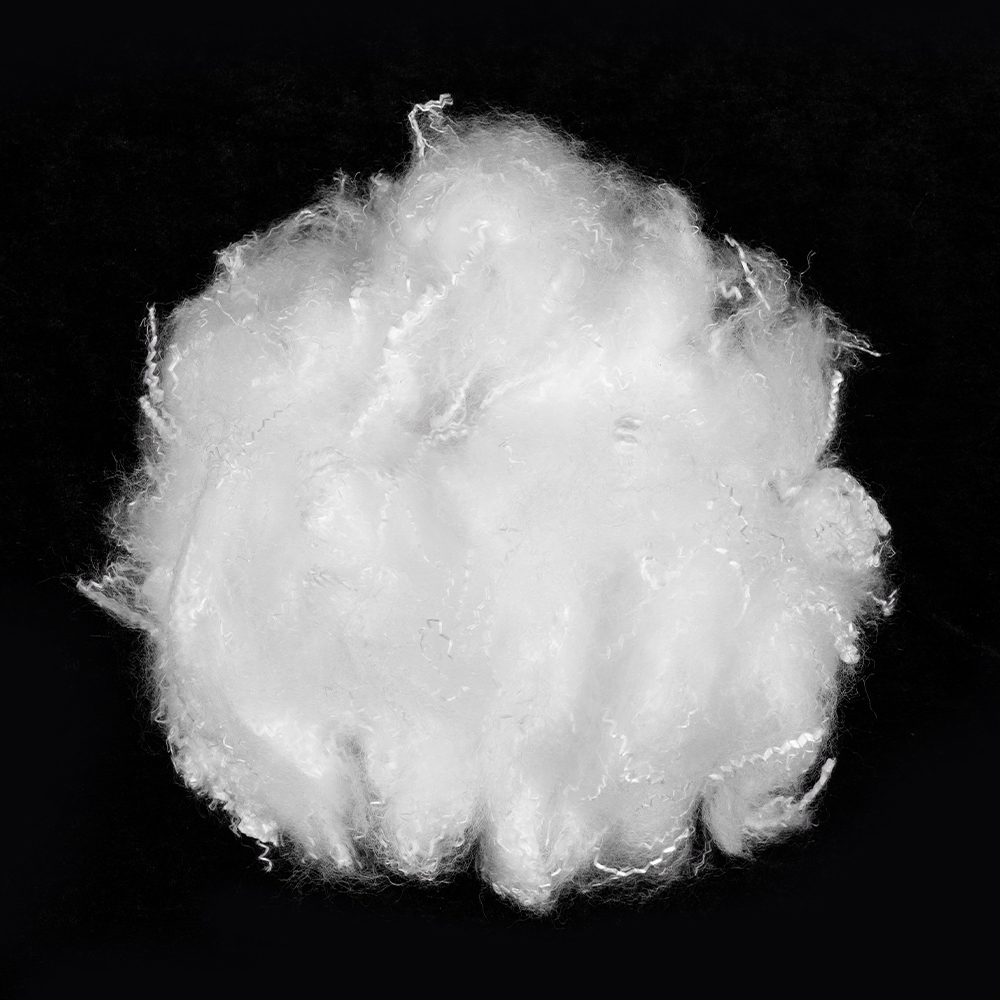 4D*51MM H Low-Melt Polyester Staple FiberThermal-bonding fiber with 4D thickness for high bonding strength in nonwovens, sofa and mattress load-bearing parts, and automotive interior structural components; no added adhesives.View Product →
If your brief fits none of these lines, the fastest route is a short conversation with the mill rather than a longer email chain. You can send your specification to our technical team and get a grade recommendation against your carding line, target weight and washing requirement.
Five Checks That Protect Loft, and Your Margin
- Do not tender on weight alone. Ask every supplier for loft per unit weight and recovery after compression, measured the same way for each quote.
- Fix the finish before you scale. Silicone and non-silicone grades behave differently in carding, so a mid-project switch shows up as batt weight drift.
- Check the bonding window for low-melt blends. A few degrees below the activation range and the batt delaminates; a few degrees above and the fiber collapses.
- Test after washing, not only before. Loft retention across five cycles predicts returns better than any figure taken from a fresh sample.
- Keep batches traceable. Blending two deliveries of slightly different crimp produces a batt that looks right on the line and feels uneven in the finished quilt.
None of these checks needs new equipment. They need the criteria written into the specification before the first container ships.
Frequently Asked Questions
Is hollow conjugate fiber warmer than solid polyester?
Per gram, yes, because the hollow core and the three-dimensional crimp trap more still air. The advantage only holds while the batt keeps its loft, so wash testing matters as much as the first measurement.
Which denier should I choose for a duvet?
Most duvets sit between 3D and 7D at 64 mm. Go finer for a softer, drapier feel, coarser for a fuller, more resilient hand.
Can thermal insulation filling be machine washed?
Polyester hollow conjugate is generally suitable for machine washing and dries quickly, unlike down, which collapses when wet. Confirm the temperature and cycle with your customer, since the finish and any bonding fiber affect the answer.
Do I need silicone-treated fiber?
Only if the line benefits from easier opening and a smoother hand. Where the batt is thermally bonded or coated, a non-silicone grade gives a cleaner surface for the bond.
Is textile filling the same as building insulation filling?
No. Building insulation is specified by thermal conductivity and fire performance inside a wall or roof cavity. Textile filling is specified by loft, hand, wash durability and bonding behaviour. The phrase is shared; the test methods are not.
Thermal insulation filling is a small line item that decides a large share of how a quilt, blanket or jacket is judged. Get the loft, the finish and the bonding behaviour agreed in writing, and the rest of the specification becomes routine. Ningbo Huaxing produces hollow conjugate, low-melt and micro polyester staple fiber alongside fiber-grade PET chip and POY filament, so the filling and the shell fabric can be matched from a single technical source.
Ningbo Huaxing Technology Co., Ltd.
-
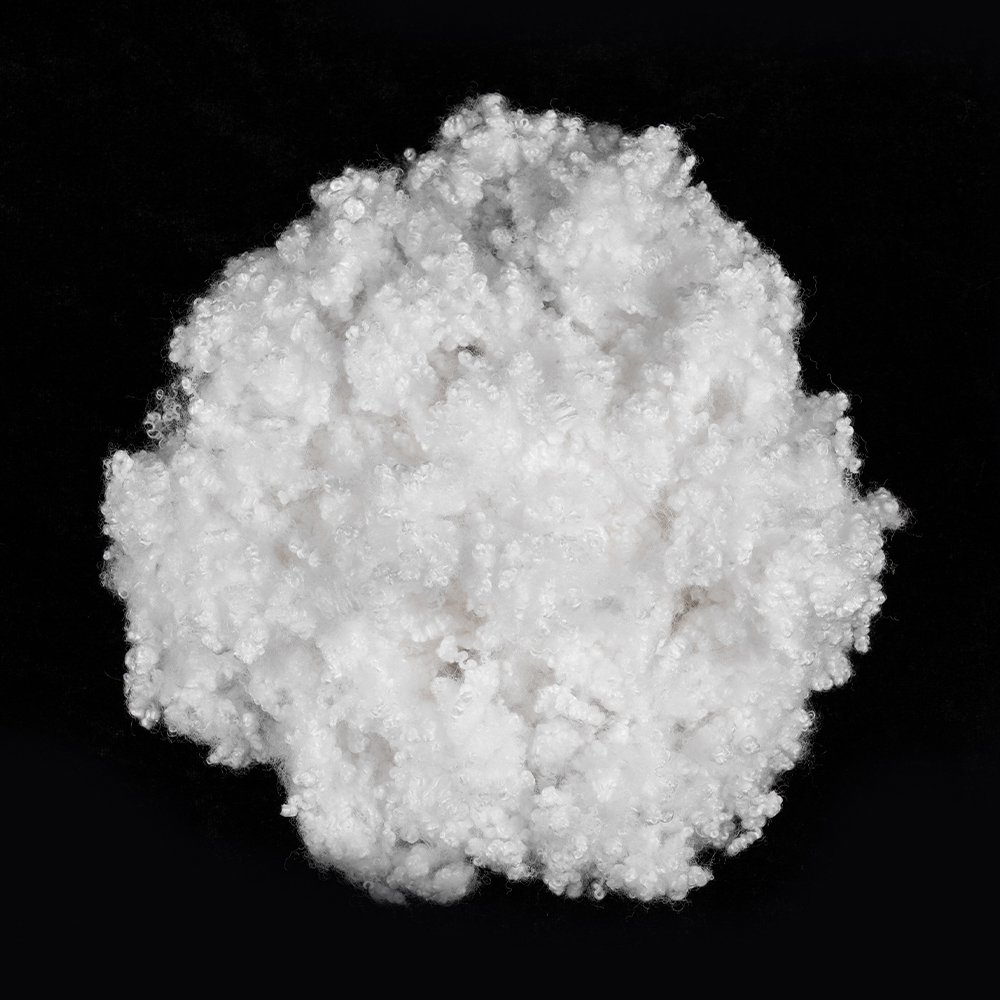
3D HCS Polyester Staple Fiber
-
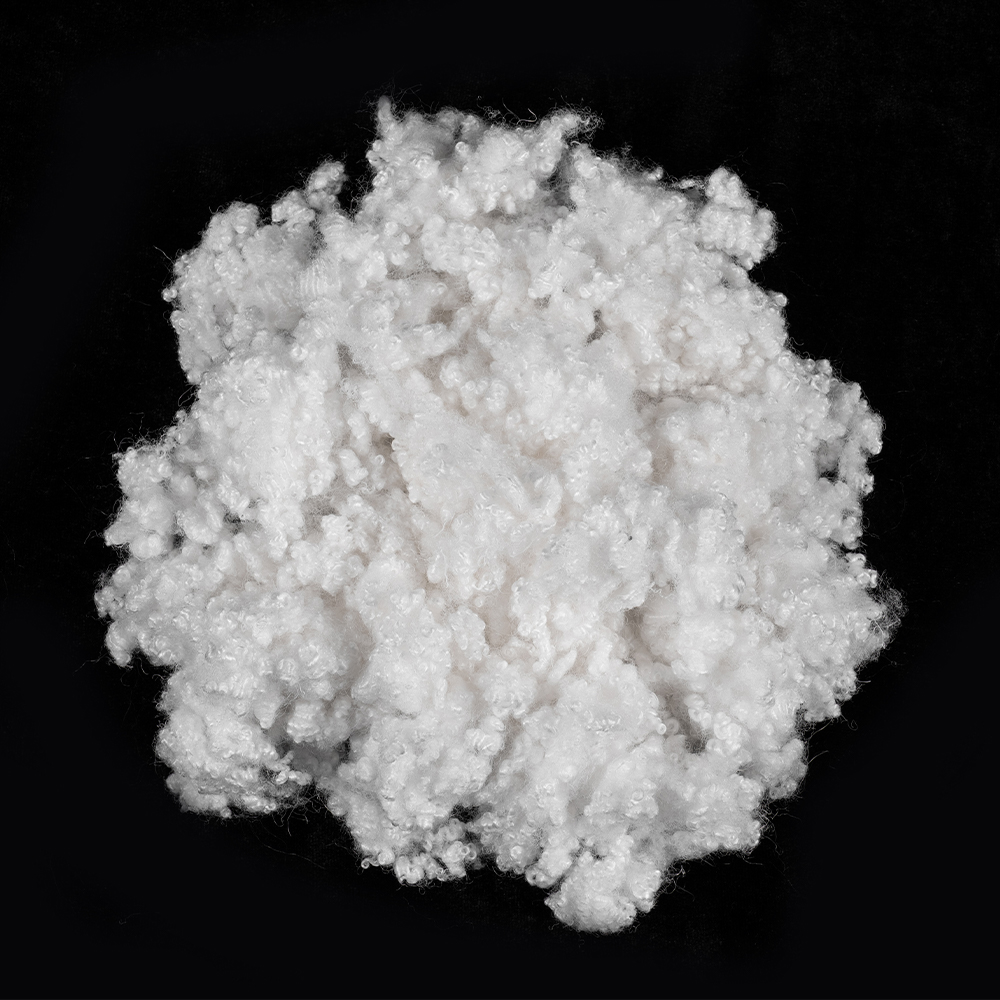
7D HCS Polyester Staple Fiber
-
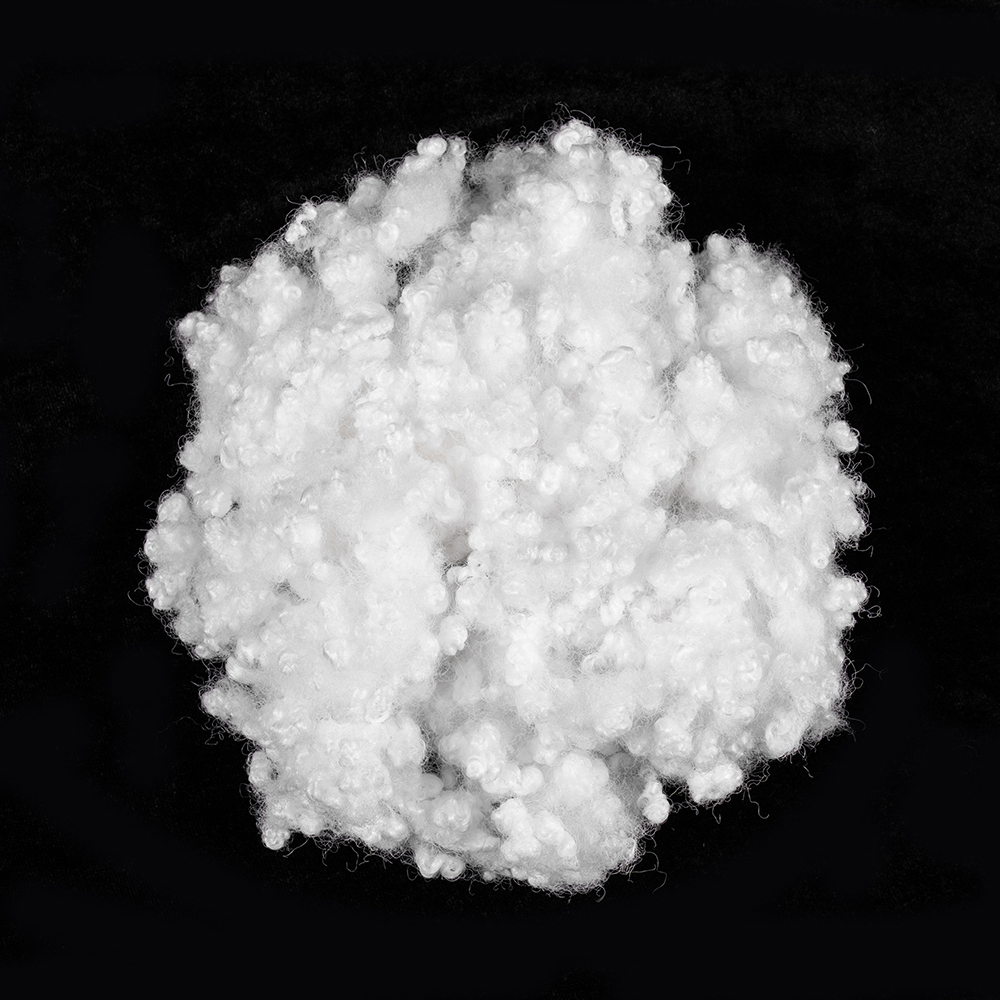
15D HCS Polyester Staple Fiber
-
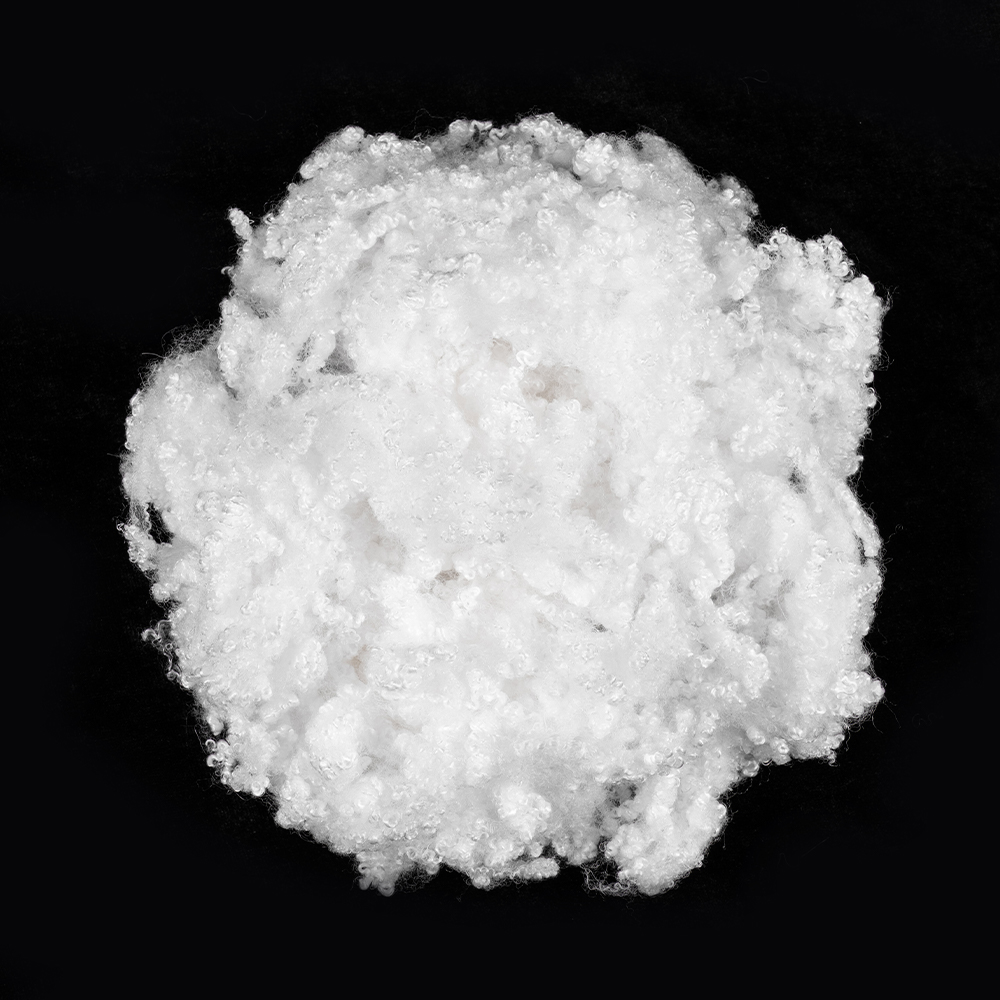
3D*64MM HC Polyester Staple Fiber
-
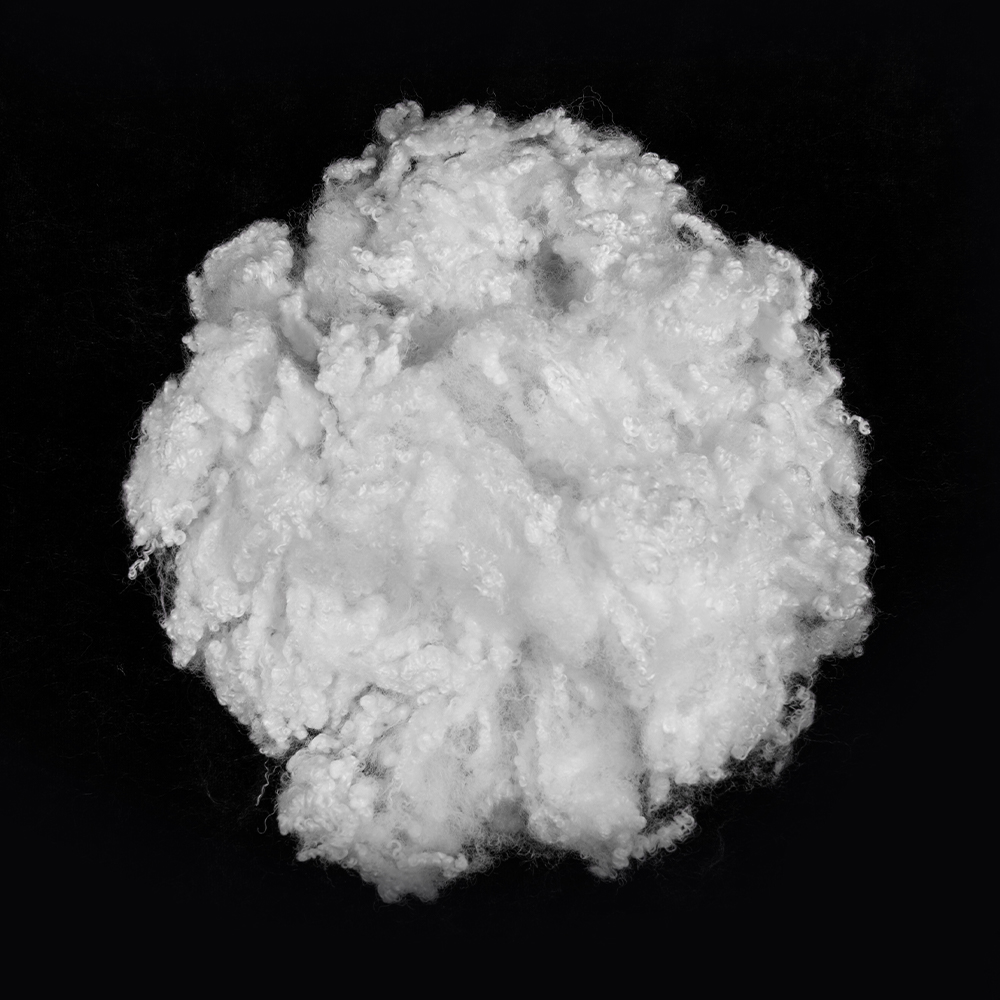
7D*64MM HC Polyester Staple Fiber
-
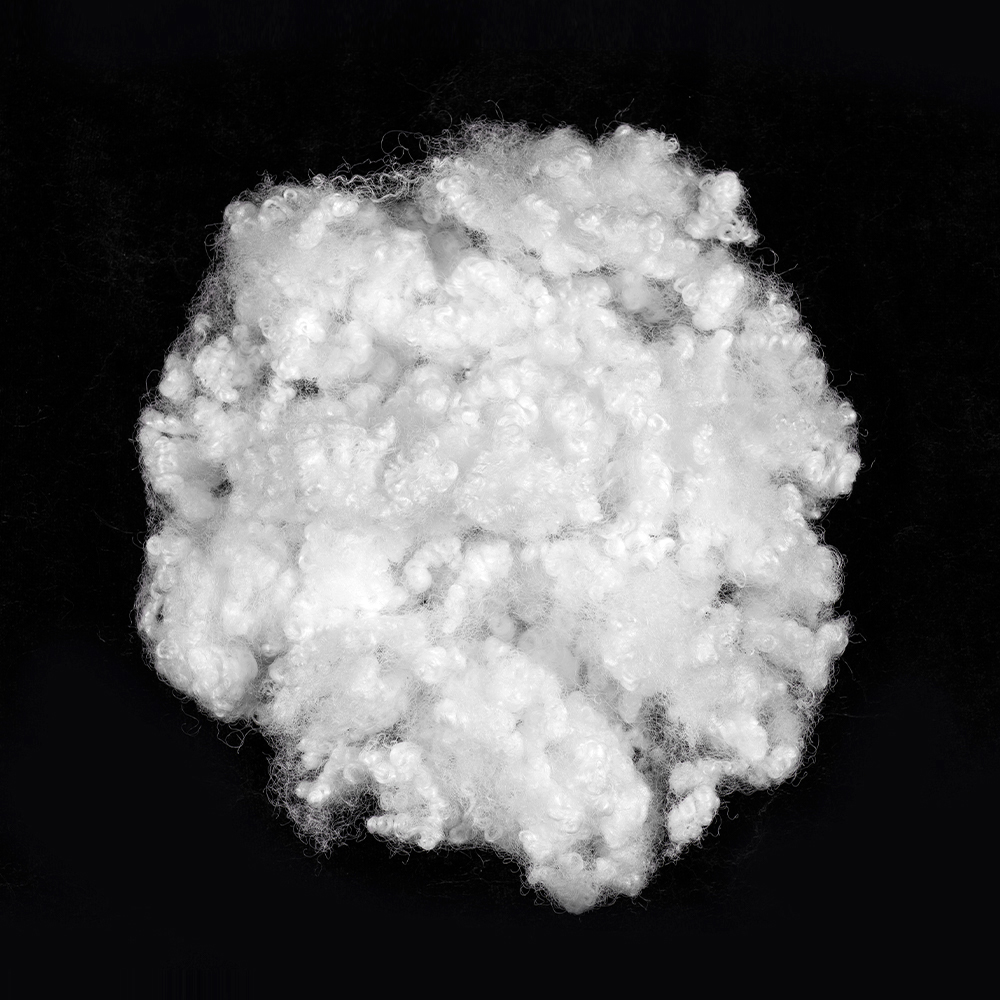
15D*64MM HC Polyester Staple Fiber
-
Quick Links
Home About Us Products FAQ News Contact Us -
Product Links
Polyester Staple Fiber Pre-oriented Yarn/POY Polyester Chip/PET Chip -
About Us
About Us Factory Honor FAQ -
Get In Touch
E-mail:
[email protected]Phone:
+86-130 8198 6637Tel:
+86-0574-63732888Address:
Haidianrong Village, Longshan Town, Cixi City, Ningbo, Zhejiang Province, China.
