-
 Welcome to Huaxing Technology
-
 Email us: [email protected]


 中文简体


Down Alternative Fiber vs Cotton Filling: Loft, Warmth, Washability and Cost Compared
Content
Two duvet samples arrive the same day: one filled with hollow polyester down-alternative fiber, one with carded cotton batting at the same total weight. Squeeze both and the answer appears within seconds. The polyester sample springs back to almost its original height; the cotton sample stays flat where your hand pressed. That single behavior settles most of this comparison.
The conclusion first: hollow polyester down-alternative fiber is the stronger choice for duvets, pillows and sleeping bags that must stay lofty through repeated washing, while cotton filling earns its place in quilts, toppers and heavier covers where weight, quiet drape and a natural-fiber story matter more than recovery. Most buyers who feel let down by a "down alternative" product were not failed by polyester in general. They were failed by a low-specification polyester: solid, low-crimp, coarse denier fiber that was never designed to trap air.
- Loft and recovery are the priority: specify hollow conjugate polyester.
- Weight and drape are the priority: specify cotton batting.
- Blends are common and useful, such as a bonded polyester core under a cotton cover.
Down Alternative Is a Claim, Cotton Is a Material
"Down alternative" describes what a fill imitates, not what it is made of. Retail listings use the phrase for polyester, cotton, microfiber, kapok and blends. The real comparison is therefore usually between hollow conjugated polyester staple fiber and cotton batting, and those two behave very differently at fiber level.
How hollow polyester holds loft
A hollow conjugate fiber carries one or more internal channels along its length, often roughly 15 to 25 percent of the cross-section. Those channels trap still air, the crimp supplies bulk, and the spin finish reduces friction so fibers slide back into place rather than locking into a mat. Denier sets the character: 3D reads soft and down-like, 7D gives a fuller pillow hand, and 15D builds volume economically but feels coarser against the shell.
How cotton behaves
Cotton batting is a web of solid, ribbon-like fibers with no internal void, so thickness has to come from mass rather than structure. Cotton also absorbs moisture, with a regain above 8 percent against well under 1 percent for polyester. That water adds weight, slows drying and softens the natural crimp, which is why cotton bedding flattens progressively instead of springing back.
Side-by-Side: What Changes in the Finished Product
The differences below decide how a finished duvet or pillow feels in month one and how it looks in year three.
| Attribute | Hollow polyester down-alternative fiber | Cotton filling |
|---|---|---|
| Loft per gram | High: internal channels trap air with little mass | Lower: solid fibers need more weight for the same thickness |
| Warmth-to-weight | Warm at a light fill weight; easy to tune season by fill weight | Warm but heavier; warmth rises with mass |
| Recovery after compression | Springs back through hollow structure and crimp | Recovers slowly and incompletely; marks stay |
| Moisture handling | Low regain; water passes through rather than soaking in | Absorbs several percent of its weight; feels damp and heavy |
| Washing and drying | Tolerates repeated 60 °C cycles with tight quilting; dries quickly | Washable but heavy wet; long drying time; lumping risk |
| Migration and clumping | Controlled by quilting, crimp level and binder fiber | Prone to shifting and matting, especially after washing |
| Dust mite environment | Slick fiber sheds dust poorly; hot washing helps control mites | Holds perspiration, creating favorable conditions if not fully dried |
| Typical service life | Five to ten years with regular washing, shell dependent | Three to six years before noticeable flattening |
| Cost driver | Polyester resin and spinning cost; stable and predictable | Cotton crop, ginning and bleaching; more volatile |
| End of life | Recyclable in PET streams; not biodegradable | Biodegradable; compostable under industrial conditions |
Where Cotton Filling Still Earns Its Place
Weight is not automatically a defect. A stitched quilt with cotton batting hangs flat and calm on the bed, with none of the billowing that a high-loft synthetic fill produces. Some sleepers prefer that pressure, and cotton feels cooler at first touch because it conducts and absorbs rather than insulating instantly.
Cotton is also the simpler story for brands selling natural materials, and it is quieter and static-free where a rustling synthetic shell would be noticed. In mattress toppers and dense summer covers, the low recovery works in cotton's favor: the fill stays where it is stitched instead of pushing against the quilting lines.
Specifying a Polyester Fill That Behaves Like Down
A "down alternative" claim means nothing until the fiber is pinned down. These are the parameters that decide whether the finished duvet feels airy or limp.
- Denier: 3D for softness, 6D to 7D for pillow cores, 15D only where volume outranks hand feel.
- Cut length: 51 mm and 64 mm are standard for carded bedding webs; shorter lengths improve blend uniformity, longer lengths improve web strength.
- Hollow type: spiral or circular hollow conjugate, with the hollow ratio written into the specification rather than assumed.
- Surface treatment: siliconized fiber slides and re-expands faster; non-silicone fiber grips, which suits bonded structures and reduces migration.
- Binder content: blending 5 to 15 percent low-melt fiber and curing in the 110 to 150 °C window locks loft in place and cuts fiber migration through the shell.
A siliconized 7D hollow conjugate fiber is the workhorse for duvet and pillow cores, giving a full hand that still recovers after compression.
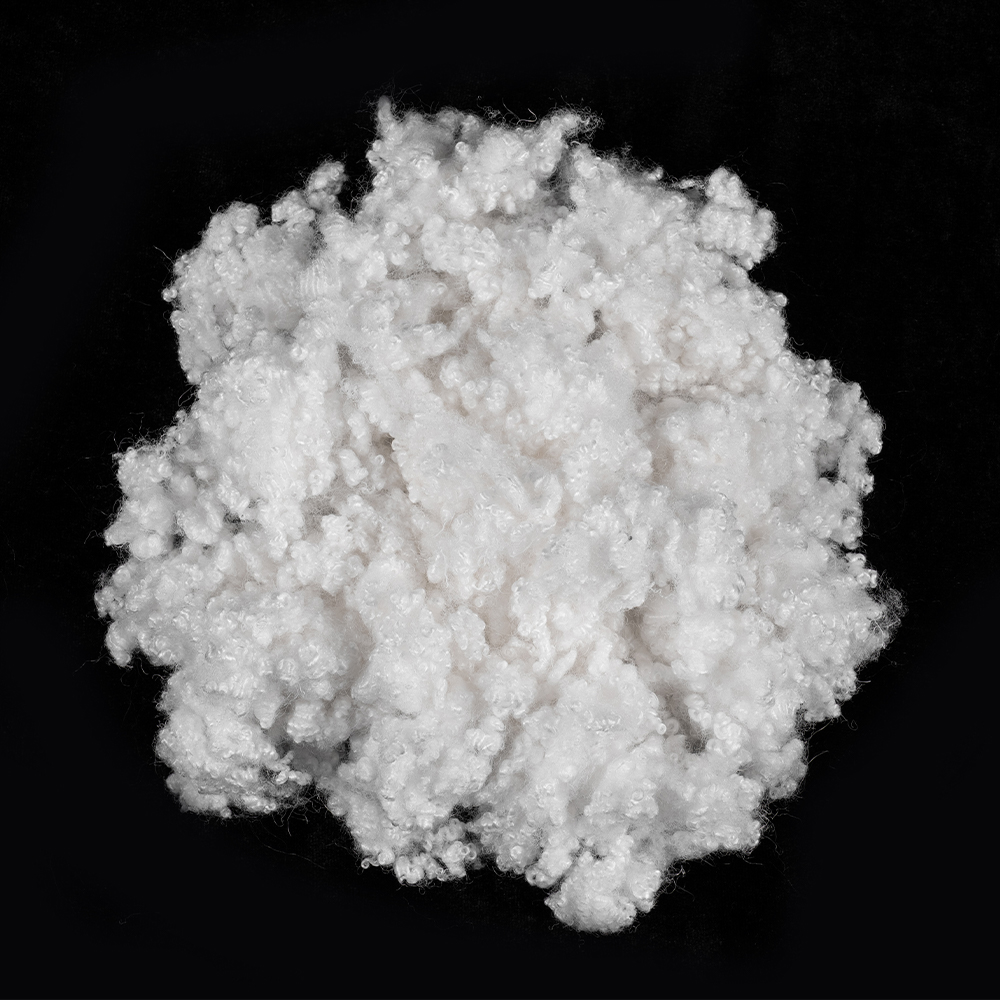 7D HCS Silicone-Treated Hollow Conjugated Polyester Staple FiberA balanced filling option for quilts, pillow cores and general home textiles, offering moderate denier, strength and recovery where maximum bulk is not required.View Product →
Where the brief asks for a down-like touch rather than maximum bulk, fine denier microfiber at 1.2D builds a softer, denser web that drapes closer to the body.
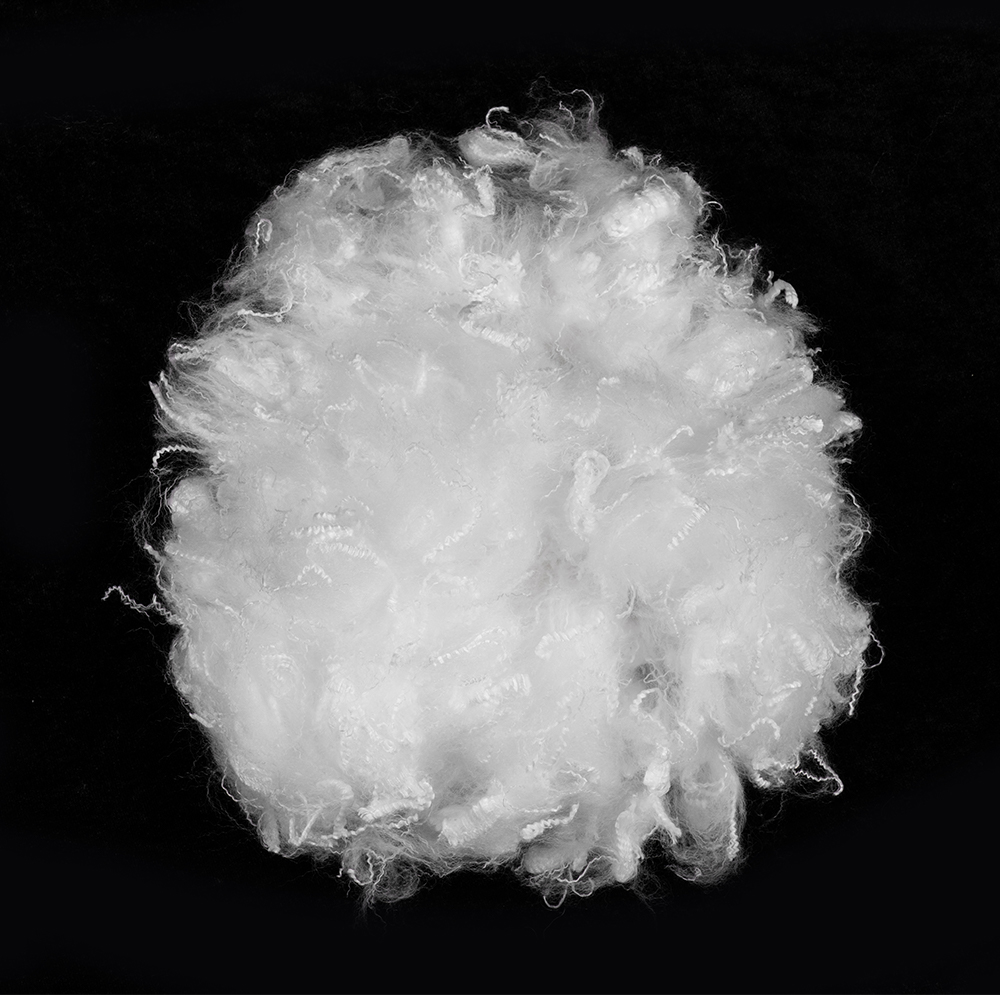 1.2D Microfiber Polyester Staple Fiber for Down-Like FillA fine-denier fill for premium down jackets, comforters and pillows that need a soft, down-like hand with better cohesion and more even warmth.View Product →
For structures that must not shift in the wash, a 4D low-melt fiber bonded into the web holds the fill geometry without stitching every square centimeter.
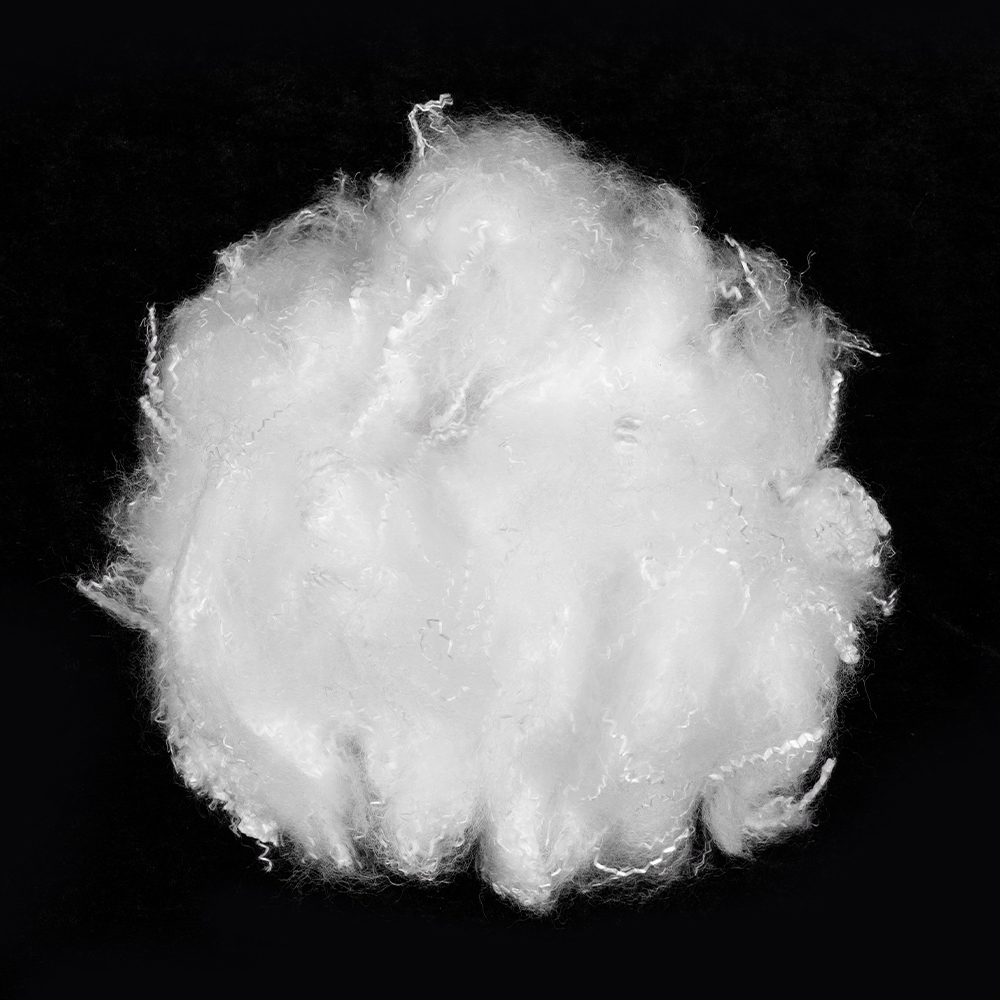 4D Low-Melt Polyester Staple Fiber for Bonded StructuresFor wash-stable fills and load-bearing parts, this 4D fiber thermally bonds without added adhesive to support cohesion, shape retention and durable nonwoven or cushion structures.View Product →
Buyers weighing hollow structures in more detail can compare denier, hollow ratio and oil treatment in this guide to choosing hollow conjugate fiber filling materials.
A Practical Purchase Checklist
- State the end product and target fill weight before discussing fiber, because the same 7D fiber can read luxurious in one quilt and lumpy in another.
- Accept denier tolerances of roughly plus or minus 5 percent; wider swings change hand feel noticeably across a production run.
- Ask for moisture content below 0.4 percent on delivery, since damp fiber cards poorly and clumps during curing.
- Request three wash cycles at 60 °C with loft measured before and after; anything above 85 percent thickness retention is healthy for a bonded polyester web.
- Confirm whether the fiber is siliconized or non-silicone, and keep that choice fixed between sampling and bulk, because switching changes friction and loft recovery.
- Check cut length consistency and the presence of fused or oversize clusters, both of which show up as hard spots in the finished duvet.
Frequently Asked Questions
Is down alternative warmer than cotton?
At equal fill weight, hollow polyester traps more air and feels warmer. At equal thickness, the gap narrows. Warmth tracks trapped air and fill weight rather than material name.
Can a polyester-filled duvet be washed more often than cotton?
Yes. Polyester dries quickly and recovers its loft, while cotton stays heavy when wet and can mat during slow drying.
Which filling is better for allergy sufferers?
Dust mites favor damp, absorbent materials. A washable polyester fill dried thoroughly, inside a tightly woven shell, is easier to keep dry and clean.
Does hollow fiber lose loft over time?
It loses some, but slowly. Loss accelerates when the shell is loose, the fiber is low-crimp, or the fill is bonded weakly, so quilting density and binder content matter as much as the fiber itself.
Are blends worth considering?
Often yes. A bonded polyester core under a thin cotton layer gives recovery plus a natural surface story, at the cost of more complex quality control.
Matching the Fill to the Brief
For loft, warmth-to-weight and wash durability, hollow polyester down-alternative fiber wins on measurable behavior. For weight, drape and a natural-material claim, cotton remains the right answer. The failures buyers complain about usually trace back to fiber specification and bonding, not to the category as a whole.
Ningbo Huaxing Technology produces hollow conjugate polyester staple fiber from 3D to 15D in siliconized and non-silicone versions, along with micro fiber down to 1.2D and low-melt binder fiber, supported by an in-house engineering center and a 160,000-tonne POY line. To discuss denier, cut length and bonding options for a bedding fill program, contact the technical team.
Ningbo Huaxing Technology Co., Ltd.
-
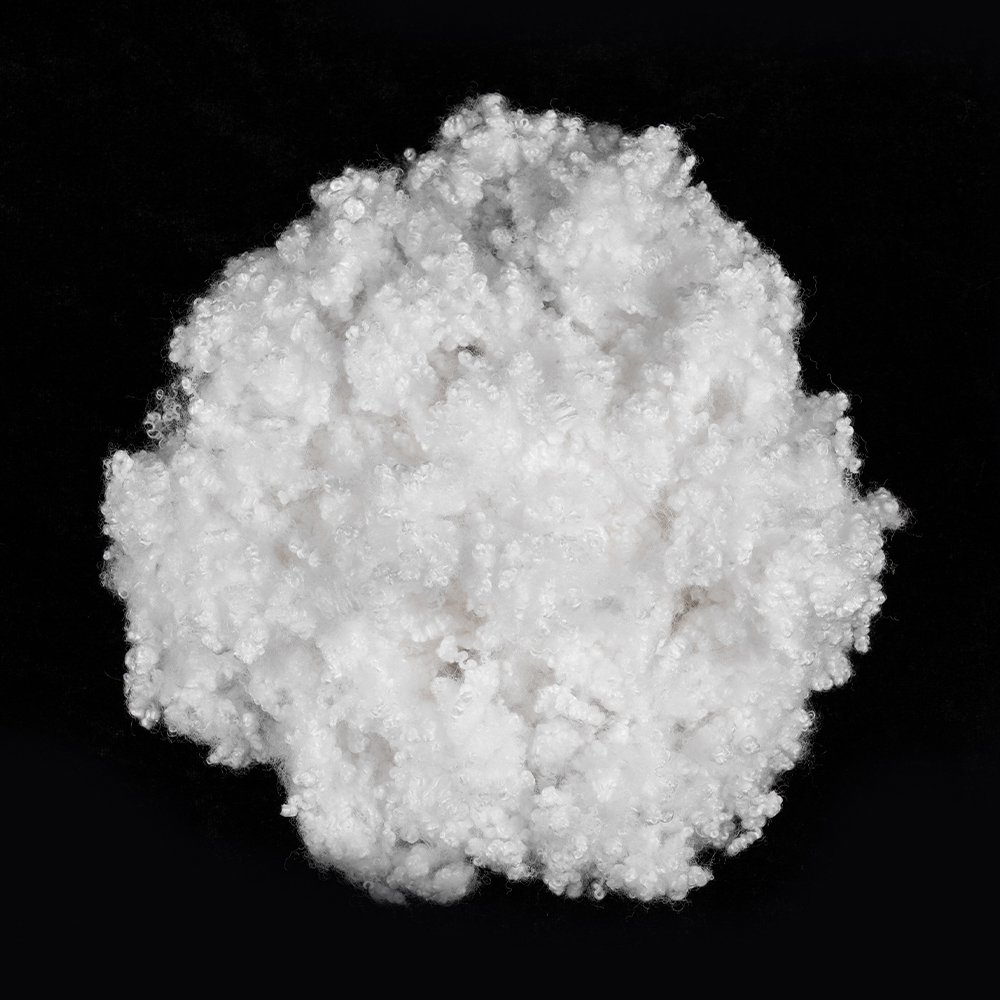
3D HCS Polyester Staple Fiber
-
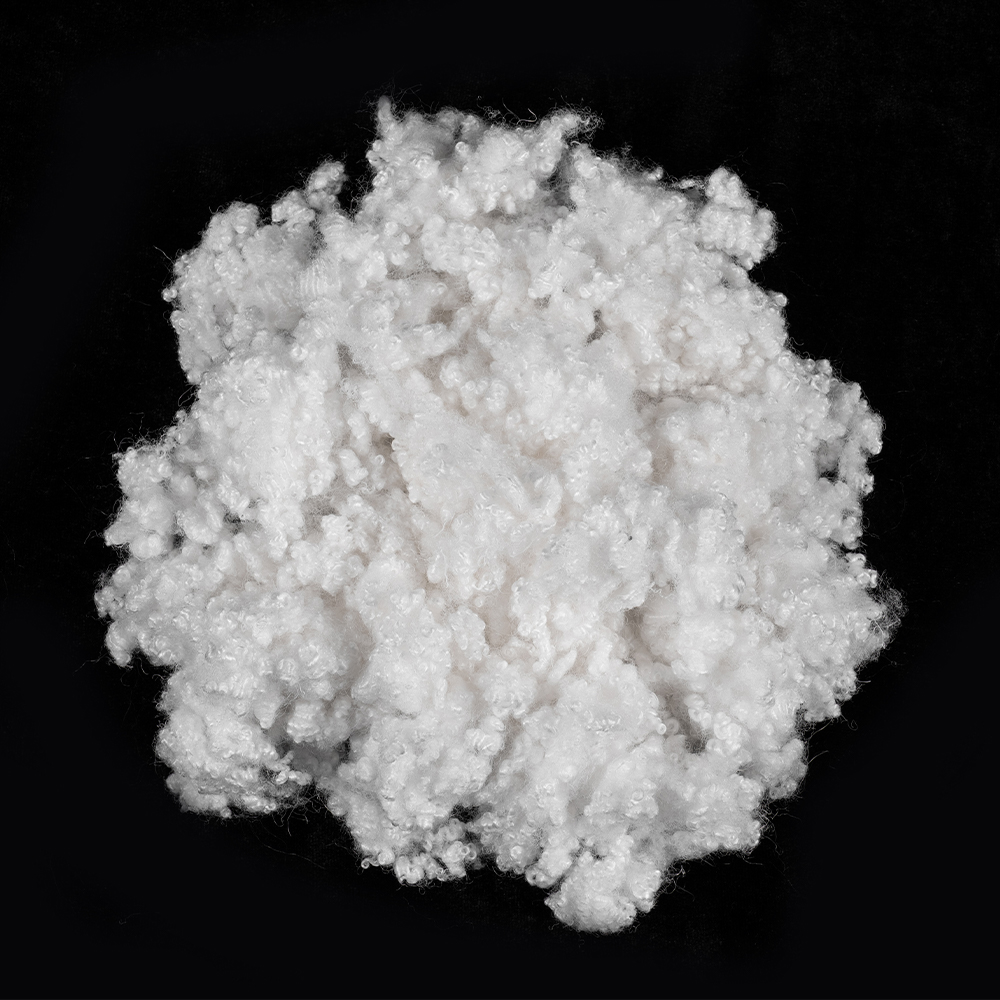
7D HCS Polyester Staple Fiber
-
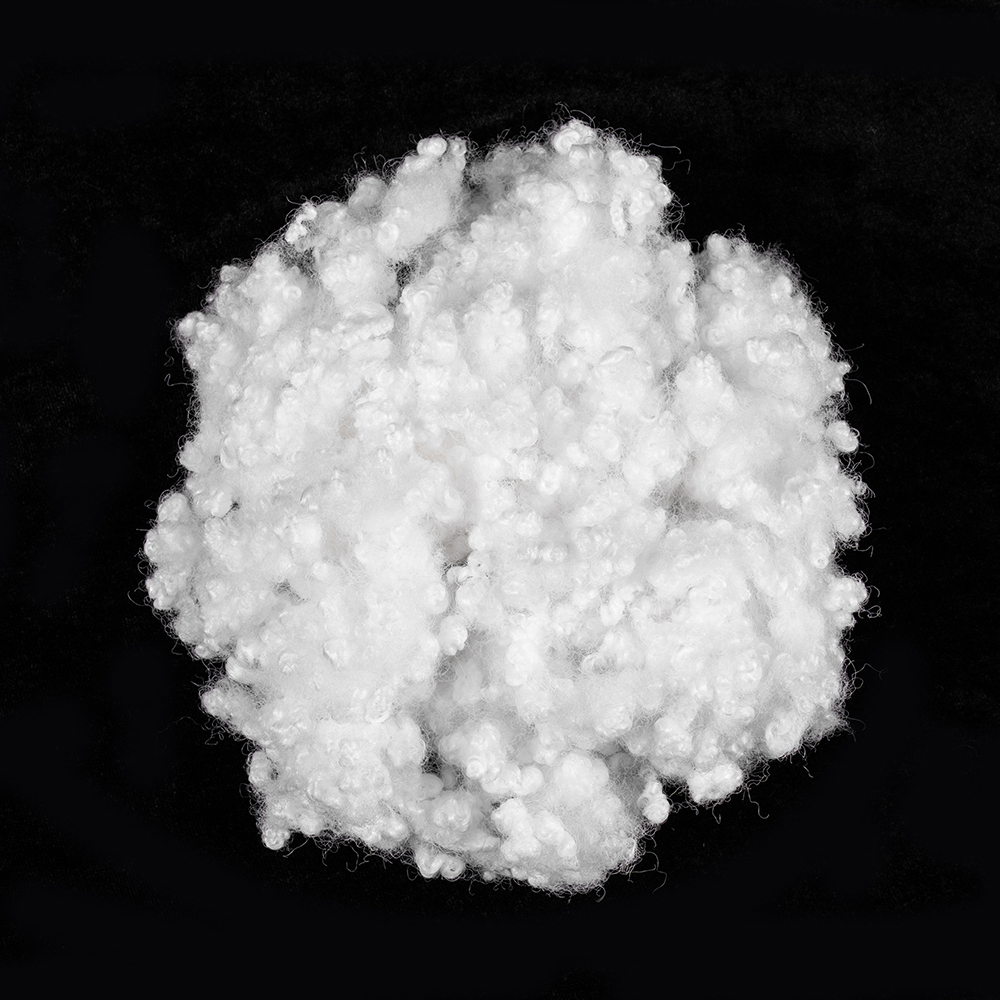
15D HCS Polyester Staple Fiber
-
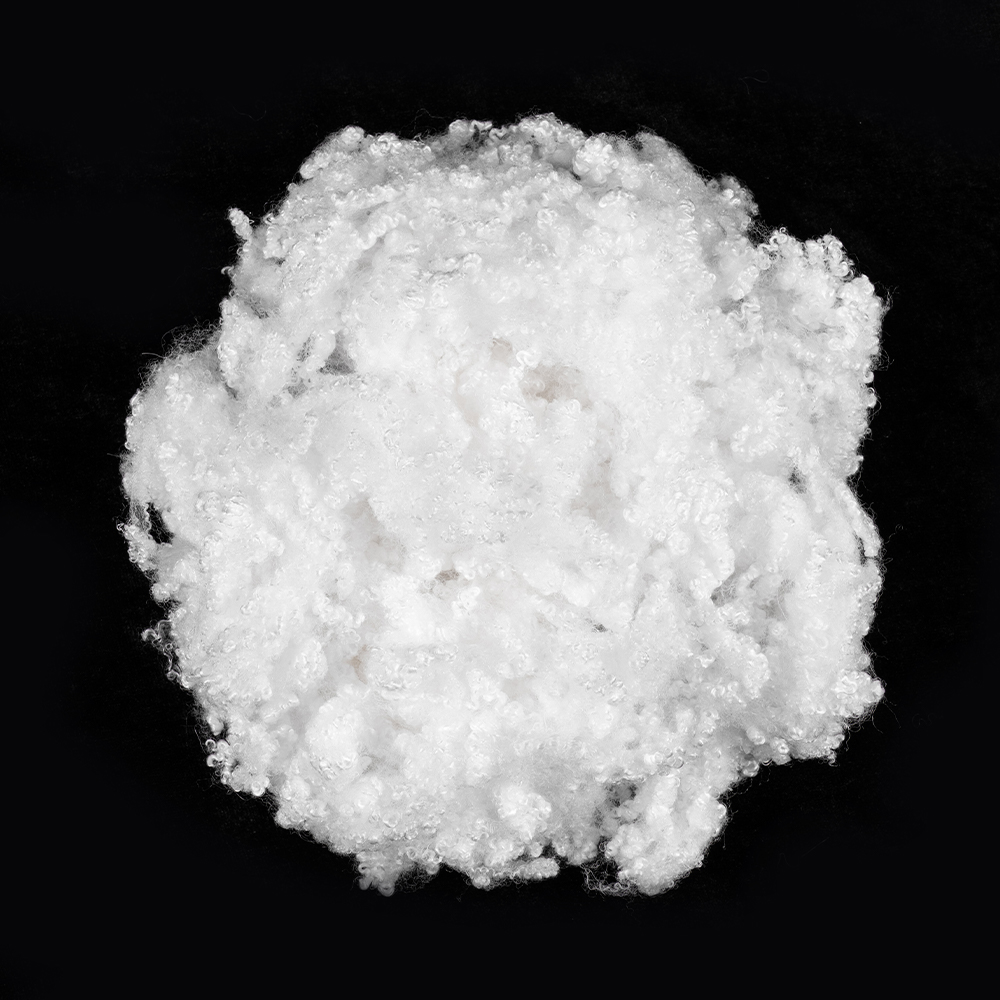
3D*64MM HC Polyester Staple Fiber
-
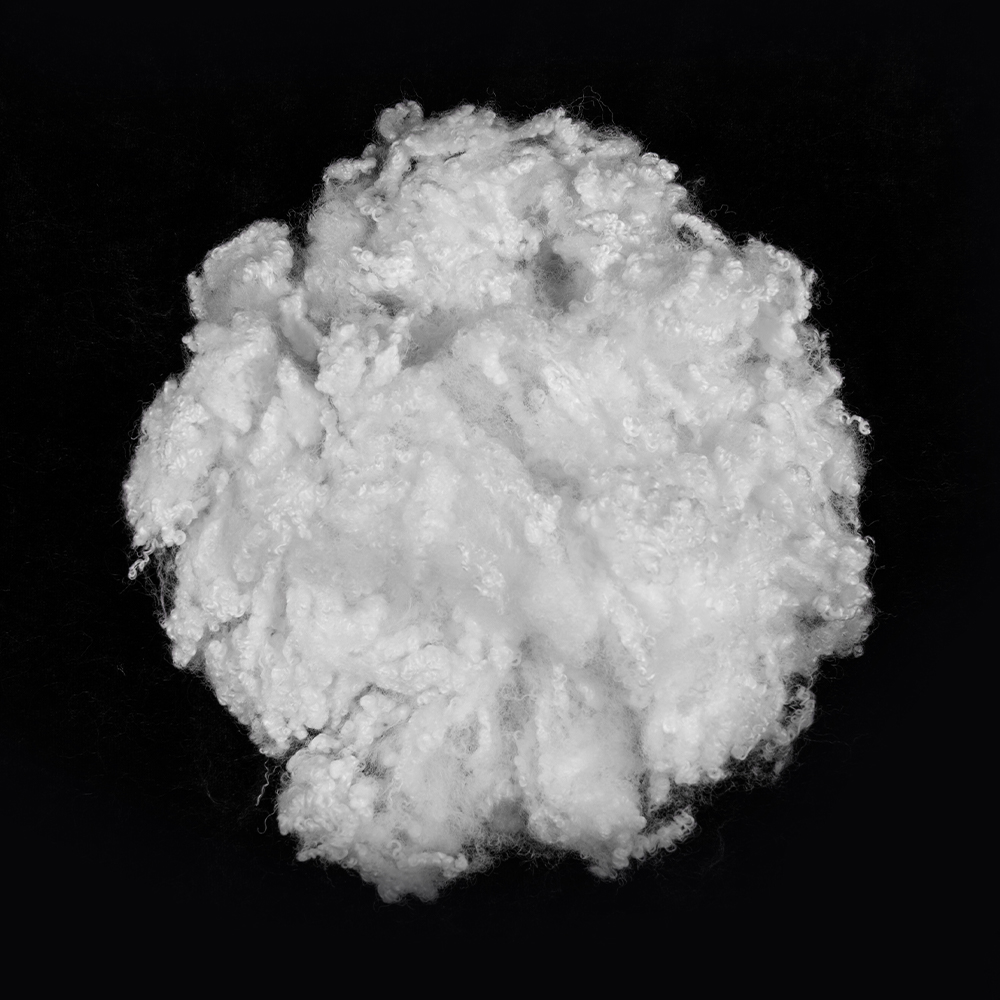
7D*64MM HC Polyester Staple Fiber
-
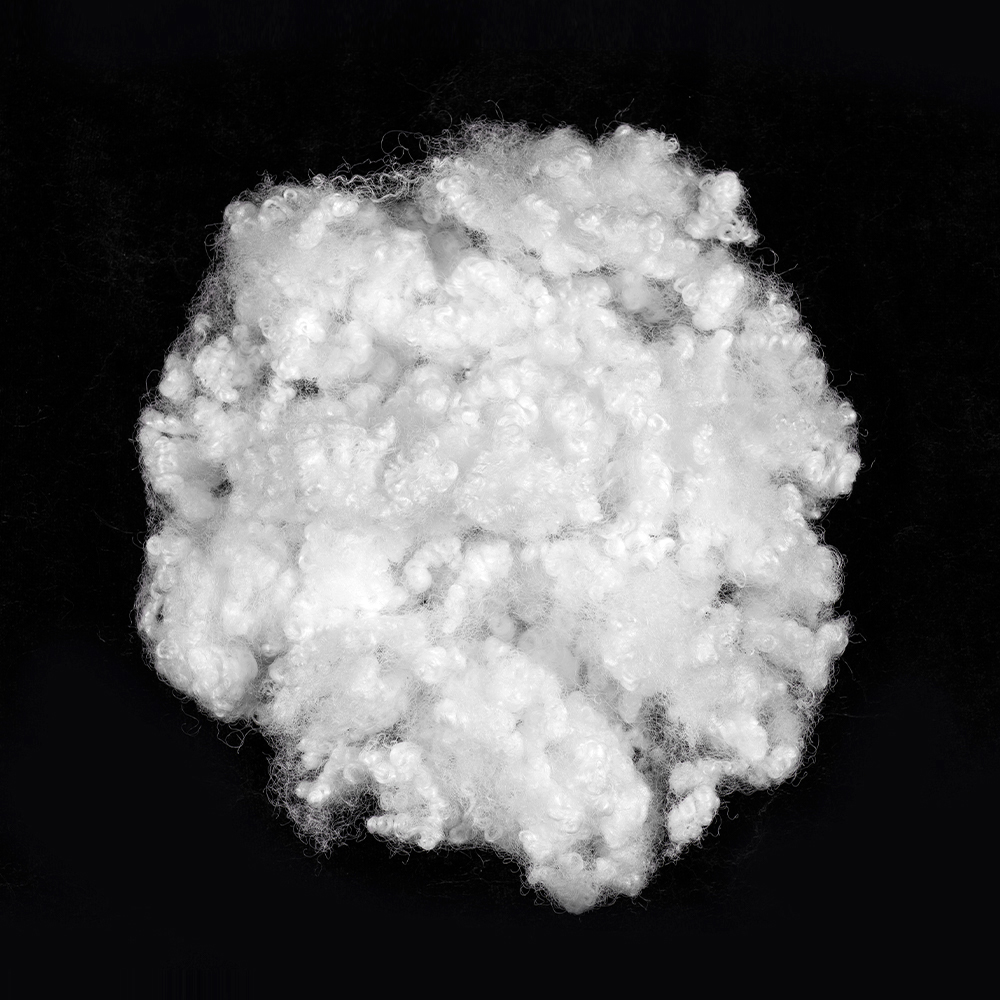
15D*64MM HC Polyester Staple Fiber
-
Quick Links
Home About Us Products FAQ News Contact Us -
Product Links
Polyester Staple Fiber Pre-oriented Yarn/POY Polyester Chip/PET Chip -
About Us
About Us Factory Honor FAQ -
Get In Touch
E-mail:
[email protected]Phone:
+86-130 8198 6637Tel:
+86-0574-63732888Address:
Haidianrong Village, Longshan Town, Cixi City, Ningbo, Zhejiang Province, China.
