-
 Welcome to Huaxing Technology
-
 Email us: [email protected]


 中文简体


Thermal Bonding Fiber Guide: Low-Melt Polyester Selection and Process Control
Content
- 1 What Thermal Bonding Fiber Does in a Nonwoven Web
- 2 How to Select Thermal Bonding Fiber Without Buying the Wrong Grade
- 3 Specifications That Matter More Than the Headline Number
- 4 Set the Line by Surface Temperature, Dwell, and Cooling
- 5 Quality Checks That Expose a Bad Bond Before Shipment
- 6 FAQ: Thermal Bonding Fiber in Practice
Put a low-melt polyester staple fiber into a carded web, pass it through a calender, and the fabric either bonds cleanly or turns stiff, brittle, or patchy. The difference is rarely the fiber alone; it is the match between the fiber's softening behavior, the web's heat-transfer path, and the line's dwell time. Thermal bonding fiber is therefore a process input, not a commodity line item.
Bottom line: choose the fiber by bonding route and target hand first, then by denier, cut length, and low-melt content. Confirm the grade on your own line before scaling.
What Thermal Bonding Fiber Does in a Nonwoven Web
Thermal bonding fiber is a thermoplastic fiber that softens or melts at a controlled stage and fuses with neighboring fibers at crossover points. In polyester nonwovens, low-melt polyester staple is a common binder: it activates at a lower temperature than standard polyester, so the web can be consolidated without melting the whole structure.
The base fiber supplies strength, bulk, and hand; the binder supplies cohesion. The bonding window is narrower than many data sheets suggest. Underbonding gives low tensile strength, fuzzing, and poor abrasion resistance. Overbonding gives stiffness, shrinkage, and film-like patches that look bonded but crack in flexing.
Three bonding routes change the selection
Calendering applies heat and pressure through rolls. The fiber must soften consistently because the nip acts directly on the web. Through-air bonding uses hot air and dwell; air permeability, web thickness, and uniform airflow matter as much as the fiber's melting range. Ultrasonic bonding uses localized mechanical energy; the fiber still needs a consistent thermoplastic response at the sonotrode, but bulk heating is lower.
How to Select Thermal Bonding Fiber Without Buying the Wrong Grade
Start with the bonding route and the target hand, not with the lowest price per ton. A grade that bonds strongly in a dense calender web may collapse a lofty through-air structure or create hard spots in a patterned ultrasonic bond.
- Define the target: tensile and elongation in machine and cross direction, thickness, softness, drape, shrinkage, and visual uniformity. Write these as acceptance limits before sampling.
- Match denier to the web. Finer fibers create more bond points per gram; coarser fibers add openness and bulk but need enough heat to form reliable intersections.
- Set cut length by carding and web draft. Too short can reduce network strength; too long can wrap card rolls or create tufts.
- Confirm low-melt content and blend ratio. More binder can raise strength but reduce softness and increase blocking risk.
- Ask for a bonding window, not a single melting point. Request onset and peak data, recommended temperature range, dwell, pressure, and cooling notes.
| Decision | Why it matters | What to request |
|---|---|---|
| Bonding route | Route changes heat flux, pressure, and dwell | Name the route, line speed, and target gsm |
| Denier | Fine fibers create more bond points; coarse fibers add bulk | Denier range and recommended blend ratio |
| Cut length | Must suit carding, web draft, and roll wrapping risk | Confirm length on a pilot card |
| Low-melt content | More binder can raise strength but reduce softness | Recommended addition rate and tolerance |
| Bonding window | A single melting point hides process sensitivity | Onset and peak data plus a trial range |
| Cooling | Residual heat causes blocking and poor unwinding | Cooling profile and winding temperature |
Specifications That Matter More Than the Headline Number
Denier and cut length control web geometry before the oven or calender does. A fine-denier, short-cut grade gives dense coverage and many contact points; a coarser, longer grade supports openness and loft. Neither is better until the target fabric is defined.
A 2D 51 mm low-melt polyester staple fiber is often a sensible starting point for smooth, dense webs where surface coverage and a tight bond pattern matter.
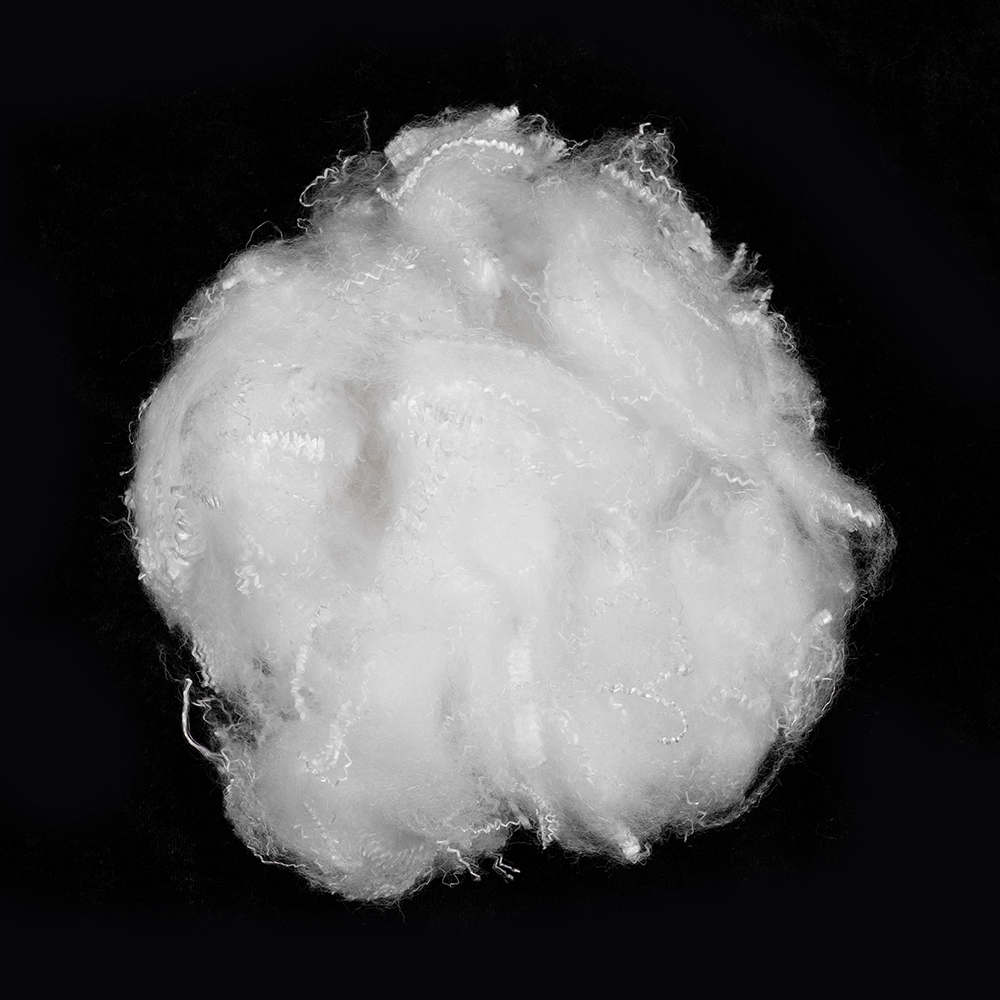 2D 51 mm Low-Melt Polyester Staple FiberFine, soft low-melt fiber for smooth, dense webs and tight thermal bonds without adhesive, suited to nonwovens, fillings, and automotive interior auxiliaries.View Product →
A 4D 51 mm H low-melt grade offers a coarser starting point for structures that need more openness or bulk while keeping a 51 mm cut length.
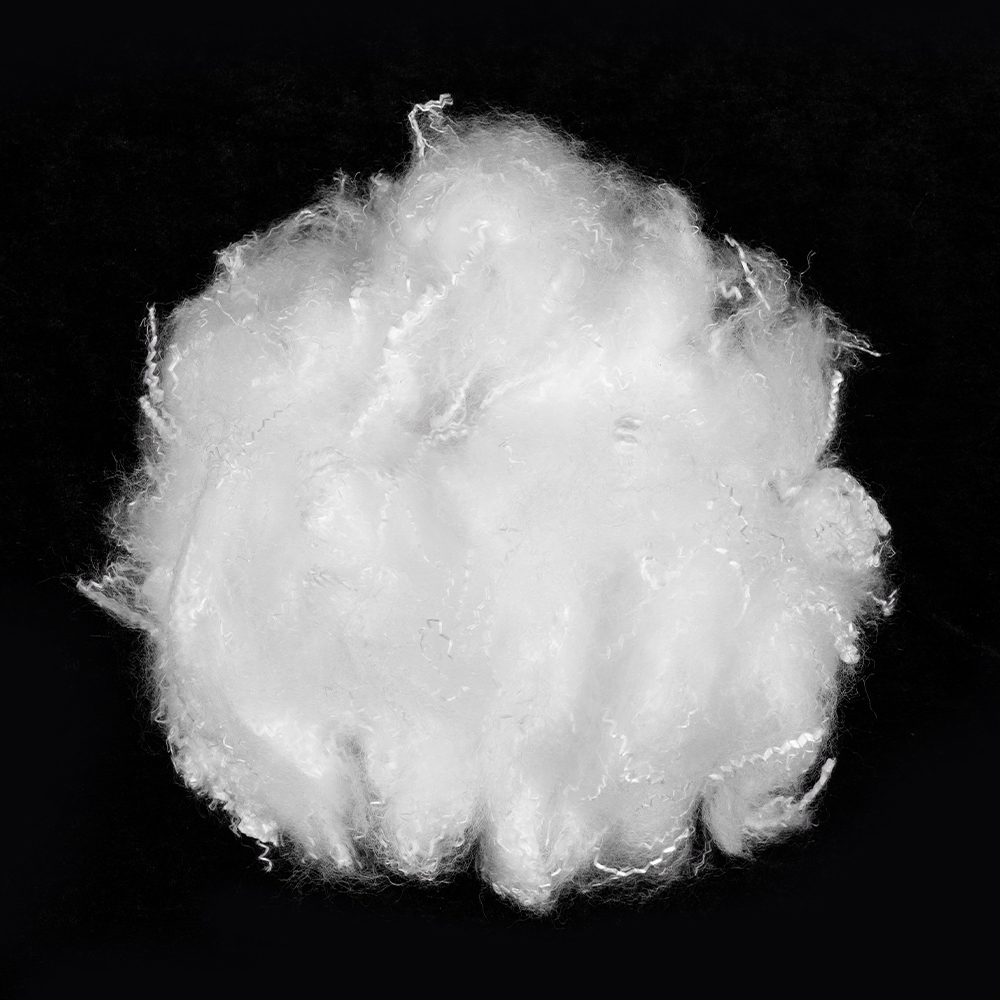 4D 51 mm H Low-Melt Polyester Staple FiberCoarser 4D low-melt staple for open, bulky structures needing strong thermal bonding, cohesion, and durable adhesive-free performance in nonwovens, load-bearing fills, and automotive parts.View Product →
A 4D 64 mm H low-melt grade can suit lines that need a longer staple for web cohesion, but confirm roll wrapping and carding behavior on trial.
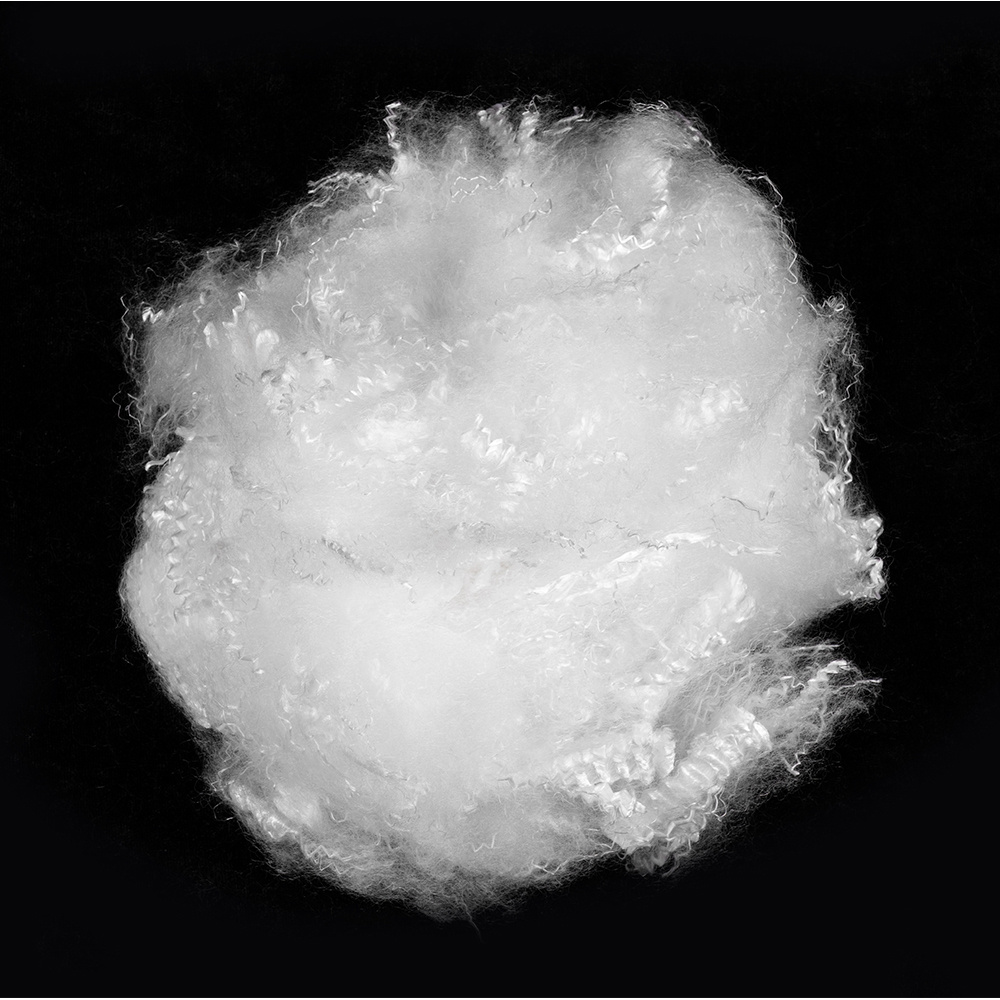 4D 64 mm H Low-Melt Polyester Staple FiberLonger 4D low-melt staple for efficient thermal bonding and stable, durable adhesive-free nonwovens, large sofa and mattress filling, and standardized automotive interior components.View Product →
Also check crimp, oil finish, moisture, and bulk density. These details affect opening, static, feeding, and the consistency of the bond across the width. For a broader view of the range, review the low-melt fiber polyester staple range.
Set the Line by Surface Temperature, Dwell, and Cooling
A controller reading is not a bonding measurement. Measure web surface temperature at entry, midpoint, and exit with a calibrated probe, and map across the width. Even a small edge-to-center difference can create a stiff edge and a weak center.
Dwell time is set by line speed and contact length in calendering, or by airflow and residence time in through-air bonding. If speed increases, do not simply raise temperature; verify surface temperature and pressure at the new rate.
- Check nip pressure uniformity and roll condition on calender lines.
- Check fan, duct, and belt uniformity on through-air lines.
- Cool before winding. Residual heat causes blocking, tearing, and inconsistent unwinding.
- Control moisture and static; both change fiber opening and web formation.
Quality Checks That Expose a Bad Bond Before Shipment
A single high tensile number can hide a brittle bond. Test the fabric as the customer will use it.
- Tensile and elongation in machine and cross direction, plus trapezoid tear if relevant.
- Flex, abrasion, and delamination or peel resistance after conditioning.
- Thickness, hand, drape, and compression recovery for the target product.
- Shrinkage and dimensional stability after a second heat exposure.
- Basis weight variation, air permeability, and visual defects such as pinholes, patches, and shedding.
FAQ: Thermal Bonding Fiber in Practice
Is low-melt fiber the same as thermal bonding fiber?
Low-melt fiber is one type of thermal bonding fiber. In polyester nonwovens, it is often used as the binder, but other thermoplastic or bicomponent fibers can also serve thermal bonding functions. The term describes a process role, not one chemistry.
Can a mill use 100% low-melt fiber?
Some structures can, but many lines blend low-melt with standard polyester to balance strength, softness, and cost. The right ratio is line-specific, so trial before committing to a formula.
What should we send to a fiber supplier for a trial?
Provide the bonding route, line speed, target gsm, current blend ratio, temperature and pressure settings, target tensile and hand, cooling setup, and any certification needs. The more line detail you share, the faster a grade can be narrowed.
Why does bonded fabric curl or block after winding?
Check cooling first, then nip pressure uniformity, moisture, and binder concentration at the surface. Fabric wound too warm often looks acceptable on the roll and fails at unwinding.
Before changing a grade, run a three-point trial: current grade, candidate grade, and candidate with adjusted blend ratio. Hold line speed, nip pressure, and cooling constant until surface temperature is verified. Compare tensile, elongation, hand, shrinkage, and winding behavior, not just peak strength.
If the trial shows a narrow window or edge-to-center variation, fix the line before blaming the fiber. Send your line details through our contact page if you need help matching a low-melt polyester staple grade to your bonding route.
Ningbo Huaxing Technology Co., Ltd.
-
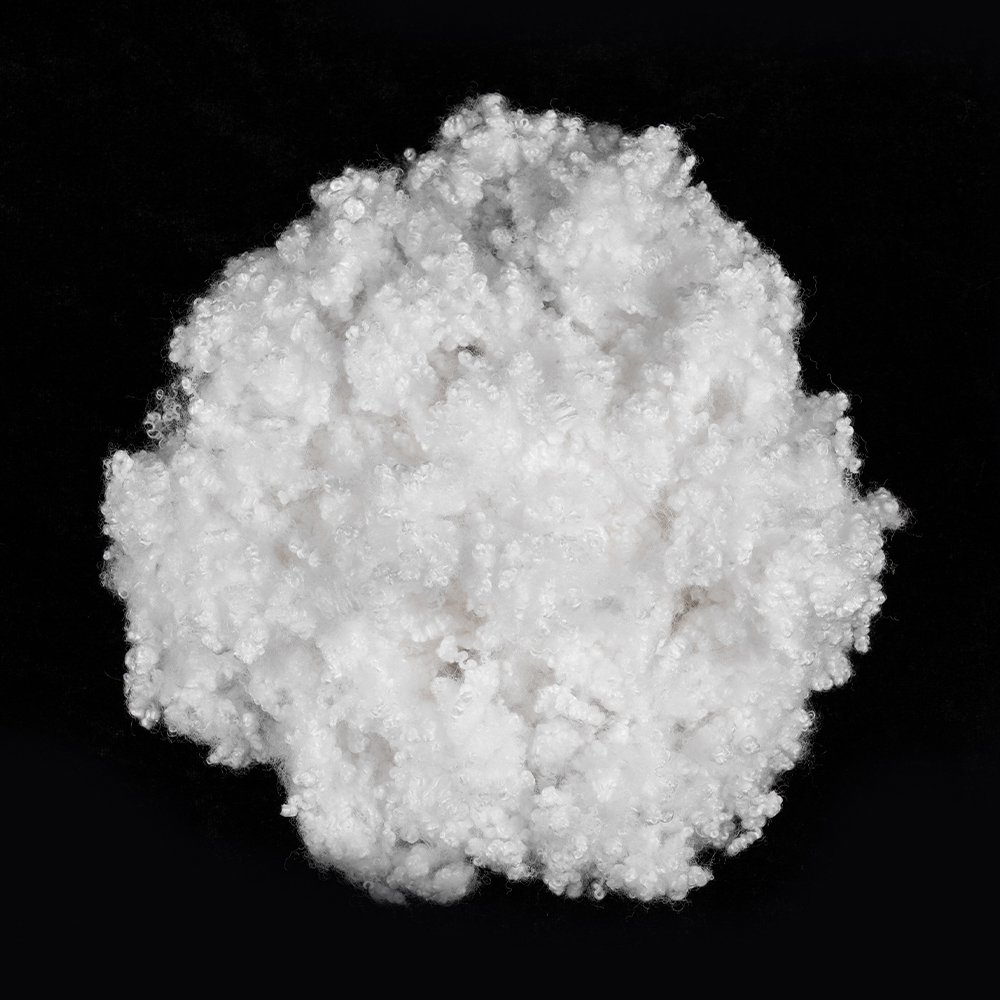
3D HCS Polyester Staple Fiber
-
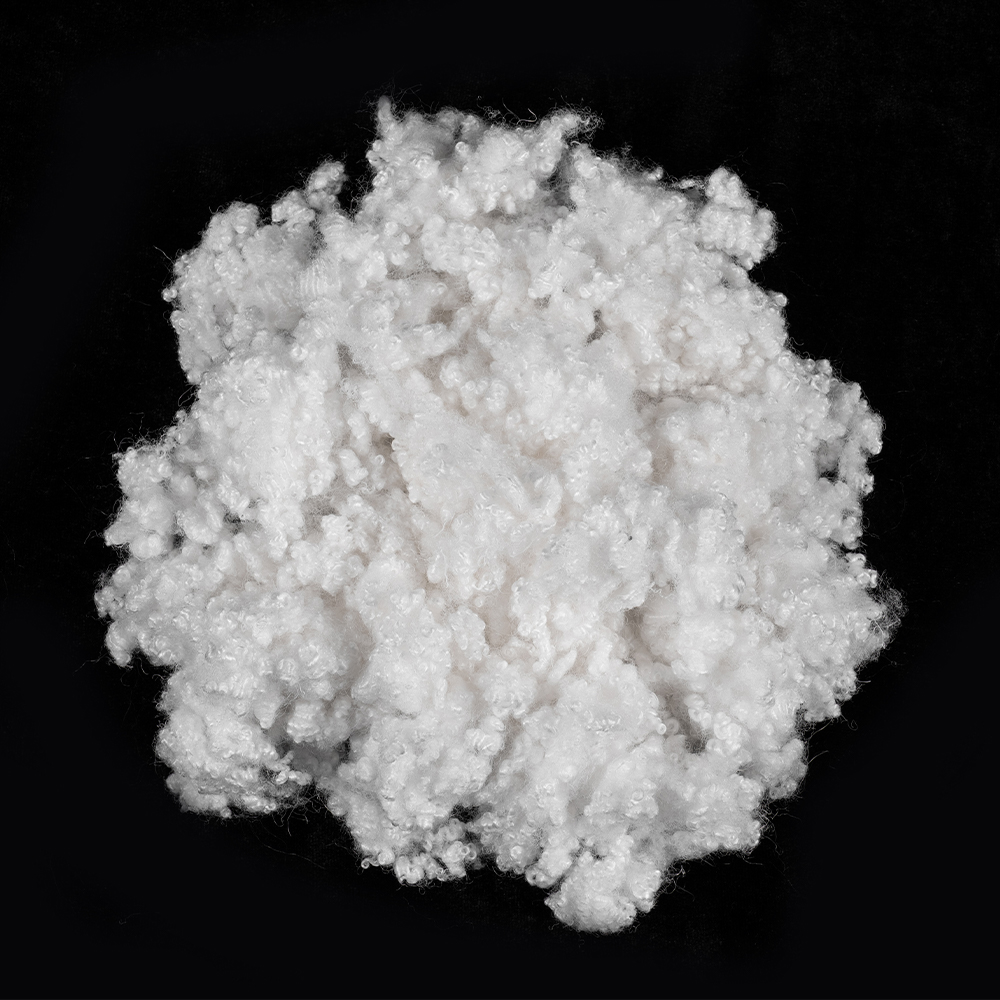
7D HCS Polyester Staple Fiber
-
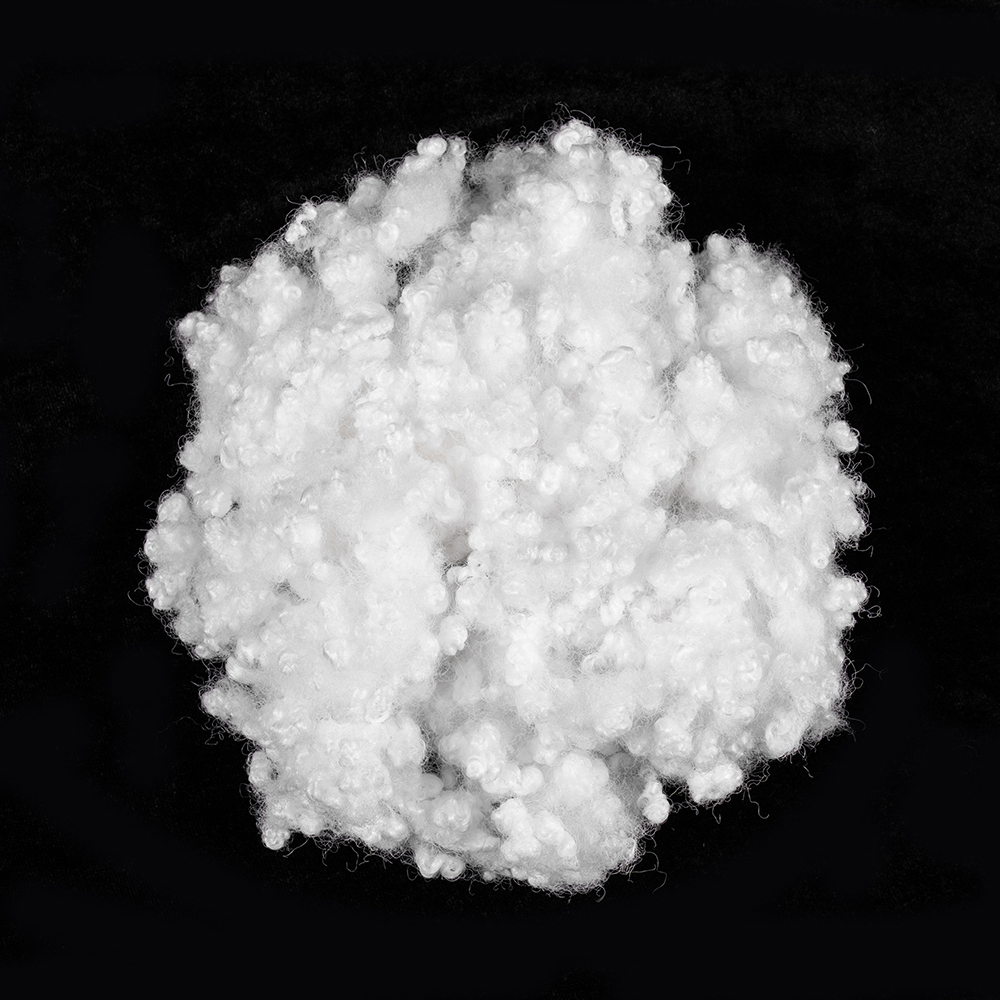
15D HCS Polyester Staple Fiber
-
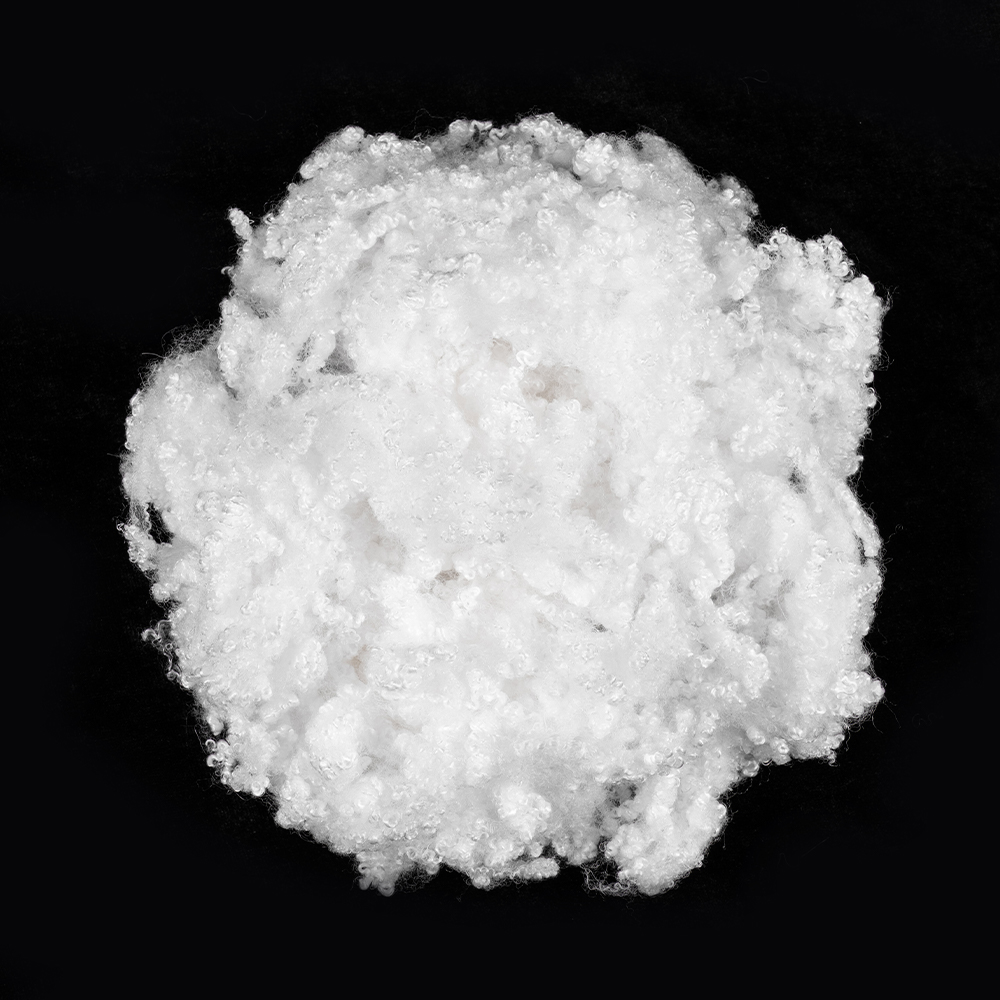
3D*64MM HC Polyester Staple Fiber
-
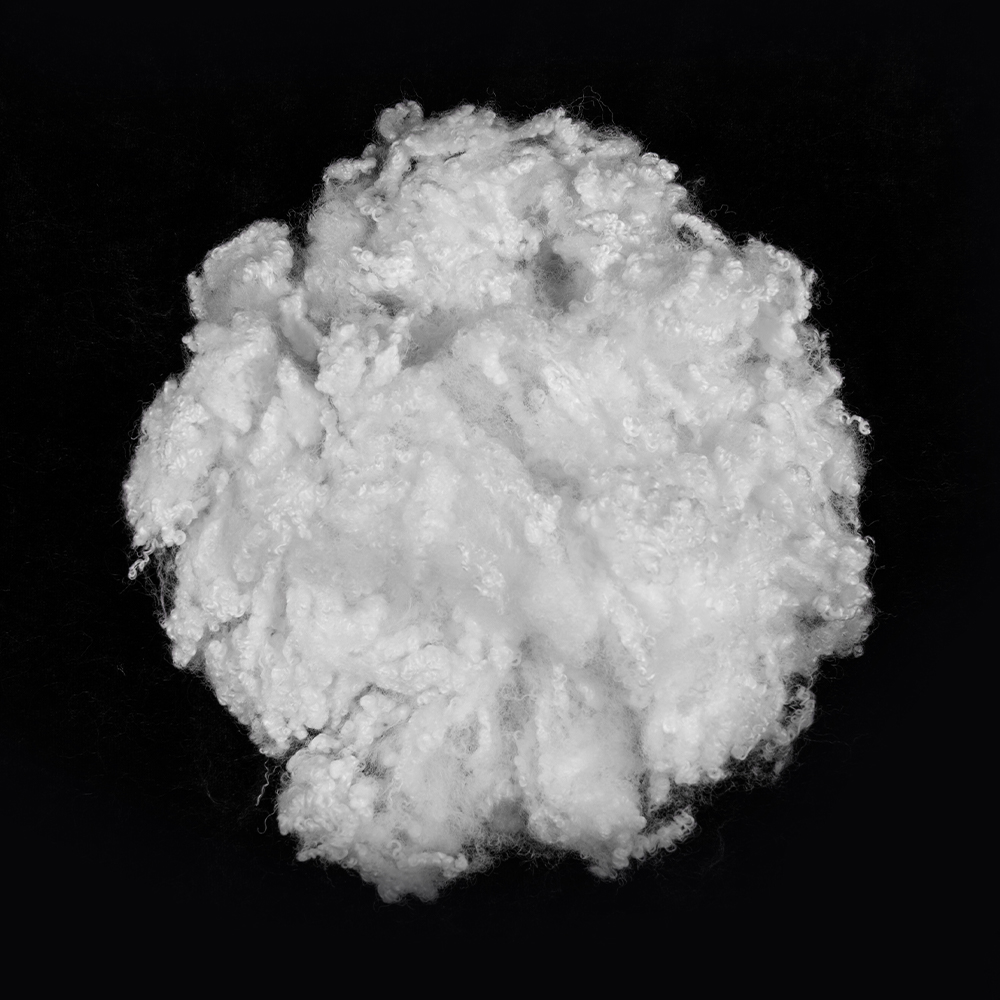
7D*64MM HC Polyester Staple Fiber
-
15D*64MM HC Polyester Staple Fiber
-
Quick Links
Home About Us Products FAQ News Contact Us -
Product Links
Polyester Staple Fiber Pre-oriented Yarn/POY Polyester Chip/PET Chip -
About Us
About Us Factory Honor FAQ -
Get In Touch
E-mail:
[email protected]Phone:
+86-130 8198 6637Tel:
+86-0574-63732888Address:
Haidianrong Village, Longshan Town, Cixi City, Ningbo, Zhejiang Province, China.
