-
 Welcome to Huaxing Technology
-
 Email us: [email protected]


 中文简体


Sofa and Cushion Filling: Choosing Polyester Fiber Specs That Hold Shape
Content
- 1 Sofa and Cushion Filling: What the Term Covers on a Purchase Order
- 2 Hollow Conjugate Fibre: The Workhorse of Seat Cushion Fill
- 3 Low-Melt Fibre: The Reason a Cushion Keeps Its Shape
- 4 Micro Fibre for Back Cushions, Armrests and Wrap Layers
- 5 Matching the Fill to the Cushion Type
- 6 What to Confirm Before You Book the Container
- 7 Questions Buyers Ask Most
A three-seat sofa comes back to the workshop after fourteen months with a seat that bottoms out and a front edge full of lumps. The fabric is intact, the foam has held, and the frame is fine. What failed is the polyester filling, and in most cases the reason is simple: the cushion was ordered by denier alone, with no discussion of hollow structure, crimp, silicone finish or bonding.
The short answer: use hollow conjugate fibre with a stable spiral crimp in the 7D to 15D range for seat cores, add low-melt fibre as a thermal binder if the cushion must survive repeated compression without drifting, and drop to 3D or micro fibre for back cushions and scatter pillows. The rest of this article explains why those numbers behave the way they do, and where specifications usually slip during sampling and bulk production.
Sofa and Cushion Filling: What the Term Covers on a Purchase Order
"Sofa and cushion filling" is not a single material. In practice it resolves into four fibre families, each with its own denier, cut length and surface treatment, and each behaving differently under load.
- The hollow lumen traps air and the spiral crimp acts as a small spring, so the fibre provides volume without weight.
- Low-melt fibre has a sheath that fuses at a lower temperature than the core, bonding contact points during curing.
- Micro fibre sits at 1.2D and finer, giving a dense, soft surface rather than bulk.
- Solid and POY-derived fills are used where a firmer, less airy hand is required.
Denier (D) is the weight in grams of 9,000 metres of filament, so a higher number means a coarser, stiffer filament. A 3D fibre feels soft and collapses easily; a 15D fibre resists point loads but can read as lumpy under a thin cover. Most failures start when a soft fibre is specified for a seat that carries 60 to 90 kg of dynamic load for eight hours a day.
Reading H, HC and HCS
H means hollow, HC means hollow conjugate (two polymers spun side by side to create a permanent three-dimensional crimp), and HCS means hollow conjugate with a silicone spin finish. Non-silicone HC keeps the same structure but has a grippier surface, which matters when the fibre has to bond into a stable core rather than slide freely.
Hollow Conjugate Fibre: The Workhorse of Seat Cushion Fill
For fixed seat cushions, hollow conjugate fibre is still the most cost-effective way to combine loft, recovery and air movement. The three-dimensional crimp resists flattening better than mechanical stuffer-box crimp, and the hollow cross-section gives more volume per kilogram, which translates directly into fill weight savings.
| Fibre family | Denier range | Common cut length | Role in a cushion | Point to watch |
|---|---|---|---|---|
| Silicone-treated hollow conjugate (HCS) | 3D / 7D / 15D | 64 mm | Loft and softness, low friction, quick recovery | Silicone can weaken thermal bonding in blends |
| Non-silicone hollow conjugate (HC) | 3D / 7D / 15D | 64 mm | Grippier surface, better for bonded cores | Slightly harsher hand, needs clean carding |
| Low-melt fibre | 2D / 4D | 51 mm, 64 mm | Thermal bonding and shape retention | Over-curing and a boardy hand at high ratios |
| Micro fibre | 1.2D and finer | 25 mm, 32 mm | Surface softness, wrap layer, down-like feel | Pilling and poke-through if entanglement is poor |
The choice between silicone-treated and untreated fibre is where most specification arguments begin. Silicone reduces fibre-to-fibre friction, so the fill opens faster, feels slicker and re-lofts after compression. Non-silicone fibre grips, which helps when a carded web has to hold together or when low-melt bonding needs clean fibre surfaces to fuse. A practical compromise is a silicone-treated surface layer over an untreated bonded core. Our guide on how to choose hollow conjugate fiber filling materials covers that layering logic in more detail.
A typical 7D 64mm non-silicone hollow conjugate grade is the specification most often quoted for bonded seat cores, because 7D gives enough stiffness to resist bottoming out while still opening into an even web.
Low-Melt Fibre: The Reason a Cushion Keeps Its Shape
Hollow fibre on its own relies on entanglement to stay in place, and entanglement relaxes with use. Low-melt fibre solves that by fusing at contact points, turning a loose web into a three-dimensional network that resists migration from the seat centre toward the seams.
Blend ratios matter more than most buyers expect. Between 15% and 30% low-melt content is the usual working window; below that the bonding is too weak to survive repeated compression, and above it the cushion becomes firm and slightly harsh, with less loft recovery after unloading. Curing temperature is the second variable: run the oven too hot or too long and the fibre yellows, the core stiffens, and the cushion loses the spring that made it comfortable in the first place. Because silicone finish can interfere with fusion, bonded cores usually pair untreated hollow conjugate with low-melt fibre rather than a silicone-treated grade.
Micro Fibre for Back Cushions, Armrests and Wrap Layers
Micro fibre is not a bulk filler. At 1.2D it is used as a thin surface layer over a coarser core, or as the whole fill in thin back cushions where a down-like hand matters more than load support. A 1.2D 32mm micro fibre over a 7D hollow conjugate core gives three benefits at once: the coarse fibre stops poking through the cover, the surface feels soft, and the total fill weight drops because the core is doing the structural work.
The trade-off is processing. Fine denier needs gentler carding and better control of static, and a poorly entangled micro layer will pill or migrate through ticking within a few months. If the cushion will be vacuum-packed for shipping, micro fibre also recovers more slowly than 3D hollow conjugate and may need a longer settling time after unpacking.
Matching the Fill to the Cushion Type
One blend does not fit every position on a sofa. The table below shows the working combinations we see most often in sampling rooms, with the risk attached to each.
| Cushion type | Core blend | Denier focus | Why it works | Main risk |
|---|---|---|---|---|
| Fixed sofa seat | 70% 7D HC + 30% 4D low melt | 7D | Firmness with a bonded, stable core | Boardy hand if low melt is pushed higher |
| Removable seat cushion | 3D and 7D HC mix | 3D to 7D | Easy re-lofting after washing | Fill drifting toward the seams |
| Back cushion | Micro wrap over 7D core | 1.2D / 7D | Soft surface, no poke-through | Loss of loft in thin fills |
| Scatter and throw pillow | 100% 3D HCS or micro | 3D / 1.2D | Down-like softness and drape | Under-filled shells look limp |
| Armrest and bolster | 15D HC | 15D | Support under concentrated load | Lumpy surface under thin covers |
| Sofa bed and topper | 7D HC + low melt | 7D | Recovery after repeated folding | Compaction over time |
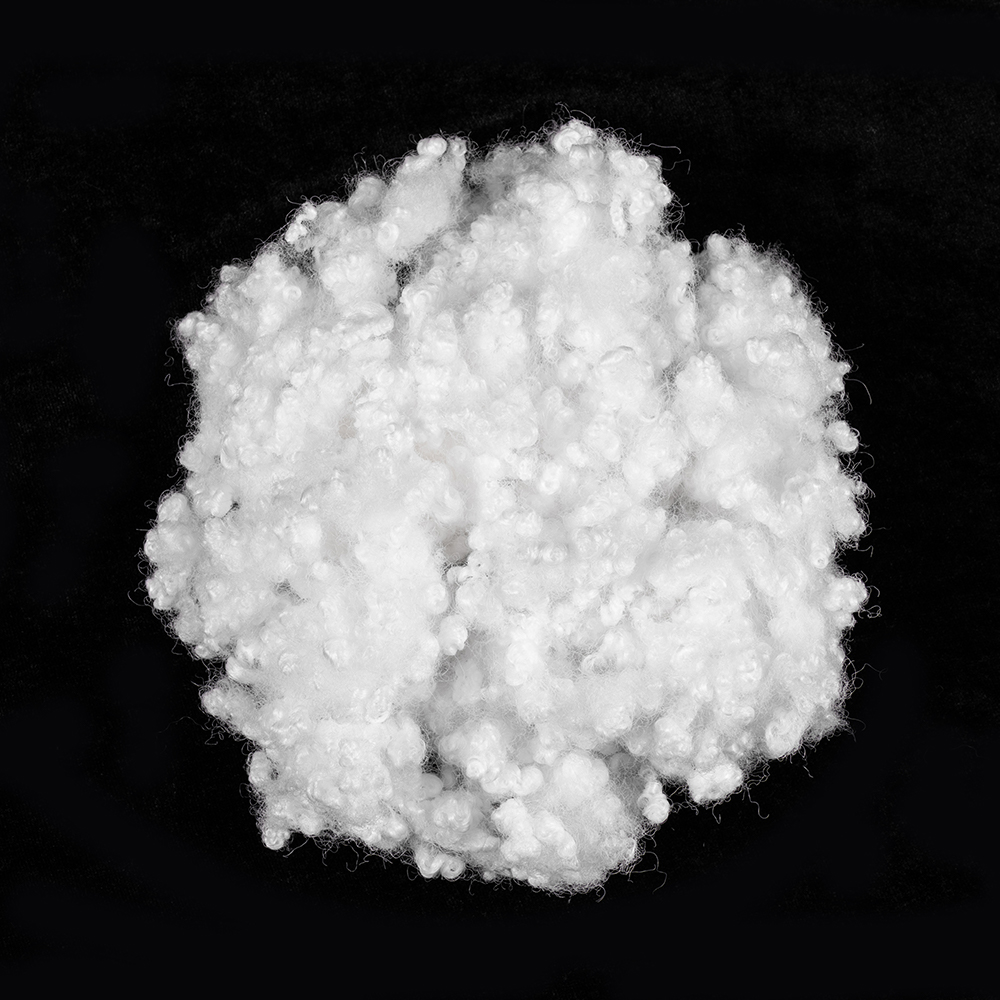 15D Silicone-Treated Hollow Conjugated Polyester Staple FiberA firmer, high-strength filling option for sofa seats needing point-load support; silicone treatment helps reduce scratchiness from the coarser 15D filament.View Product →
Where a firmer seat is required without adding foam, a 15D silicone-treated hollow conjugate grade provides the point-load resistance, and the silicone finish keeps the coarser filament from feeling scratchy through the ticking.
What to Confirm Before You Book the Container
Most quality disputes on filling fibre are tolerance disputes, not material disputes. Confirm these items in writing before bulk production:
- Denier and cut length tolerance, with the test method and sampling plan named.
- Silicone pick-up percentage, since finish level changes hand feel and bonding behaviour.
- Crimp number and crimp stability after compression, not just the value on the certificate.
- Moisture and oil content, because both affect opening behaviour on the card.
- Bale density and packaging, which determine how the fibre opens on your line.
- A trial run of the actual blend at your curing temperature, checked for loft recovery after 24 hours.
Ask for the same grade in a small sample before the full order. A 2 kg sample through your own carding line tells you more about a filling fibre than any data sheet. If you want to run that trial against a specific cushion construction, contact our team with the denier, blend ratio and target fill weight, and we can match the specification to your line.
Questions Buyers Ask Most
What denier is best for sofa seat cushions?
7D hollow conjugate is the usual starting point. Move to 15D if the seat carries heavy load or the cushion is thin; move to 3D only for back cushions or soft-top constructions.
Does silicone treatment really change performance?
Yes, but mainly in hand feel and recovery speed rather than durability. Silicone lowers friction so the fill opens faster and re-lofts sooner; untreated fibre bonds better when low-melt is in the blend.
How much low-melt fibre should be in a cushion core?
Commonly 15% to 30% by weight. Higher ratios increase shape retention and reduce migration, but the cushion becomes firmer and loses some of its spring.
Why does the front edge of a seat flatten first?
Load concentrates there and the fill has the least room to move. A bonded core, a slightly higher fill weight at the edge, or a baffled insert addresses the cause better than simply adding more fibre overall.
A cushion that holds its shape for years is not the result of a premium fibre alone. It comes from matching denier to load, choosing hollow structure for loft, deciding whether silicone finish or clean bonding surfaces matter more, and confirming tolerances before the container ships. Get those four decisions right and the filling stops being the part of the sofa nobody wants to talk about.
Ningbo Huaxing Technology Co., Ltd.
-
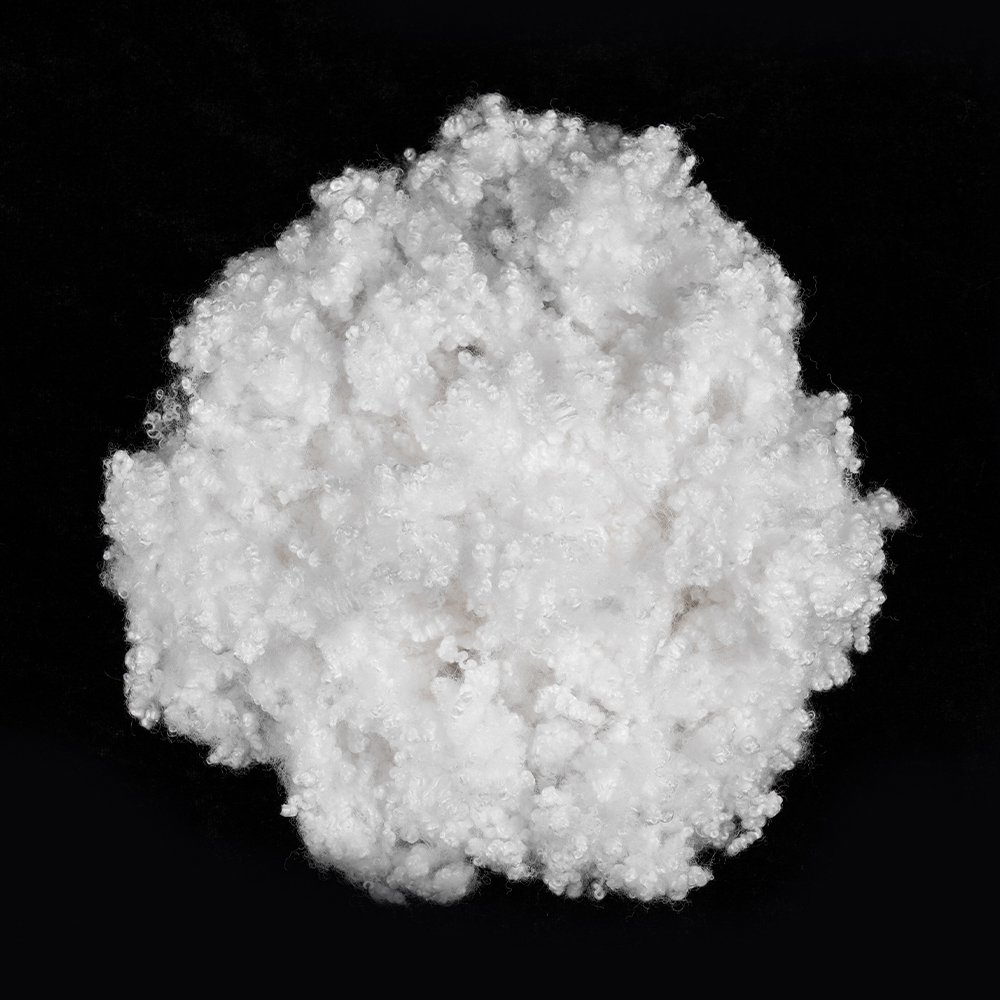
3D HCS Polyester Staple Fiber
-
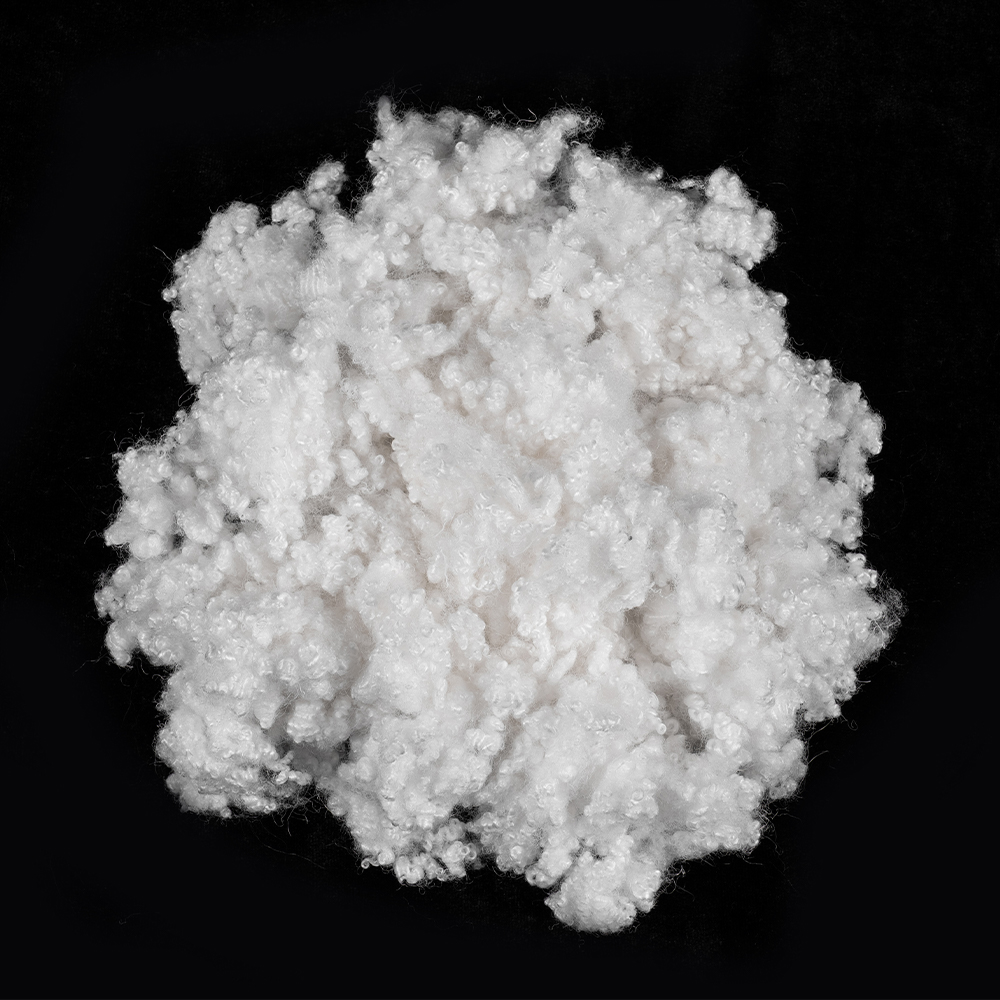
7D HCS Polyester Staple Fiber
-
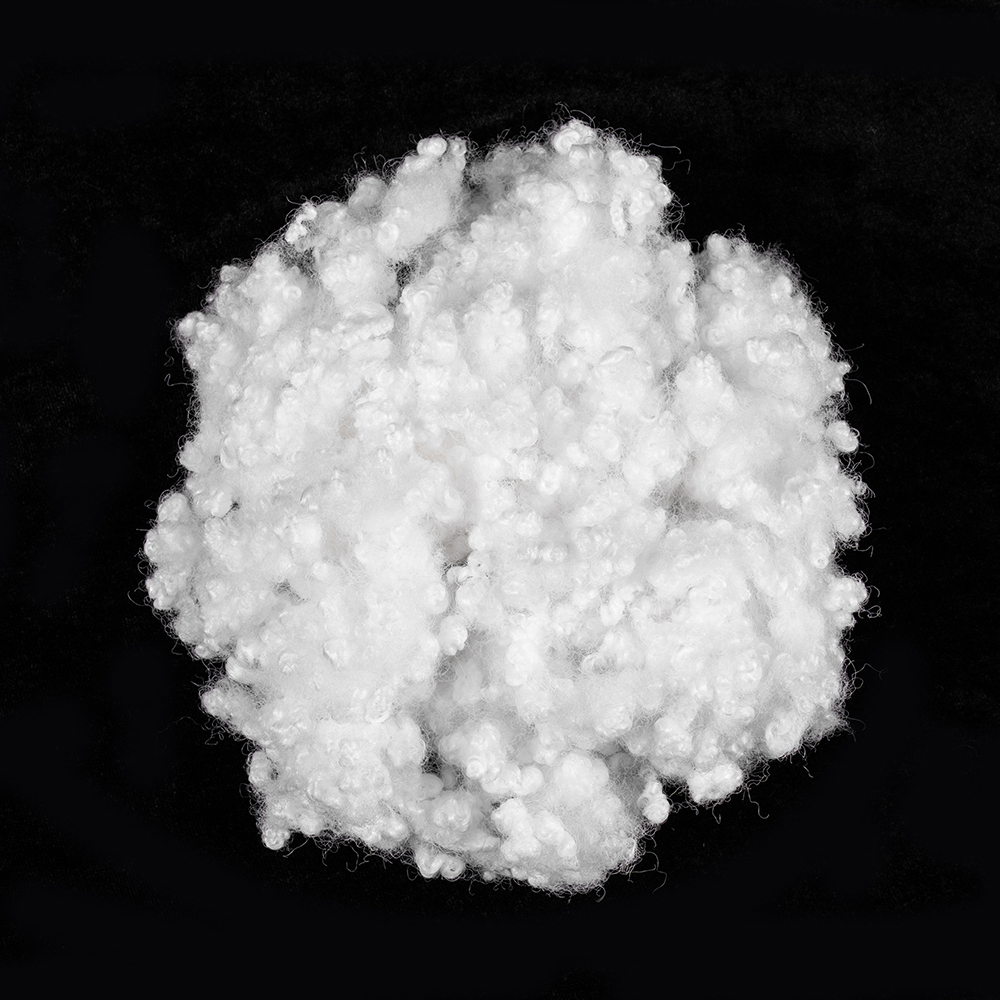
15D HCS Polyester Staple Fiber
-
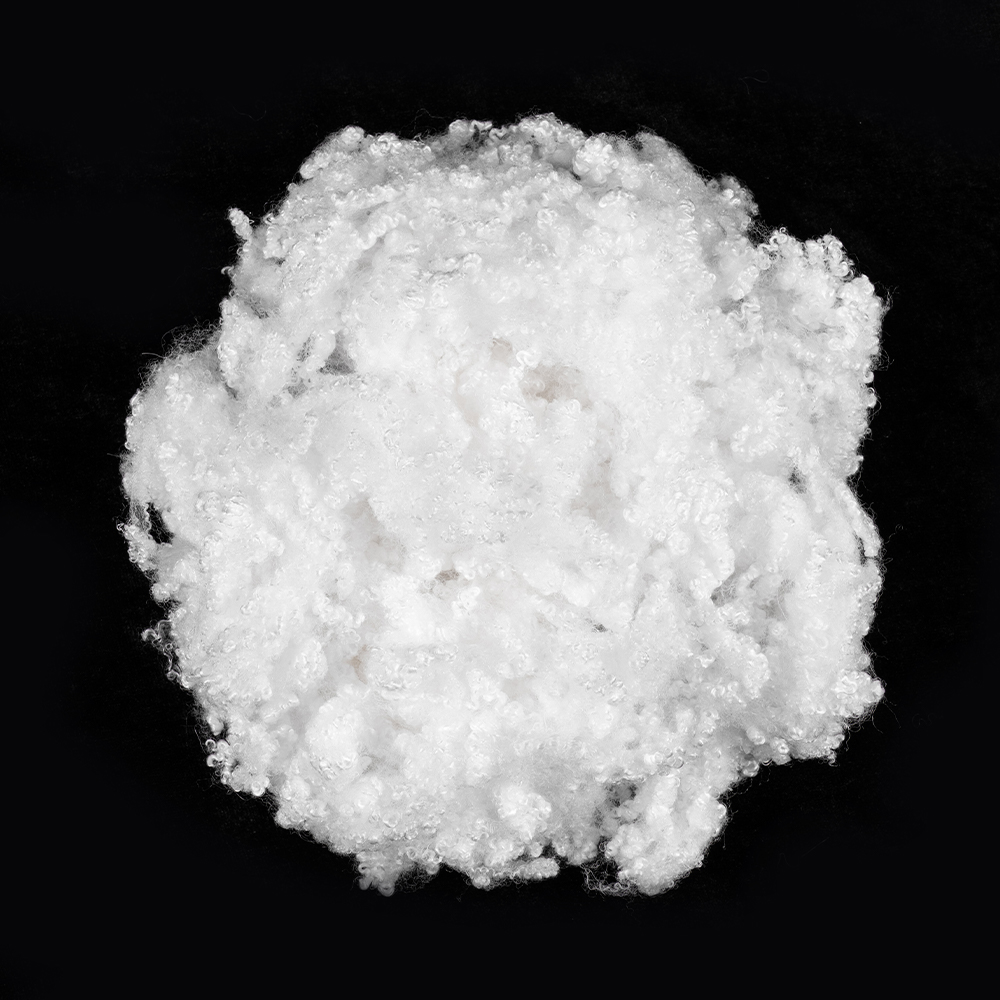
3D*64MM HC Polyester Staple Fiber
-
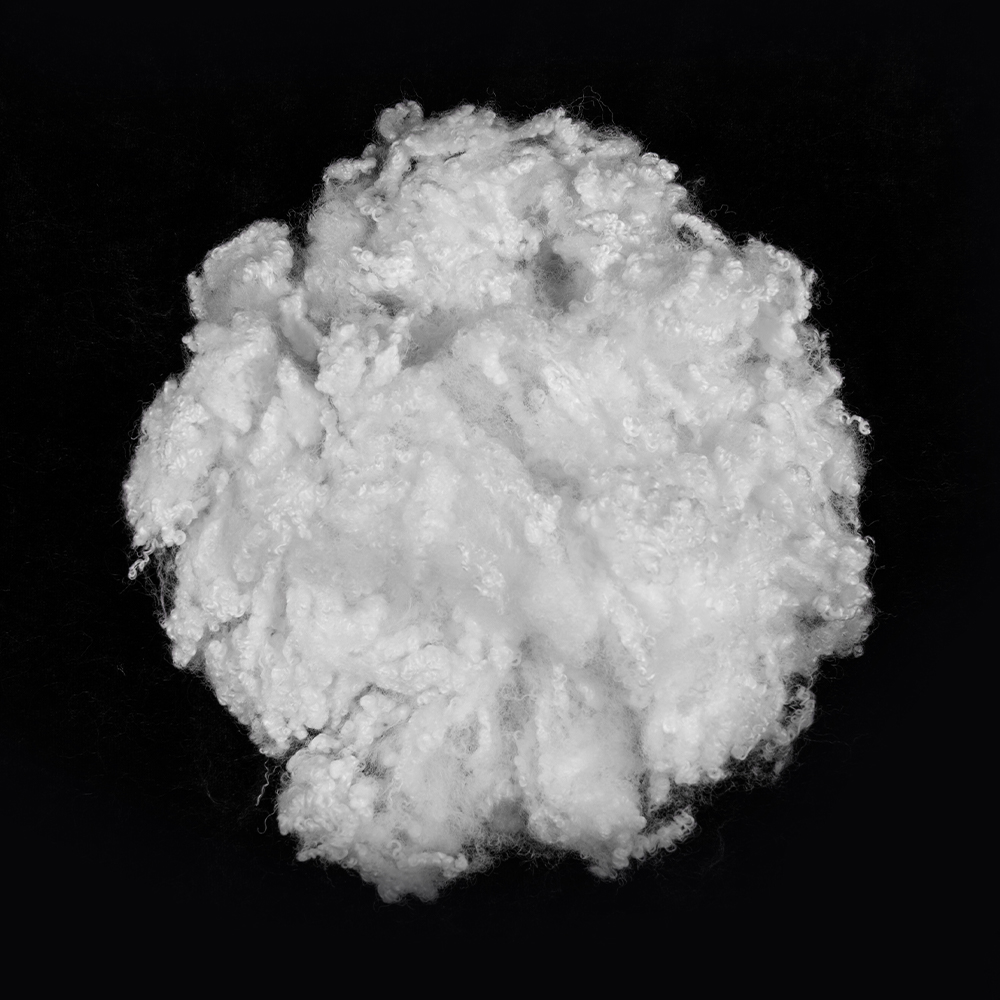
7D*64MM HC Polyester Staple Fiber
-
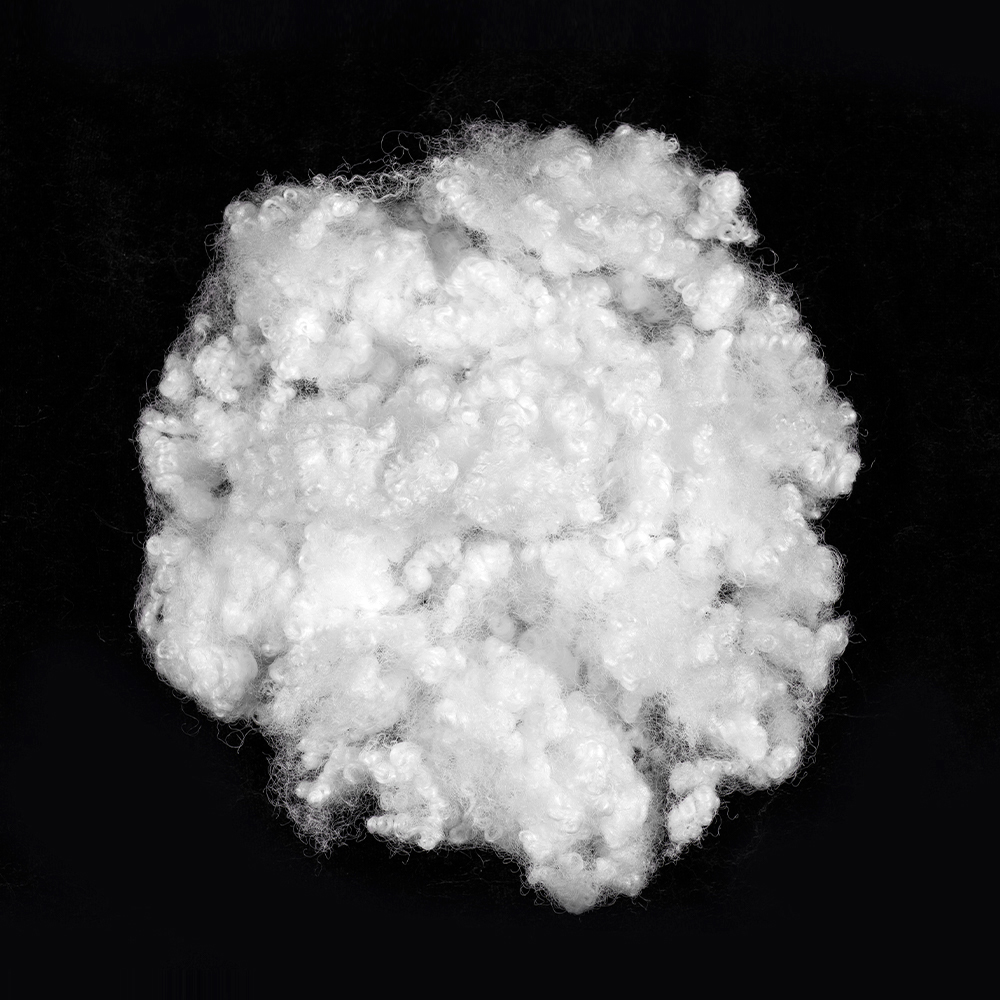
15D*64MM HC Polyester Staple Fiber
-
Quick Links
Home About Us Products FAQ News Contact Us -
Product Links
Polyester Staple Fiber Pre-oriented Yarn/POY Polyester Chip/PET Chip -
About Us
About Us Factory Honor FAQ -
Get In Touch
E-mail:
[email protected]Phone:
+86-130 8198 6637Tel:
+86-0574-63732888Address:
Haidianrong Village, Longshan Town, Cixi City, Ningbo, Zhejiang Province, China.
