-
 Welcome to Huaxing Technology
-
 Email us: [email protected]


 中文简体


Sleeping Bag Insulation Guide: How Hollow Polyester Fiber Fill Traps Heat
Content
- 1 What insulation actually does inside a sleeping bag
- 2 Why hollow conjugate fiber carries most synthetic fills
- 3 Denier, cut length and finish: matching fiber to the fill design
- 4 Low melt fiber and micro fiber: the parts of the fill nobody sees
- 5 Down, loose hollow staple or bonded wadding
- 6 What to verify before approving a bulk shipment
- 7 FAQ
A sleeping bag does not warm you because it contains fiber. It warms you because the fiber holds still air in thousands of small pockets and slows the rate at which that air is replaced by colder air. Solid polyester conducts heat roughly five times faster than still air, so every design decision that raises the polymer share of a fill — thicker filaments packed tight, heavy finish build-up, collapsed crimp — works against warmth. That is why a well-built 200 gsm hollow fiber wadding can outperform a heavier solid-fiber batt, and why "fill weight" alone tells a buyer very little.
The short answer: hollow conjugate polyester staple fiber in the 3D–15D range, with a controlled spiral crimp and a finish matched to the downstream process, is the most cost-effective insulation core for synthetic bags. What follows explains the numbers behind that statement, and the cases where it stops being true.
What insulation actually does inside a sleeping bag
Heat leaves a sleeper by three routes: conduction into the ground and the shell, convection through moving air, and radiation across the air gaps. A fill only interferes with two of them. It breaks up air into cells small enough that convection currents cannot form, and it scatters radiant heat across many fiber surfaces. Both effects scale with the number and stability of air cells, not with the mass of polymer.
Compression is where specification sheets and real bags diverge. Under a sleeper's torso, fill thickness commonly drops by more than half, and that area is carried by the sleeping pad rather than the bag. What still matters overhead is loft recovery: how quickly the fill springs back after a night of being flattened, and whether it keeps springing back after fifty nights. A fiber that recovers 85% of its loft after a 24-hour compression test will feel noticeably warmer in year three than one that recovers 70%.
Convection inside the bag is the second quiet failure. Short staple blown into wide baffles can shift, leaving thin spots along the seams. Baffle spacing, overfill ratio and whether the fill is bonded all change how much the insulation moves.
Why hollow conjugate fiber carries most synthetic fills
Two design features do the work. The hollow cross-section puts an air channel inside each filament, so a given weight of fiber occupies more volume and traps more still air. The conjugate structure — two polymer components with different shrinkage, spun side by side — produces a permanent three-dimensional spiral crimp. That crimp is what delivers bulk out of a compressed stuff sack and what keeps the fill from matting after washing.
The surface finish is the part buyers most often leave to the supplier, and it should not be. A silicone (polysiloxane) finish lowers fiber-to-fiber friction, improves opening and carding, controls static, and gives the slick, soft hand expected in a sleeping bag. A non-silicone finish is the right choice when the fiber has to bond, coat or laminate downstream, when silicone would interfere with adhesion, or when a silicone-free declaration is required by the brand. Choosing the wrong one does not show up in the fiber test report; it shows up as weak web strength or a fill that feels slightly tacky.
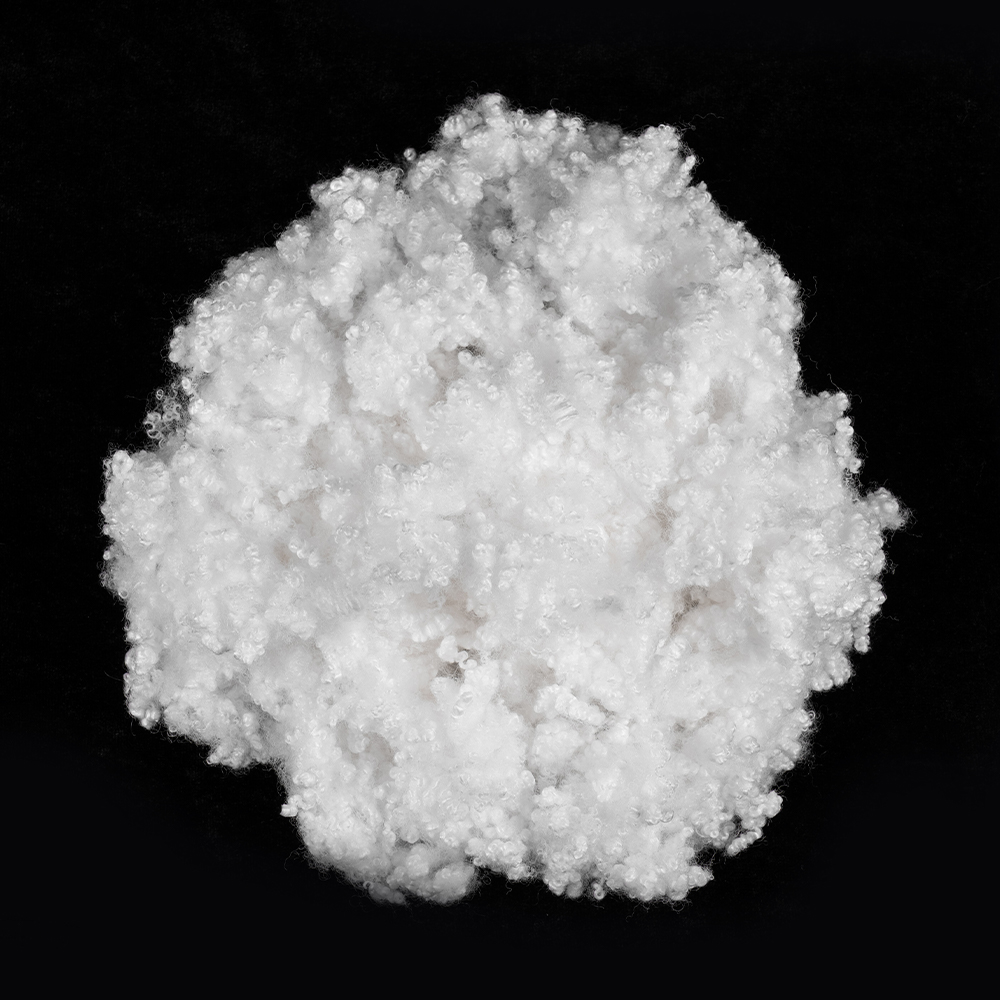 Hollow Conjugate Polyester Staple Fiber VariantsReview 3D, 7D and 15D hollow conjugate options to match loft, support and cut length to filling or processing needs.View Product →
Denier, cut length and finish: matching fiber to the fill design
Denier is a weight per length figure: one denier equals one gram per 9,000 meters. Finer filaments give more fibers per gram, a denser web and a softer hand, but they resist compression less. Coarser filaments give more loft per gram and a firmer structure that holds its shape in a deep baffle. Cut length then follows the process: 64 mm is a standard carding length for wadding lines, while 25 mm and 32 mm suit airlaid and blending routes where shorter fibers disperse more evenly.
| Specification | What it changes in the bag | Typical role |
|---|---|---|
| 3D hollow conjugate (HCS) | Fine filament, high fiber count per gram, soft hand, moderate spring-back | Light and mid-season fills, 120–200 gsm wadding |
| 7D hollow conjugate (HCS) | Balanced bulk and softness, good recovery after compression | Three-season fills, often blended with 3D for hand |
| 15D hollow conjugate (non-silicone) | Coarse filament, highest loft per gram, firmer structure | Cold-weather fills, thick baffles, bonding-sensitive builds |
| 2D / 4D low melt fiber | Sheath softens at roughly 110–130 °C and welds contact points on cooling | Binder inside bonded wadding, replaces latex, locks fibers in place |
| 1.2D micro fiber | Very high surface area, down-like softness, dense and smooth web | Surface layers, soft-touch fills, blending component |
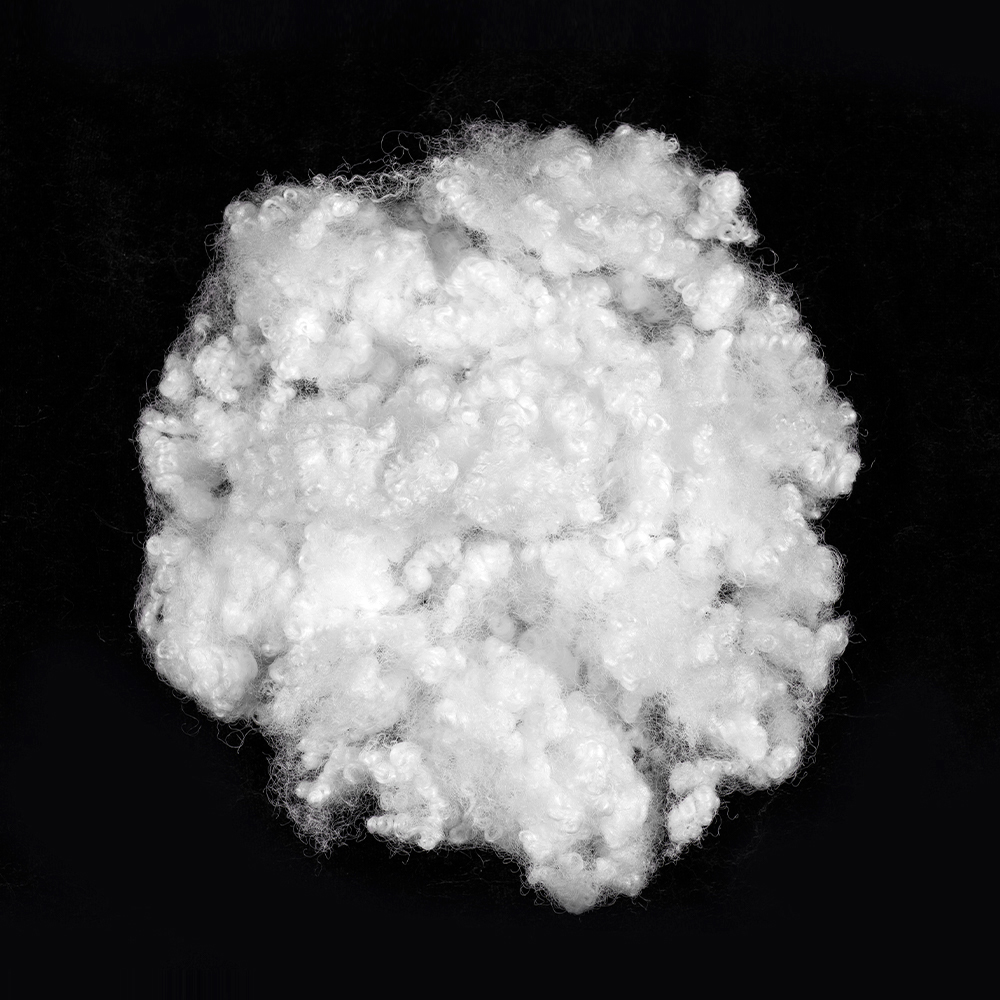 15D*64MM HC Polyester Staple FiberA firmer, high-support hollow conjugate fiber for durable fills where structure and abrasion resistance matter more than softness.View Product →
A 15D non-silicone grade at 64 mm is the usual starting point when a bag needs maximum loft in a deep baffle and the wadding will be thermally bonded; a 3D/7D silicone blend is the usual starting point when hand feel and drape matter more than absolute bulk. For a step-by-step comparison of hollow fiber grades against fill weight and target temperature, see this guide to choosing hollow conjugate fiber filling materials.
Low melt fiber and micro fiber: the parts of the fill nobody sees
Short staple inside a wide baffle migrates. It creeps toward seams, works through shell fabric, and leaves cold bands where the fill has thinned. One practical answer is a small share of low melt bicomponent fiber blended into the wadding: the sheath softens during curing and welds the crossing points, so the web behaves like a stable lattice instead of loose fluff. That bonding step also lets a producer reduce or drop latex binders, which lowers volatile organic compounds and avoids the stiff, papery feel that heavy chemical bonding creates.
Micro fiber plays the opposite role. At 1.2D the filaments are fine enough to soften the surface layer and give the fill a smoother, more down-like hand without adding weight. The trade-off is cost and a greater sensitivity to finish quality — fine filaments show static and neps much faster than 7D or 15D. Over-bonding is the other risk: too much binder restores fiber stability but removes the loft you paid for, which is why binder percentage should be specified as a range and verified by loft testing, not by visual inspection.
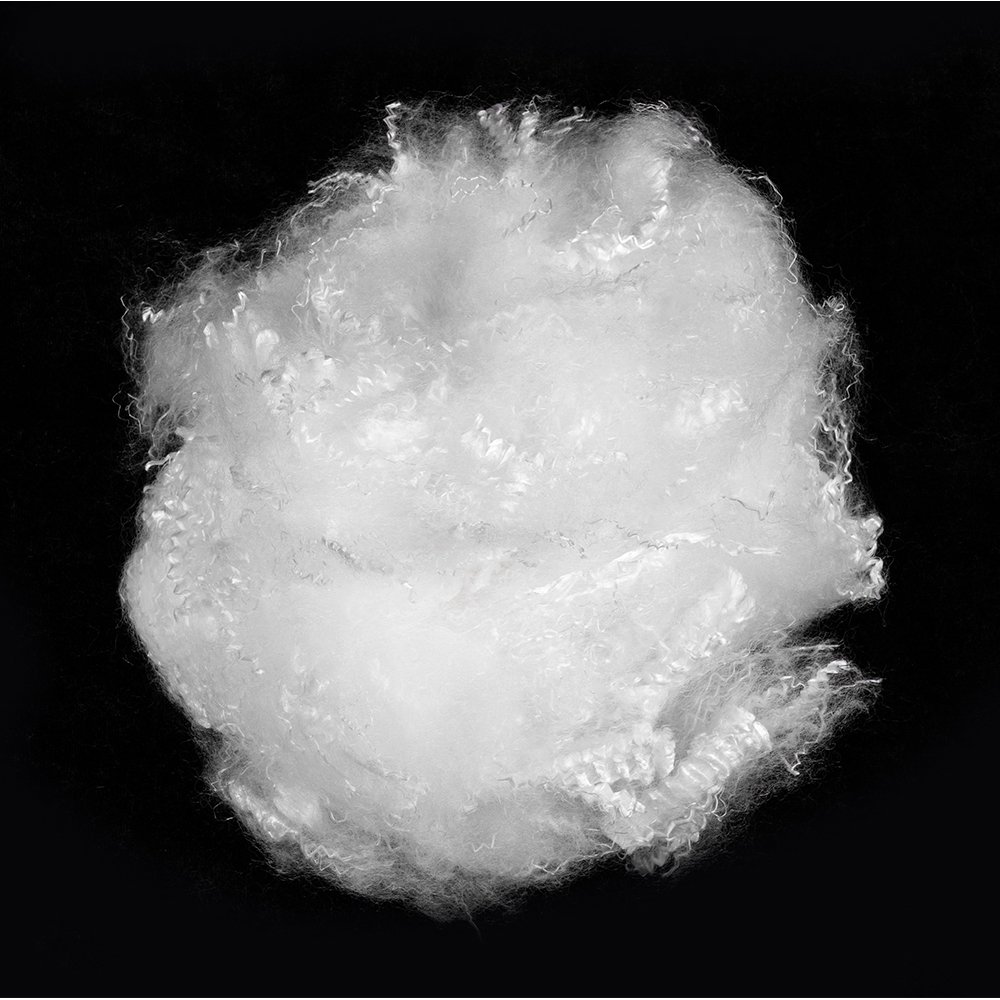 Low Melt Polyester Staple Fiber for Thermal BondingSheath-core thermal-bonding fibers for nonwovens, mattress and pillow fills, automotive interiors and industrial applications, available in three denier and length options.View Product →
Down, loose hollow staple or bonded wadding
All three can be sold as "warm". The differences show up in pack volume, damp conditions and year five.
| Attribute | Down | Loose hollow staple | Bonded polyester wadding |
|---|---|---|---|
| Warmth-to-weight | Highest, roughly 550–900 fill power | 20–35% heavier for the same warmth | Close to loose staple, plus binder weight |
| Behaviour when wet | Loses most loft; treated down helps but does not solve it | Keeps most loft; polyester absorbs well under 1% moisture | Keeps most loft and dries quickly |
| Pack volume | Smallest | Roughly 1.5–2 times the down volume | Bulkiest; resists compression |
| Loft over years | Excellent if stored loose and washed rarely | Gradual loss; partly recoverable after a careful wash | Stable, but bonded points fatigue with heavy use |
| Best fit | Dry cold, weight-critical trips | Damp cold, rental fleets, high-use bags | Quilted and sewn-through construction, easy assembly |
The decision rule is blunt. If pack size is the hard constraint and the bag will stay dry, down still wins. If the bag will be used in sustained humidity, hired out repeatedly, or washed often, hollow polyester staple is the more predictable purchase. Bonded wadding makes sense when manufacturing simplicity, uniform thickness and controlled fiber migration matter more than minimum pack volume.
What to verify before approving a bulk shipment
Fiber data sheets rarely predict bag performance on their own. These checks catch most of the failures that reach a customer's tent:
- Loft recovery: compress a finished wadding sample under a fixed load for 24 hours, release, and measure thickness recovery after 30 minutes and 24 hours.
- Wash durability: five cycles at 30 °C, then repeat the loft test; matting after washing is usually a crimp or finish problem, not a fill weight problem.
- Migration: shake and tumble a stitched sample against the intended shell fabric and inspect for fiber strike-through at seams.
- Finish consistency: confirm silicone presence or absence with the supplier, and ask for oil pick-up tolerance — one or two percent variation changes hand feel noticeably.
- Denier and crimp stability: check denier variation and crimp count between lots, since both shift loft even when the label stays the same.
- Temperature rating: the finished bag's comfort and limit values should be established to EN/ISO 23537-1 by the brand; the fiber supplier's job is consistent loft, not the rating.
A 5% shortfall in loft under load is invisible on a component certificate and obvious at −5 °C.
FAQ
Is hollow fiber actually warmer than solid polyester?
Per gram, yes — the hollow core adds trapped air and reduces polymer weight. The gain is real but modest. Crimp stability and loft recovery after compression influence warmth far more than the hollow ratio alone.
Does synthetic insulation stop working when it gets wet?
No. Polyester absorbs under 1% moisture by weight and keeps most of its loft, so a damp synthetic bag still insulates. Water in the air spaces does raise heat loss, but the fill dries quickly compared with down.
Which denier suits a three-season bag?
7D hollow conjugate blended with 3D for hand feel covers most three-season designs. Move toward 15D when baffles are deeper and the target comfort rating drops below freezing.
Does the silicone finish wash out?
Partly, over repeated washing. Specify a wash-cycle target and test the finished wadding rather than relying on the fiber's initial finish level.
Specifying fill is easier when the conversation starts with the wadding gsm, baffle height, target comfort rating and wash cycle target instead of a single denier figure. If you are building a bag program around hollow conjugate, low melt or micro fiber and want the specification matched to your construction, send the requirements to our technical team and we will map the fiber grade to your process.
Ningbo Huaxing Technology Co., Ltd.
-
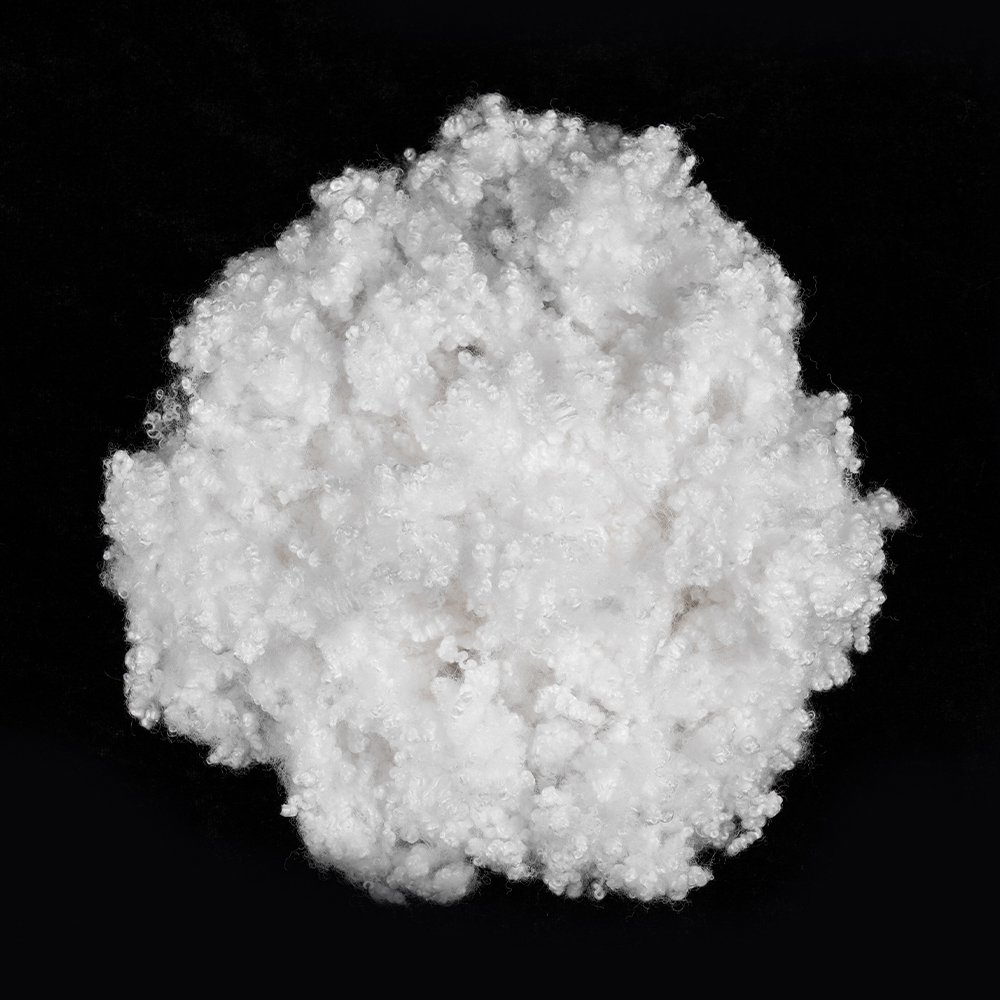
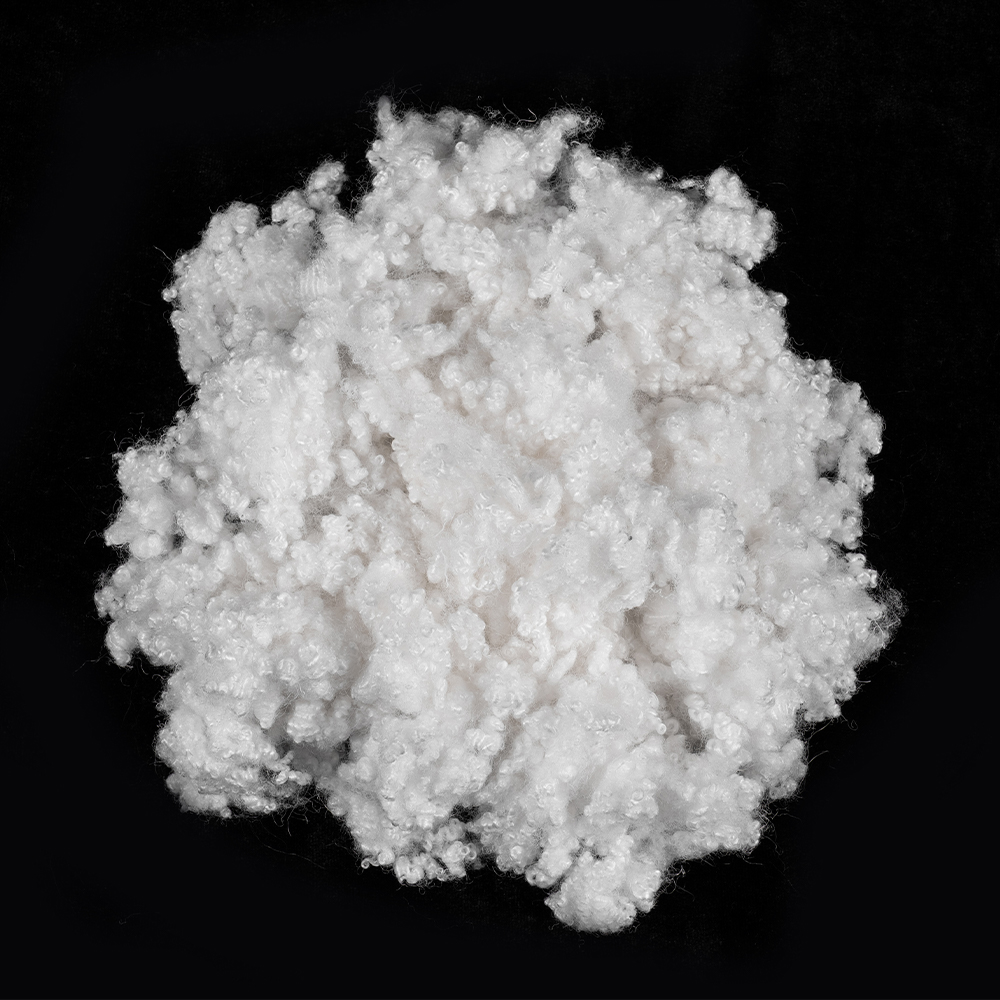
3D HCS Polyester Staple Fiber
-
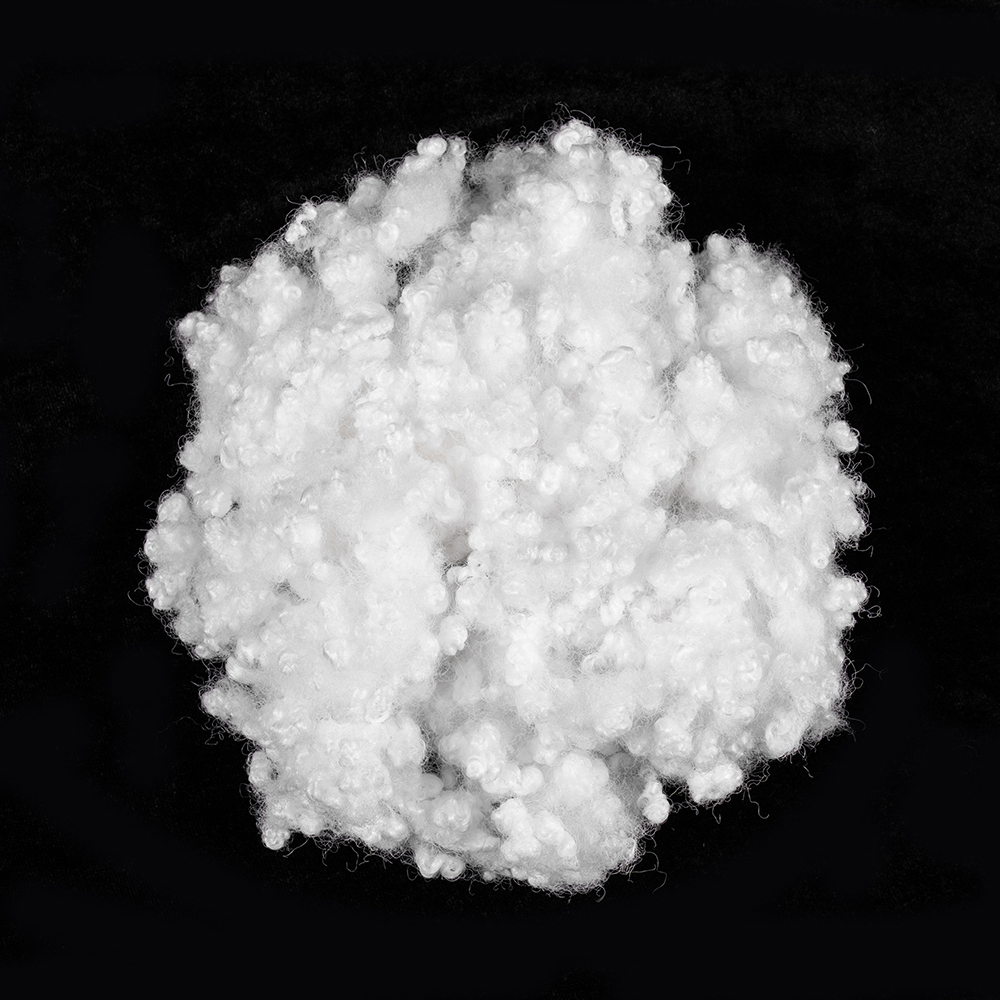
7D HCS Polyester Staple Fiber
-
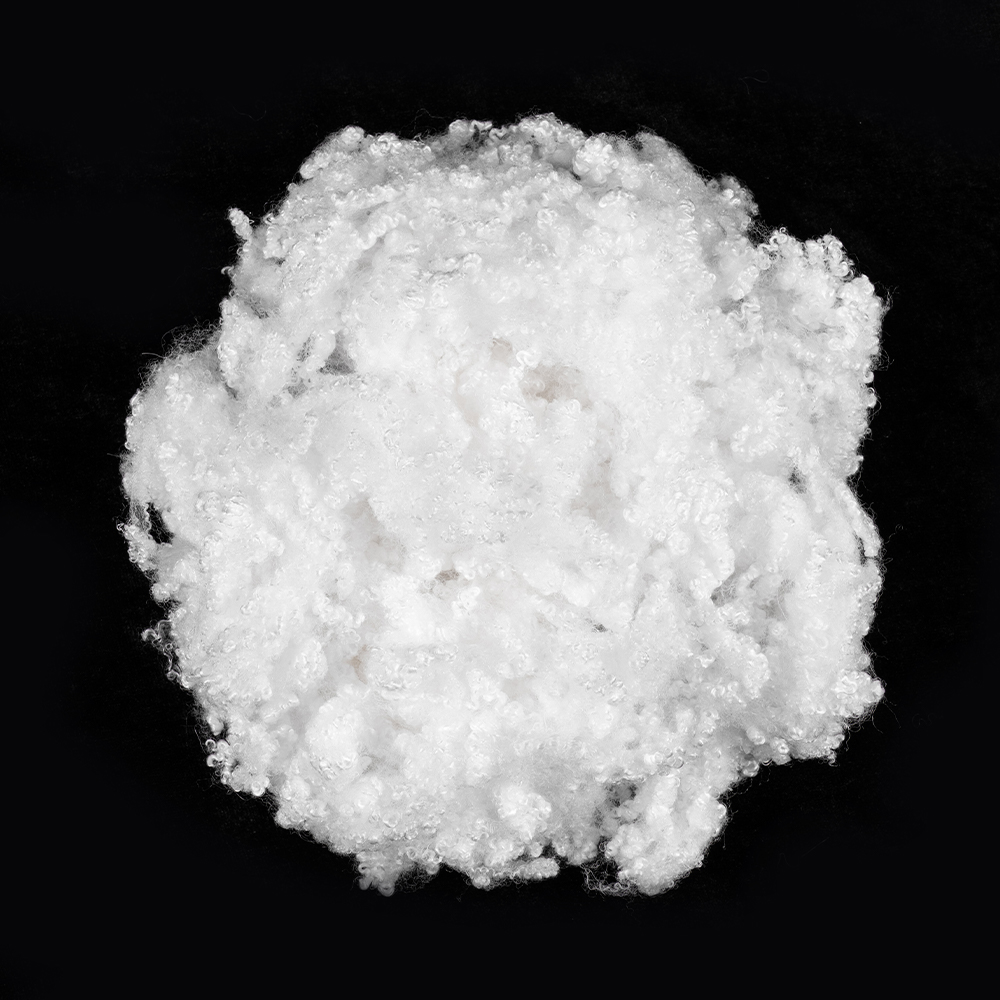
15D HCS Polyester Staple Fiber
-
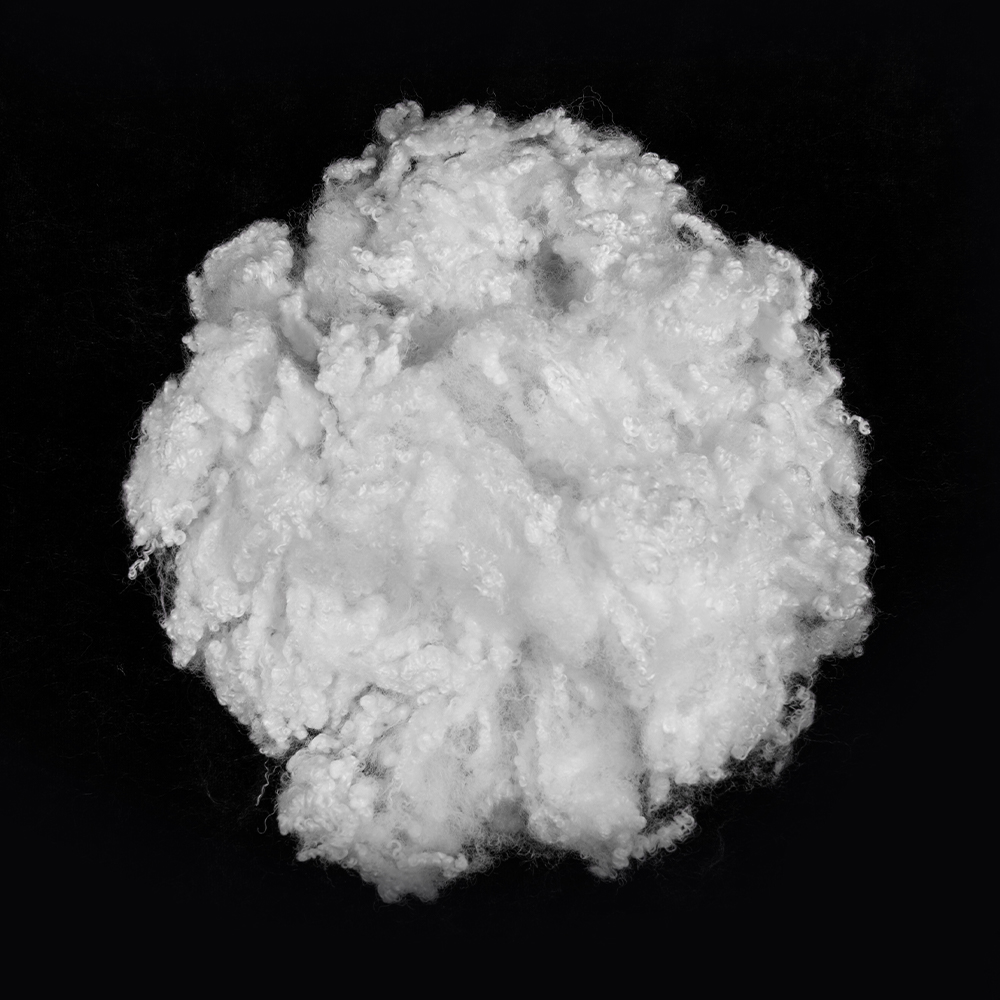
3D*64MM HC Polyester Staple Fiber
-
7D*64MM HC Polyester Staple Fiber
-
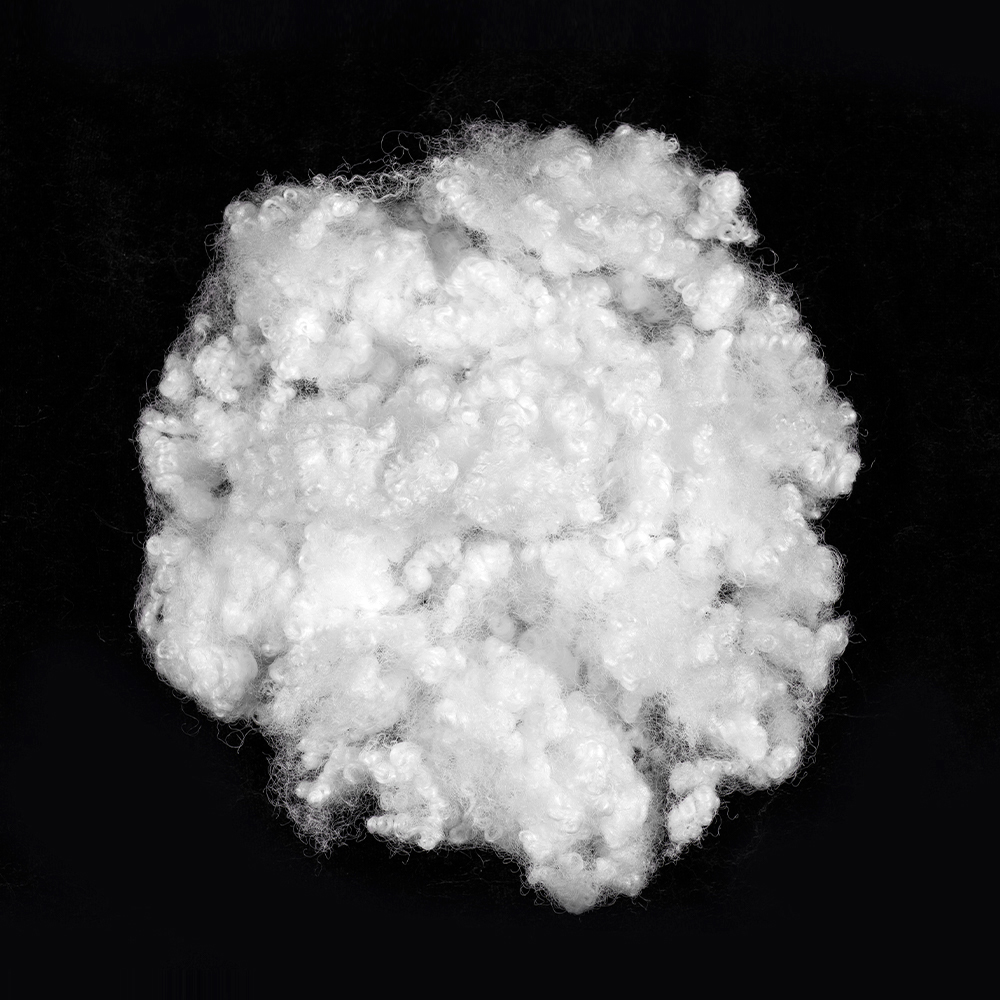
15D*64MM HC Polyester Staple Fiber
-
Quick Links
Home About Us Products FAQ News Contact Us -
Product Links
Polyester Staple Fiber Pre-oriented Yarn/POY Polyester Chip/PET Chip -
About Us
About Us Factory Honor FAQ -
Get In Touch
E-mail:
[email protected]Phone:
+86-130 8198 6637Tel:
+86-0574-63732888Address:
Haidianrong Village, Longshan Town, Cixi City, Ningbo, Zhejiang Province, China.
