-
 Welcome to Huaxing Technology
-
 Email us: [email protected]


 中文简体
中文简体

High-End Garment Fabric Raw Materials: Engineering Performance into Fibers
Content
- 1 What separates high-end garment fabric raw materials from commodity fiber?
- 2 The polymer stage decides what the fabric can become
- 3 POY filament: the base for smooth, draping, high-luster fabrics
- 4 Specialty staple fibers fill the functional gaps in garment programs
- 5 Five checks before approving a raw material batch
- 6 Quick answers for fabric buyers and product teams
Two rolls of polyester satin arrive at a garment factory with the same shade code, the same finish, and the same ticket. One cuts into a cleanly draping blouse with deep, even color. The other shows faint streaks, slight shrinkage differences between panels, and a luster that changes from side to side. The difference was decided before weaving, in raw material choices that most product teams never see. In high-end garment fabric raw material selection, the line between a premium result and an expensive rejection is not written on a certificate. It is determined by engineering control inside the polymer, the spinning line, and the specification tolerance.
What separates high-end garment fabric raw materials from commodity fiber?
Luxury fabric discussions usually begin with rare natural fibers such as silk, cashmere, and fine wool. Those materials have earned their reputation, but they are only one route to a premium garment. A growing share of high-end garment programs now relies on engineered polyester raw materials because modern fiber processing can deliver the physical qualities that premium products need: smooth surfaces, clean drape, consistent luster, resistance to pilling, and reliable dyeing. On a mill floor, high-end has less to do with mystique and more to do with measurable behavior:
- Polymer quality, including fiber-grade PET with stable intrinsic viscosity.
- Filament fineness and uniformity across the whole batch.
- Cross-section and luster profile control.
- Spin finish consistency for trouble-free weaving and knitting.
- Crimp, shrinkage, and thermal stability.
When these parameters are controlled, a polyester raw material can outperform a natural fiber in uniformity while costing far less to process. The weighting below reflects how many mills evaluate raw material quality in premium fabric programs.
- Consistency 40%
- Fineness uniformity 25%
- Functional value 15%
- Dye and color behavior 12%
- Traceability 8%
Illustrative weighting used by mills when approving premium raw material batches.
The polymer stage decides what the fabric can become
The quality of a premium polyester raw material starts one step before fiber formation. Fiber-grade PET chips are the foundation: their intrinsic viscosity, diethylene glycol content, carboxyl end groups, and oligomer level directly influence spin stability, mechanical properties, and dyeability. Vertical control matters here. A manufacturer that polymerizes its own chips and then spins them on the same site can hold a level of melt uniformity that a trader or small spinner cannot reproduce. One example of this approach is the five-reactor continuous polymerization and direct spinning line used by Ningbo Huaxing, which produces 160,000 tons of high-grade pre-oriented yarn per year after a major production upgrade.
For a garment brand, this upstream discipline translates into fabric consistency. Identical-looking fibers from different suppliers will not dye the same, shrink the same, or drape the same. The chart below shows why polyester raw materials deserve serious attention in high-end garment programs.
Approximate share of global fiber production by material type, based on recent industry fiber reports.
POY filament: the base for smooth, draping, high-luster fabrics
Pre-oriented yarn is the intermediate filament that many premium garment fabrics start from. When a fine POY filament is drawn and woven, it contributes the hand feel and visual characteristics that buyers describe as smooth, dry-touch, and cleanly draping. The distinctive luster of the finished fabric is set at the POY stage through polymer additives and cross-section design. In our production experience with pre-oriented polyester yarn (POY), the same fiber base can deliver several competing properties at once: moisture transport, warmth, anti-pilling behavior, stain resistance, and stable colorfastness. For outerwear, lining fabric, and lightweight woven tops, POY quality correlates strongly with dye evenness and shrinkage control in the finished garment.
 Pre-oriented Yarn / POY Manufacturer, High Pilling Resistance Fiber CompanyAs a China pre-oriented yarn / POY manufacturer and company, Ningbo Huaxing Technology supplies differentiated polyester filament and hig...View Product →
Specialty staple fibers fill the functional gaps in garment programs
For blended and structured garments, staple fibers matter as much as filament. A microfiber such as 1.2D provides the fine denier needed for brushed peach-skin textures, soft touch, and wind resistance in bonded garments; our 1.2D micro polyester staple fiber is regularly specified for this kind of application. Hollow conjugate fibers add loft and thermal insulation to quilted linings without adding weight. Low-melt fibers work behind the scenes in fusible interlinings, collar stiffening, and seamless bonded constructions; a 4D low-melt polyester staple fiber softens at a controlled temperature and binds adjacent fabric layers without adhesive fogging.
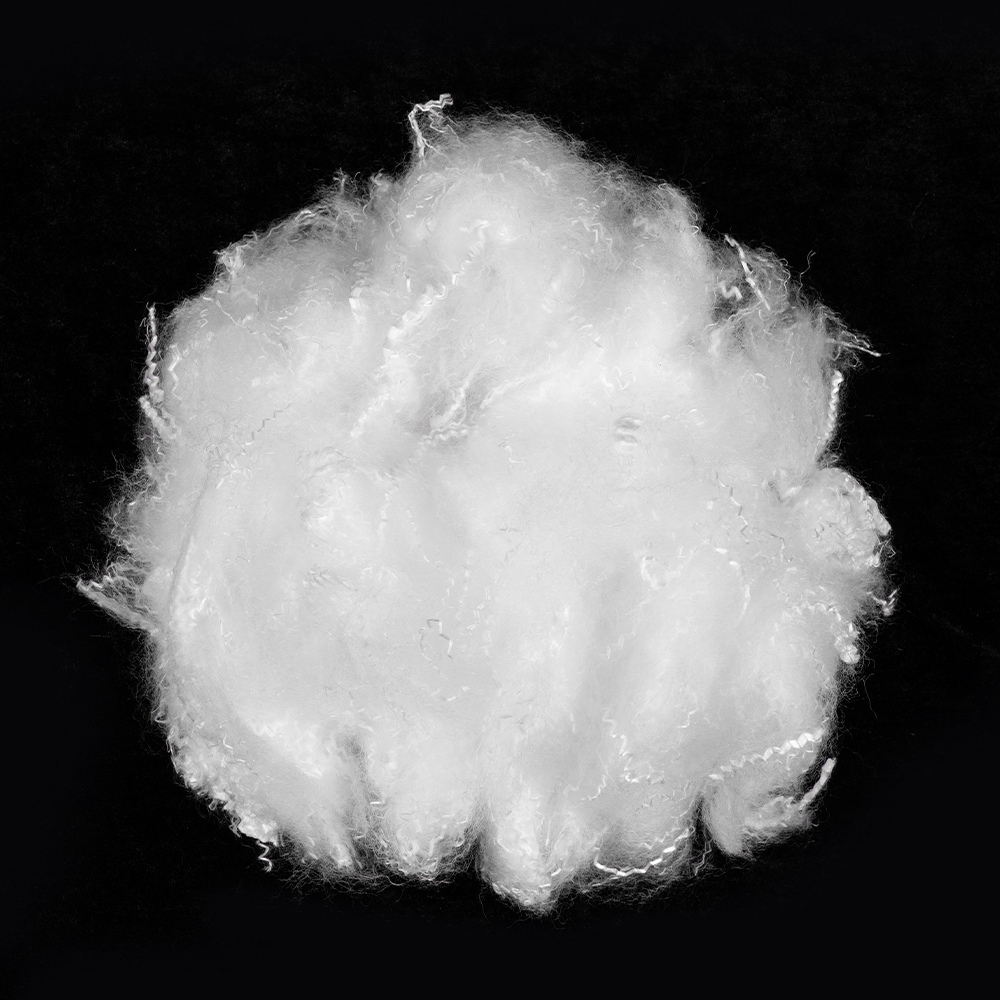 4D*51MM H Low Melt Fiber Polyester Staple Fiber Manufacturer, FactoryNingbo Huaxing Technology Co., Ltd is a China 4D*51MM H low melt fiber manufacturer and factory, we supply 4D*51MM H polyester staple fib...View Product →
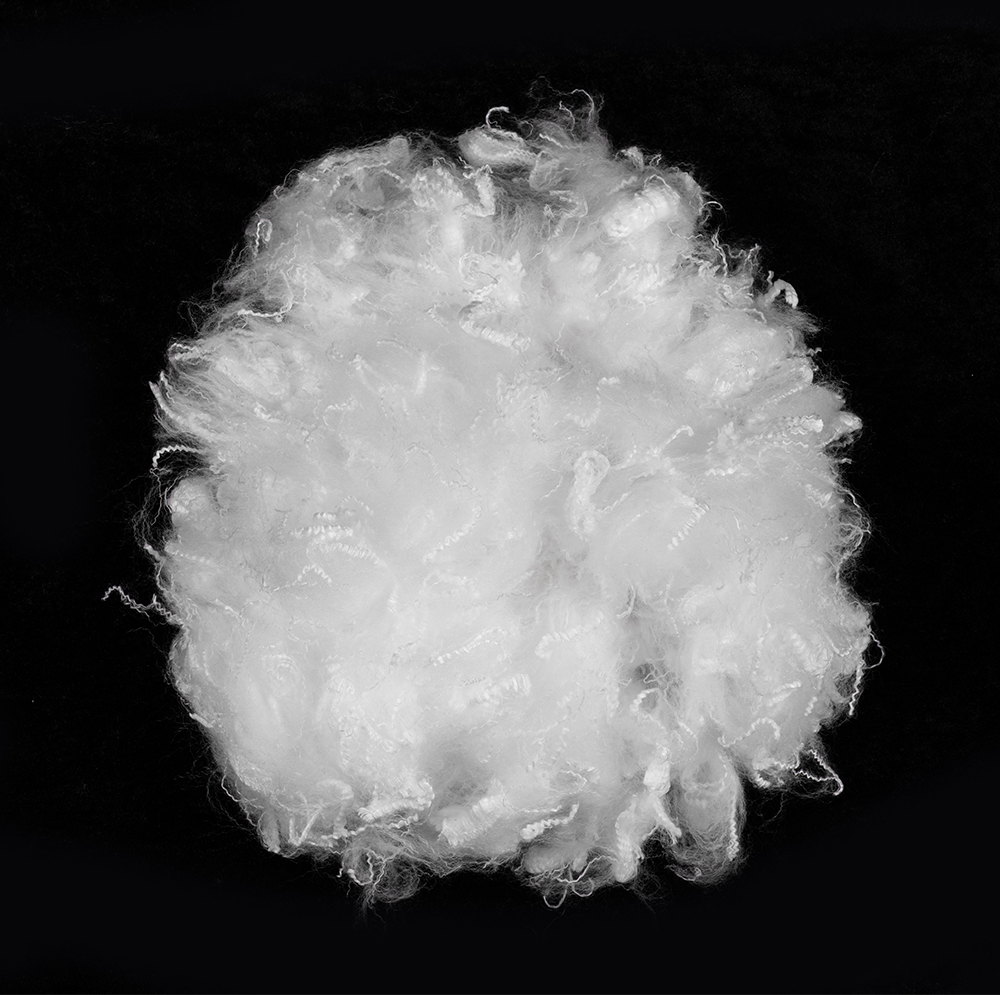 Wholesale 1.2D*32MM Polyester Staple Fiber Manufacturer, Factory - Ningbo HuaxinNingbo Huaxing Technology Co., Ltd is a China 1.2D*32MM Polyester Staple Fiber manufacturer and factory, we supply 1.2D*32MM Polyester St...View Product →
| Garment application | Preferred raw material | Why it works |
|---|---|---|
| Lightweight woven blouse or dress | Fine POY filament | Clean drape, even dyeing, smooth hand |
| Brushed peach-skin or suede-like knit | 1.2D micro fiber | Fine denier, soft touch, compact surface |
| Quilted insulated lining | Hollow conjugate fiber | High loft, low weight, thermal retention |
| Bonded interlining and structured panels | Low-melt fiber | Controlled bonding, stable shaping |
Five checks before approving a raw material batch
Premium results depend on discipline during material qualification. These five checks catch most of the variation that leads to garment defects:
- Ask for the intrinsic viscosity range and the batch-to-batch coefficient of variation.
- Review elongation and shrinkage tolerances; high variation hides in finished panels.
- Inspect luster and delusterant uniformity, because streaks usually trace back to this step.
- Confirm that the spin finish is compatible with your downstream weaving or knitting process.
- Run a pilot trial on the actual fabric construction, not only a lab test card.
These checks are not theoretical. In real shipments, the most common garment complaints, including uneven shade, pilling, and a boardy hand, point upward to raw material variation. A supplier's frequently asked questions and technical specifications are useful starting points, but a pilot trial is the real proof.
Quick answers for fabric buyers and product teams
Is polyester acceptable for high-end garment fabrics?
Yes. Many premium collections use engineered polyester because it offers precise control over luster, drape, durability, and functional performance. Blends with natural fibers are also common; the polyester component adds strength and shape retention.
What is the difference between POY and drawn yarn for garment use?
POY is an intermediate; it is drawn during further processing. For a fabric mill, POY is valued for its stretchability and uniform dyeability when processed correctly. Consistent POY leads to fewer streaks and better shrinkage control.
What are the first steps with a new raw material supplier?
Start with a technical data sheet, then run a small pilot trial on your target fabric. Compare dye uptake, shrinkage, and hand feel against your current reference. Ask how the polymer process is controlled from batch to batch.
Can one supplier provide both filament and staple fibers?
Yes. Suppliers with integrated polymerization and spinning can produce POY, staple fibers, and even PET chips from the same polymer base. This simplifies qualification and keeps raw material consistency across product lines.
The gap between an ordinary polyester fabric and a genuinely high-end one is rarely visible in the finished roll. It lives in raw material decisions made weeks earlier. A fabric that drapes well, dyes evenly, resists pilling, and keeps its shape does not come from a lucky batch; it comes from a raw material supplier who controls polymerization, spinning, and specification discipline at scale. When you define your next garment program, define the raw material first. Send your fabric construction and performance targets to contact our technical team before sampling, because the fastest route to consistent premium quality is to start upstream.
-
Quick Links
Home About Us Products FAQ News Contact Us -
Product Links
Polyester Staple Fiber Pre-oriented Yarn/POY Polyester Chip/PET Chip -
About Us
About Us Factory Honor FAQ -
Get In Touch
E-mail:
[email protected]Phone:
+86-130 8198 6637Tel:
+86-0574-63732888Address:
Haidianrong Village, Longshan Town, Cixi City, Ningbo, Zhejiang Province, China.
