-
 Welcome to Huaxing Technology
-
 Email us: [email protected]


 中文简体


High-End Filling Material: How to Choose Hollow Conjugate Polyester Fiber
Content
- 1 What "High-End" Really Means in Filling Material
- 2 The Hollow Conjugate Family: Silicone-Treated and Non-Silicone
- 3 Low-Melt Fiber and Micro Fiber: The Supporting Cast
- 4 Purchase Risks Worth Checking Before You Commit
- 5 Matching the Specification to the End Product
- 6 Frequently Asked Questions
- 7 Where to Go From Here
A bedding producer ran the same filling recipe for two years, then switched to a cheaper 7D hollow fiber one March to protect margin. The problem only surfaced in July: the identical fill weight produced comforters that looked noticeably flatter after six home washes. Nothing else in the process had changed except the price per kilogram of filling material.
That gap is what separates high-end filling material from the standard grade. It is not a marketing tier, and it is not measured by how soft the fiber feels in a sample bag. It is a bundle of properties that hold steady from lot to lot: denier consistency, a controlled surface finish, and crimp that recovers after repeated compression and laundering. When any one of those drifts, the cost does not appear on the invoice. It appears in returns, refill claims, and a flat-looking product on a retail shelf.
This article covers how the hollow conjugate family is actually organized, where low-melt and micro fibers fit into the blend, what to verify before committing to a container, and how to match a specification to the product you are filling.
What "High-End" Really Means in Filling Material
Buyers often ask for the "best" filling material, but the practical question is narrower: which properties must stay within tolerance for your finished product to behave the same way every time? In hollow conjugate polyester staple fiber, four properties do most of the work.
- Denier consistency — how closely actual fiber thickness tracks the nominal value, both within a lot and between lots.
- Surface finish — whether the silicone treatment is applied evenly, which controls friction, opening behavior in carding, and hand feel.
- Crimp and bulk recovery — how much loft the fiber regains after being compressed in a bale, in a pillow, and in a washing machine.
- Cleanliness — the level of fines, broken filaments and residual finish, which shows up as dust in the plant and as a gritty feel in the finished article.
| Property | Standard grade | High-end filling grade | Effect on the finished article |
|---|---|---|---|
| Denier variation between lots | Roughly plus or minus 8 to 10 percent | Roughly plus or minus 3 to 5 percent | Repeatable loft and fill weight per piece |
| Silicone finish | Light, uneven pickup | Controlled, uniform pickup | Faster opening in carding, consistent hand, less dust |
| Loft recovery after compression | Noticeable flattening after repeated compression | Recovers most of its bulk after washing and compression | Quilt and pillow thickness maintained across many wash cycles |
| Fines and broken fiber | Higher content | Lower content | Cleaner processing, fewer airborne particles |
| Behavior in washing | Clumping and migration risk | Fibers re-open and redistribute | Fewer consumer complaints, fewer returns |
The commercial implication is straightforward. Two suppliers can both quote "7D hollow conjugate, 64 mm" and deliver materially different products. The specification line on the purchase order is not the protection; the tolerance attached to it is.
The Hollow Conjugate Family: Silicone-Treated and Non-Silicone
The hollow conjugate range is normally split by surface treatment rather than by denier. Both variants are offered at 3D, 7D and 15D in this product family, and 64 mm is a common cut length in the non-silicone range.
Silicone-treated hollow conjugate fiber (3D, 7D, 15D HCS)
A silicone finish lowers friction between fibers. The material opens quickly in the carding machine, fills a shell evenly, and feels slick rather than dry. For pillows, comforters and soft cushions where immediate loft and a smooth hand are the priority, this is usually the first choice. The trade-off is that the finish is a surface property, so it has to be applied consistently. Uneven pickup is the most common reason two deliveries of supposedly identical fiber behave differently on the same line.
Non-silicone hollow conjugate fiber (3D, 7D, 15D 64 mm HC)
Without a silicone finish, the fiber behaves differently downstream. It is generally preferred where the filling is bonded — for example when low-melt fiber is added and the batt passes through an oven — because a heavy finish can interfere at the bonding points. It is also used where silicone carryover into a later finishing or coating step is unwelcome. The hand is slightly less slick, but the bulk and resilience are of the same order.
One practical note: the codes HCS and HC appear in supplier specification sheets and are not standardized across the industry. Confirm in writing what your supplier means by them before you place a repeat order.
Low-Melt Fiber and Micro Fiber: The Supporting Cast
Filling material rarely works alone. Two other staple fibers do most of the supporting work in washable and high-recovery constructions.
Low-melt fiber (2D 51 mm, 4D 51 mm H, 4D 64Hmm)
Low-melt fiber has a sheath that softens at a lower temperature than the core. Blended with hollow conjugate fiber, it fuses at the contact points during a heat-setting pass and locks the structure in place. The result is less migration, fewer hollow spots at the corners of a quilt, and the option to reach a target thickness with less total fill weight. Typical blends run from about 15 to 30 percent low-melt content, depending on how much wash durability the product needs.
Micro fiber (1.2D 25 mm, 1.2D 32 mm)
Micro fiber is about hand feel. At 1.2 denier, the individual filaments are fine enough to produce a dense, soft surface that reads as down-like rather than polyester. It is usually blended with hollow conjugate fiber — the hollow fiber supplies bulk and the micro fiber supplies the surface feel — and it is the reason two fillings of identical weight can feel completely different to a customer.
Purchase Risks Worth Checking Before You Commit
Most filling material problems are not defects. They are batch-to-batch differences that sit inside a loose specification and only become visible in the finished article. The following sequence catches most of them.
- Ask for three consecutive production lots, not a single sample. Denier and finish variation between lots causes most "the fiber changed" complaints.
- Measure denier and cut length in your own lab. A wide denier band looks harmless on paper; on a 7D fiber it becomes a visible difference in loft.
- Run a wash and compression cycle on the finished article, not on loose fiber. Ten cycles are usually enough to separate a resilient filling from one that flattens.
- Confirm finish pickup if the filling will be bonded. A finish that is fine for a loose pillow fill can block adhesion in a heat-bonded batt.
- Check moisture content and bale compression on arrival. Over-compressed bales release slowly and can leave a line running through the first few hundred kilograms of production.
- Agree on how fines and residue are measured. "Low dust" means little unless both sides use the same method.
Matching the Specification to the End Product
There is no universal best filling. The right specification depends on how the article will be used, washed and loaded. The table below offers starting points, not final answers.
| End product | Filling approach | Starting denier and length | Main risk to watch |
|---|---|---|---|
| Pillow | Silicone-treated hollow conjugate, single fiber | 7D HCS, 64 mm | Finish inconsistency between lots |
| Washable quilt or duvet | Hollow conjugate blended with low-melt binder | 7D HC plus 4D low-melt, 51 to 64 mm | Binder ratio too low, filling migrates |
| Mattress topper | Firmer hollow conjugate with binder | 15D HC, 64 mm | Loss of thickness under sustained load |
| Soft cushion or decorative pillow | Micro fiber blended with hollow conjugate | 1.2D micro fiber plus 3D to 7D HC | Excess fines and dust in processing |
| Firm support filling | Coarse hollow conjugate | 15D HCS | Hand feel becomes dry or harsh |
Frequently Asked Questions
Is silicone treatment permanent?
It is a surface finish, not a coating that disappears in the first wash. How long it lasts depends on the pickup level and on the chemistry your supplier uses. If a product must survive repeated laundering, test the finished article rather than trusting the fiber datasheet.
Which denier should I start with?
7D is the usual starting point for a standard pillow or quilt. Move to 3D when you want a softer, denser hand, and to 15D when the product must hold thickness under body weight.
Can hollow conjugate and low-melt fiber be mixed in the same filling?
Yes, and it is common practice. The hollow fiber supplies bulk and resilience; the low-melt fiber supplies structure. Start around 15 to 30 percent low-melt content and adjust based on how the finished article behaves after washing.
What does the difference between HC and HCS actually mean?
Those codes are used inconsistently across suppliers. Rather than assume, ask for the finish description and the measured finish pickup, and write both into your specification.
Where to Go From Here
Filling material is one of the few components where a small percentage change in raw material quality is invisible at goods-in and obvious in the customer's home six months later. Denier tolerance, finish consistency and crimp recovery are the three places to concentrate your attention, and a wash test on the finished article is the cheapest way to confirm all three at once.
Ningbo Huaxing Technology produces polyester staple fiber, POY and PET chip from a 185,000 square meter site, with nine independent patents and an in-house engineering technology center. The company invested more than 300 million RMB in 2012 to bring a 160,000 tonne-per-year POY line into service, using direct esterification polymerization and direct spinning with German Barmag spinning and winding equipment. Alongside the hollow conjugate range described above, the product catalog covers low-melt fiber, micro fiber, fiber-grade PET chip and POY filament whose fabrics are used for high-end apparel, blankets and carpets. If you are narrowing down a specification, the practical guide on choosing hollow conjugate fiber filling materials walks through the selection criteria in more detail, and you can send us your target specification for a matched sample.
Ningbo Huaxing Technology Co., Ltd.
-
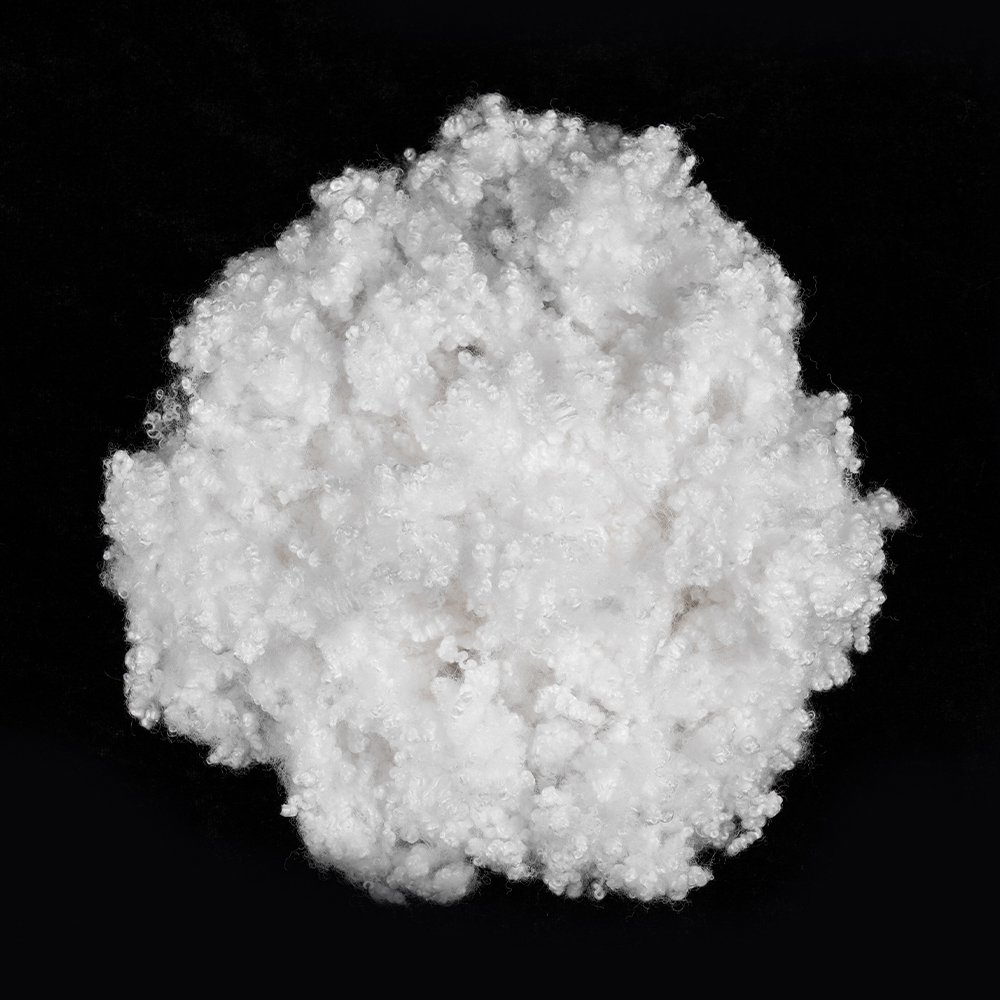
3D HCS Polyester Staple Fiber
-
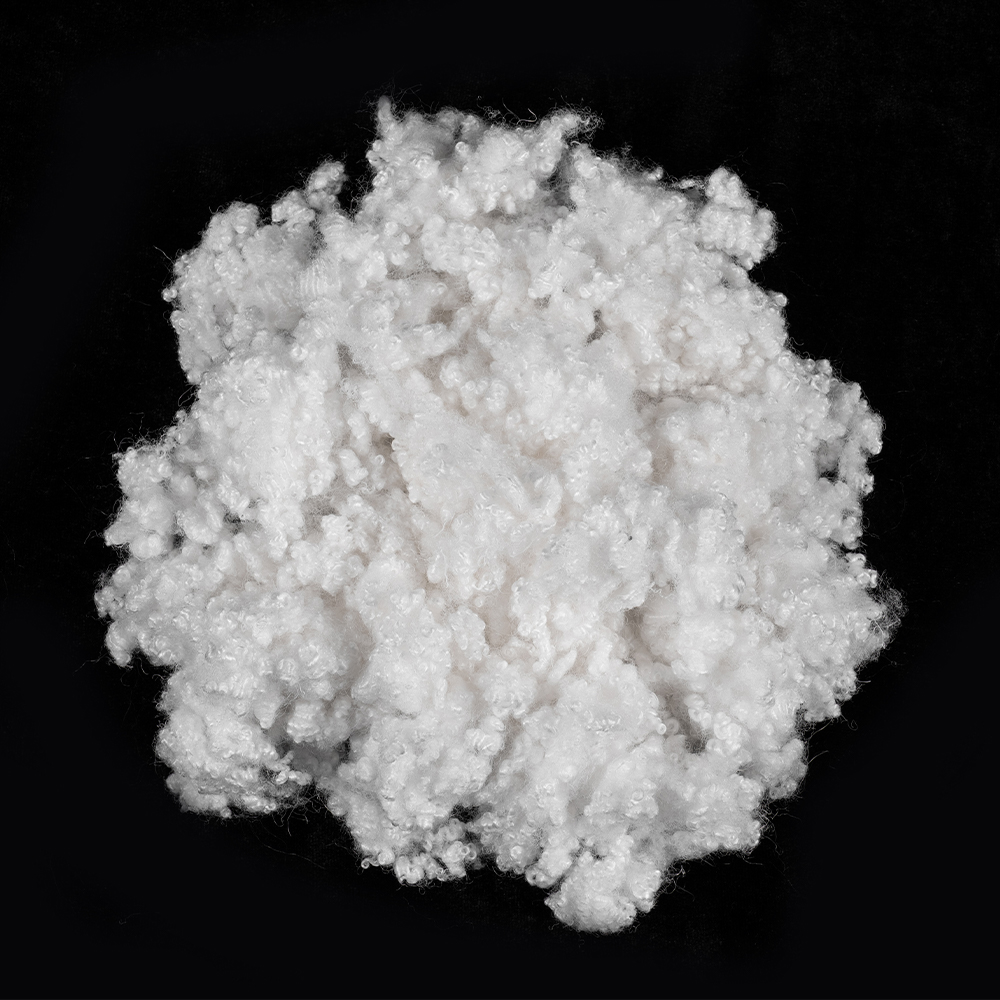
7D HCS Polyester Staple Fiber
-
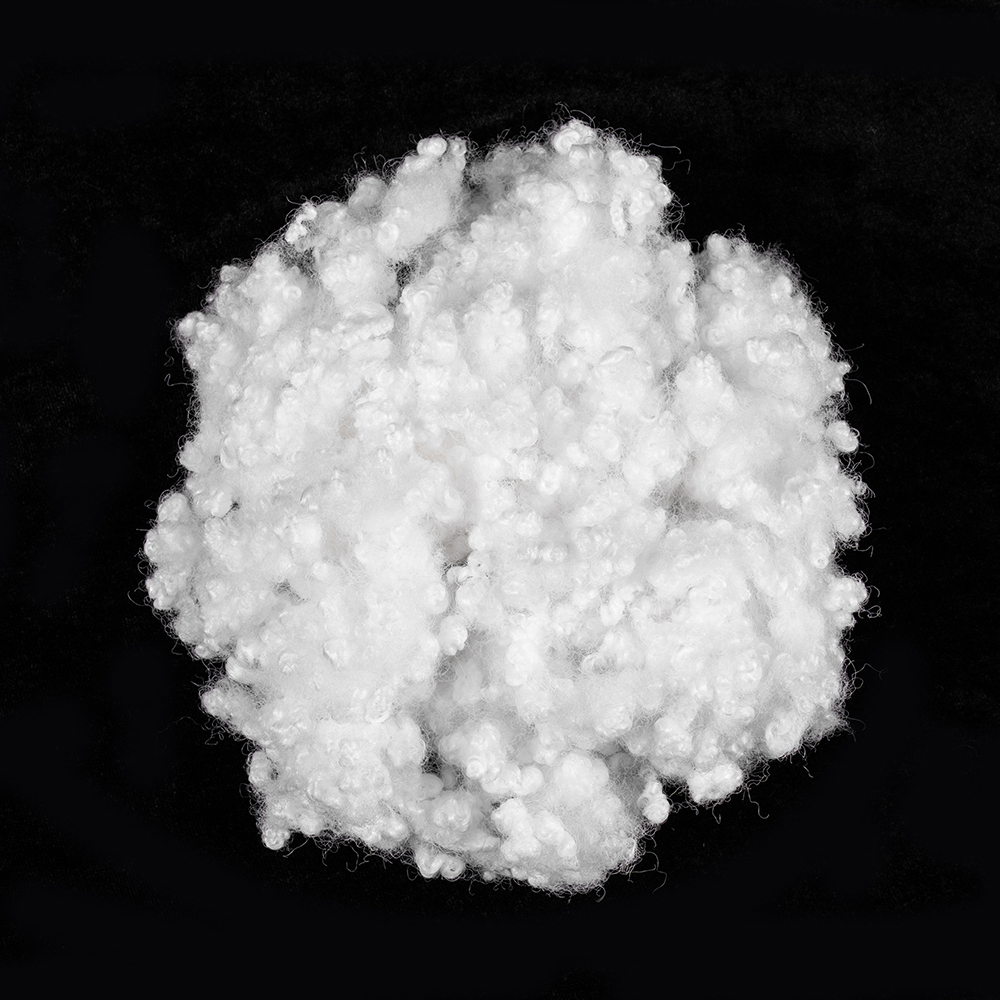
15D HCS Polyester Staple Fiber
-
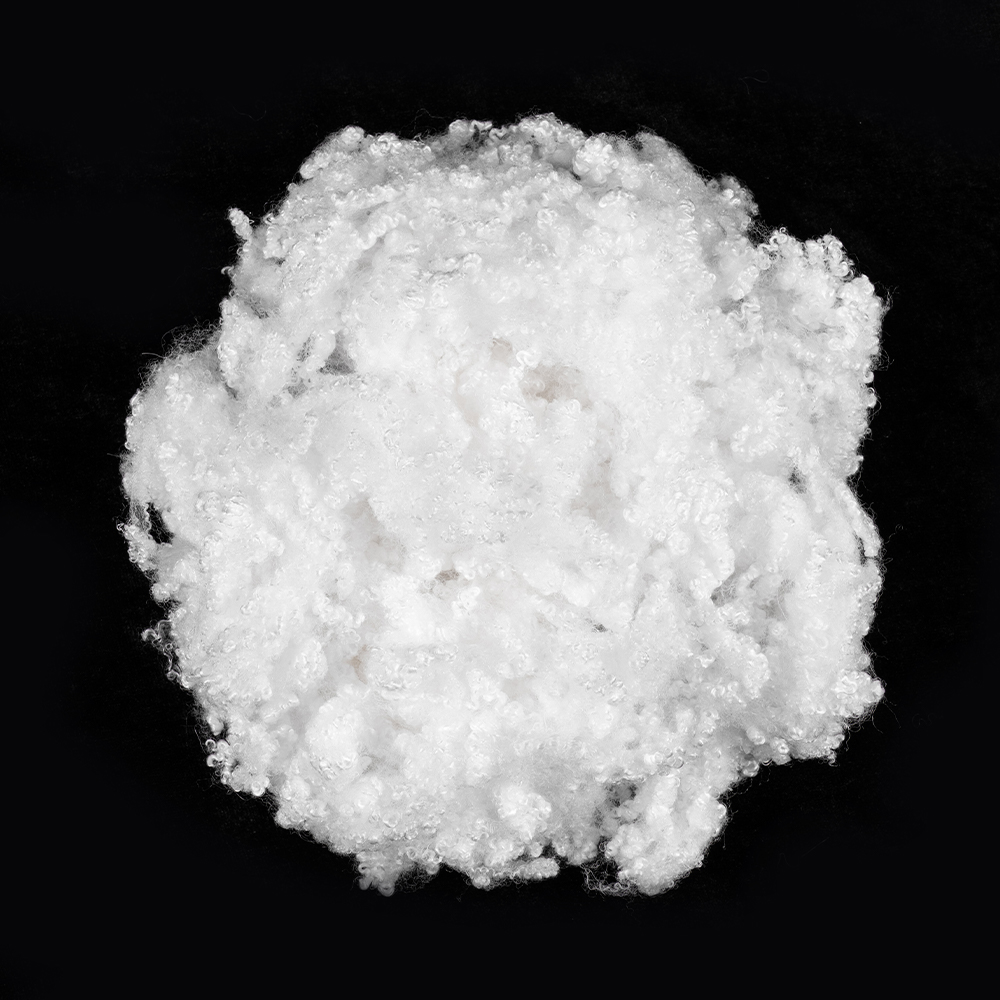
3D*64MM HC Polyester Staple Fiber
-
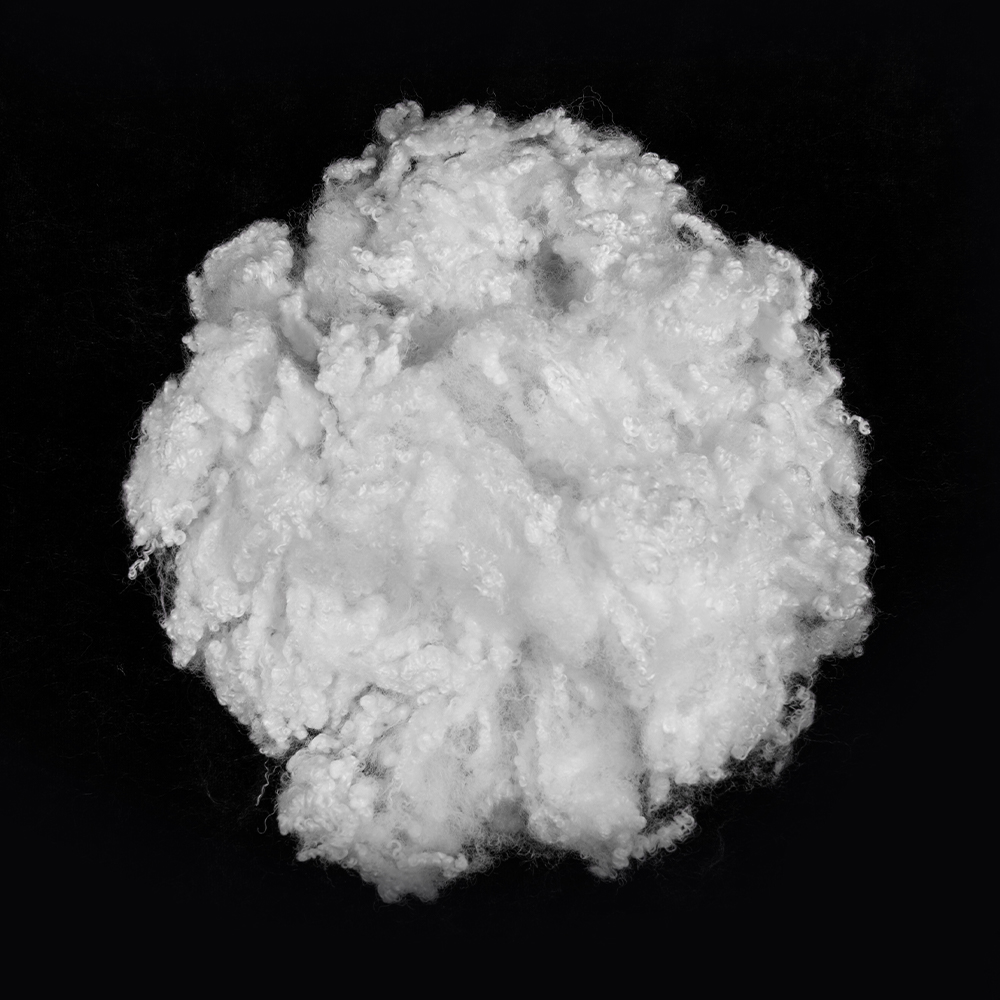
7D*64MM HC Polyester Staple Fiber
-
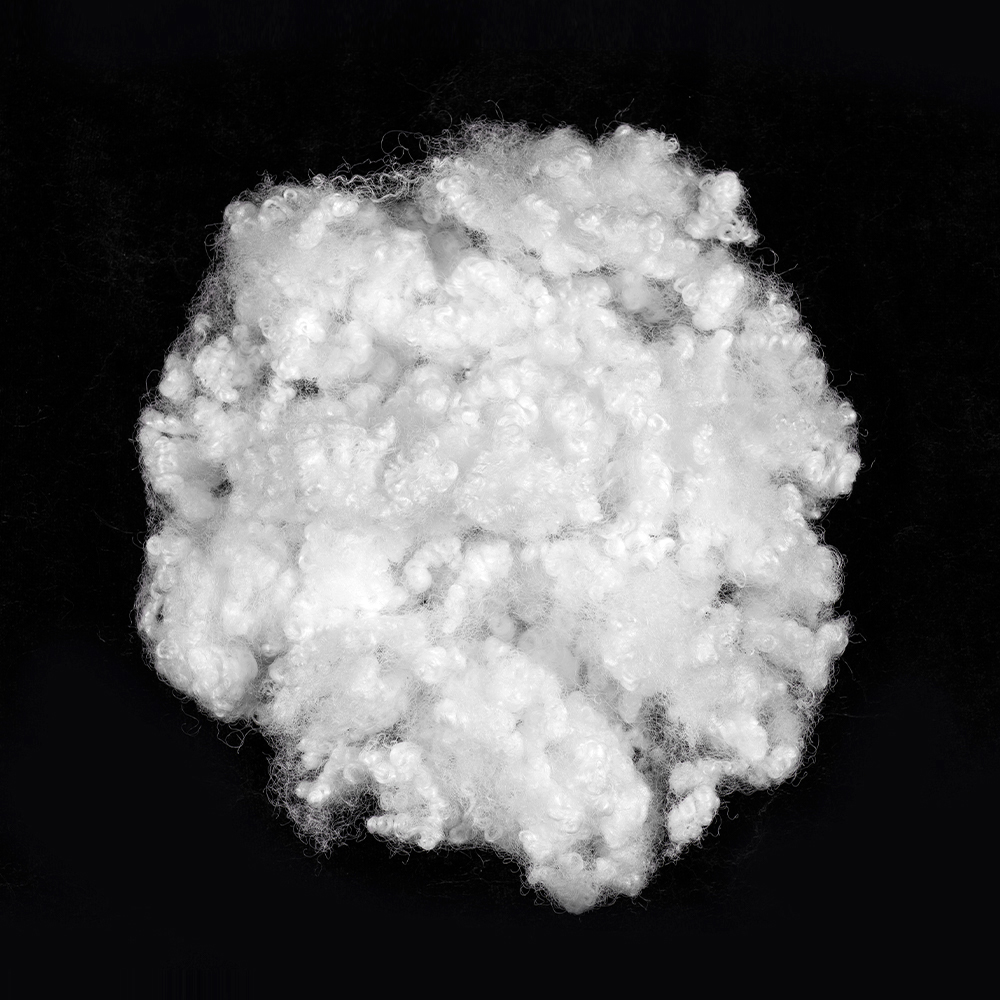
15D*64MM HC Polyester Staple Fiber
-
Quick Links
Home About Us Products FAQ News Contact Us -
Product Links
Polyester Staple Fiber Pre-oriented Yarn/POY Polyester Chip/PET Chip -
About Us
About Us Factory Honor FAQ -
Get In Touch
E-mail:
[email protected]Phone:
+86-130 8198 6637Tel:
+86-0574-63732888Address:
Haidianrong Village, Longshan Town, Cixi City, Ningbo, Zhejiang Province, China.
