-
 Welcome to Huaxing Technology
-
 Email us: [email protected]


 中文简体
中文简体

High Pilling Resistance Fiber: How to Choose Specs That Pass ISO 12945 Tests
Content
A European knitwear buyer receives 4,000 pieces of 320 gsm cotton-polyester fleece. Three home launderings at 40 °C later, the cuffs and underarm areas show visible pills. The dyehouse blames the softener, the spinner blames the yarn count, and the brand asks for a root-cause report. In most of these reviews, the answer is written on the fiber purchase order: tenacity, elongation, denier per filament and spin finish were approved on price, and nobody re-checked them against the pilling requirement.
High pilling resistance fiber is not one material you can order by name. It is a specification set: a fiber that sheds fuzz before the fuzz becomes a visible ball, spun into a yarn that keeps most fiber ends inside the structure, and verified with a test method both sides agreed on.
The short version: buy fiber that fractures before it anchors, build yarn with enough cohesion to stop fiber migration, and test with the standard that matches the end use. The sections below explain which numbers matter, which tolerances belong in a contract, and where a full pilling grade is usually lost.
Pilling Moves Through Three Stages
Abrasion does not make a pill in one step, and each stage responds to a different variable. That is why a single fix, such as a softer finish, a higher twist or a different blend, rarely solves the problem on its own.
- Fuzz formation: fiber ends migrate to the fabric surface. Fiber length, crimp and yarn twist decide how many ends escape.
- Pill formation: loose fibers entangle with each other and with lint from the wash. Fiber tenacity and elongation at break decide whether the tangle keeps growing.
- Shedding or anchoring: tough fibers hold the pill on the surface, while low-tenacity fibers release it. This is why nylon and high-tenacity polyester look worn after months of use, while cotton pills tend to disappear on their own.
The objective is not a fiber that cannot be abraded. It is a fiber that gives up surface fuzz before that fuzz becomes a visible ball.
Fiber Type Sets the Baseline
Before adjusting any process, check whether the fiber itself can pass the requirement. The comparison below assumes identical yarn construction and finishing.
| Fiber | Pilling tendency | Main reason |
|---|---|---|
| Merino wool | High | Fine, crimped, high elongation; pills stay anchored |
| Combed cotton | Moderate to low | Short fibers shed and pills break away |
| Viscose / rayon | High, worse when wet | Low wet tenacity and heavy fibrillation |
| Regular PET staple | High | Tenacity above 4.5 cN/dtex anchors pills |
| Low-tenacity PET staple | Low | Fibers break before the pill is locked in |
| Nylon 6 | Very high | High toughness resists rupture during abrasion |
| Micro fiber PET | Moderate | Fine denier changes the mechanism; finish must be matched |
The pattern is consistent: fibers above roughly 4.5 cN/dtex tenacity and 40% elongation tend to anchor pills, while low-tenacity staple with moderate elongation sheds them.
The chart below follows the same three fibers through a 5,000-cycle sequence. Combed cotton peaks early and then sheds; regular polyester keeps accumulating anchored pills; a low-tenacity anti-pill staple stays close to the baseline.
Four Fiber Specs That Decide the Pilling Grade
Fiber purchase orders state denier, tenacity, elongation, crimp, cut length and finish, but they rarely state a pilling grade. Those numbers, and the tolerances around them, are the real levers.
1. Denier per filament
Finer filaments bend more easily, so pills break off sooner, and they pack tighter in the yarn cross-section, leaving less free space for fiber migration. For pill-resistant knitwear, 1.2-2.2 dtex per filament is a practical window. Below about 1.0 dtex the fiber is genuine micro fiber and the mechanism shifts again, so yarn twist and spin finish must be re-tuned rather than copied from a standard denier program.
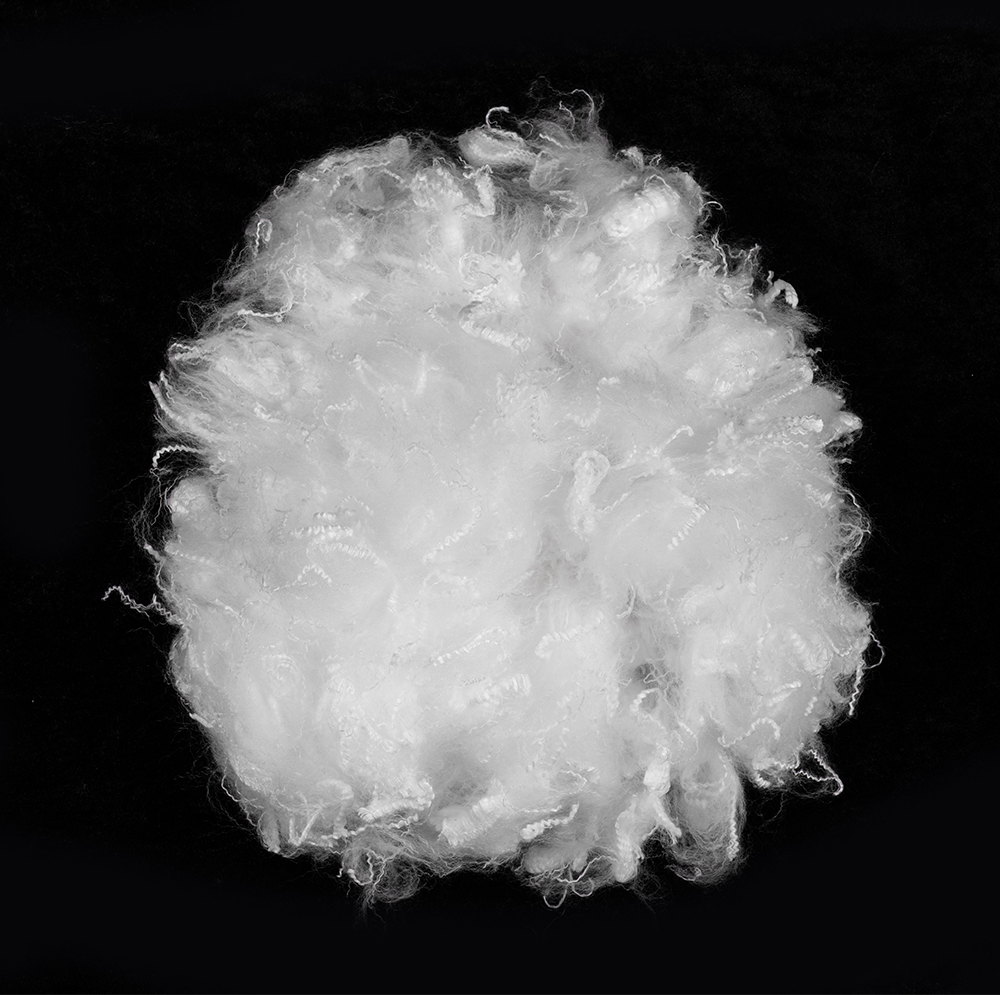 1.2D 32mm Micro Fiber Polyester Staple Fiber for Down-Like FillingIdeal for premium down jackets, comforters, and pillows, this 1.2D/32mm micro fiber offers a soft, down-like feel with improved cohesion and reduced clumping after filling.View Product →
Running both ranges in one plant simplifies that adjustment. Ningbo Huaxing Technology produces micro fiber staple in 1.2D/25 mm and 1.2D/32 mm alongside its standard deniers, so the fine-denier option stays inside the same quality system as the rest of the order.
2. Tenacity and elongation
This pair of numbers matters most. For anti-pill staple, 3.0-3.8 cN/dtex with 25-40% elongation gives fibers that fracture under abrasion instead of holding a pill. Above 4.5 cN/dtex, pills stay attached and the fabric looks worn; below about 2.5 cN/dtex, yarn strength drops and fuzz generation rises.
3. Crimp and cut length
Crimp keeps fibers interlocked inside the yarn, and 10-14 crimps per 25 mm is a workable range. Cut length follows the same logic: 38-51 mm suits cotton-system spinning, while shorter fiber adds free ends at the fabric surface.
4. Spin finish
Finish is the most frequently ignored variable in pilling claims. Below roughly 0.15% on weight of fiber, friction during spinning and knitting increases. Above 0.30%, the fiber turns slick, yarn cohesion falls and fiber migration rises.
| Parameter | Target | Typical tolerance | Effect when out of range |
|---|---|---|---|
| Denier per filament | 1.2-2.2 dtex | plus or minus 5% | Coarser fiber resists bending and holds pills |
| Tenacity | 3.0-3.8 cN/dtex | plus or minus 0.3 cN/dtex | Higher anchors pills; lower weakens the yarn |
| Elongation at break | 25-40% | plus or minus 5 points | Low elongation raises dust and hairiness |
| Crimp | 10-14 per 25 mm | plus or minus 2 | Low crimp increases fiber migration |
| Cut length | 38-51 mm | plus or minus 1 mm | Short fibers add free ends at the surface |
| Spin finish | 0.15-0.30% o.w.f. | plus or minus 0.03% | Low raises friction; high reduces cohesion |
Write tolerances into the specification, not just nominal values. A drift of 0.5 cN/dtex in tenacity can move a knitted fabric from grade 4 to grade 3 after 2,000 Martindale cycles.
Filament and Staple Fail Differently
In continuous filament fabrics, pilling starts from broken filaments and protruding loop ends rather than staple fiber migration. Filament evenness and oil pickup matter more than crimp. Partially oriented yarn has almost no free fiber ends by construction, so the priority is keeping filaments intact through texturing and weaving. Ningbo Huaxing Technology rebuilt its POY line in 2012 around direct esterification five-kettle polymerization and direct spinning, with a rated capacity of 160,000 tonnes per year, and the company states that fabrics made from this yarn are smooth, easy to dye, colour-fast and anti-pilling.
 Pre-Oriented Yarn POY for DTY, FDY, and Pilling-Resistant FabricsPolyester filament precursor for DTY false-twist texturing and FDY production, with high strength, abrasion resistance, and specifications suited to apparel and home textiles.View Product →
Blends, Binders and Finishing
Blend ratio can work against you. In cotton-polyester knits, raising the polyester share above roughly 40% usually lowers pilling resistance, because the tough polyester fibers anchor the pills that the cotton fuzz creates.
A binder locks the structure from the inside. Low-melt fibers fuse fiber crossings during heat setting, which cuts the number of free ends available to migrate later. Ningbo Huaxing Technology supplies low-melt polyester staple in 2D/51 mm, 4D/51 mm H and 4D/64 H mm grades for the common activation window used in drying and bonding ovens.
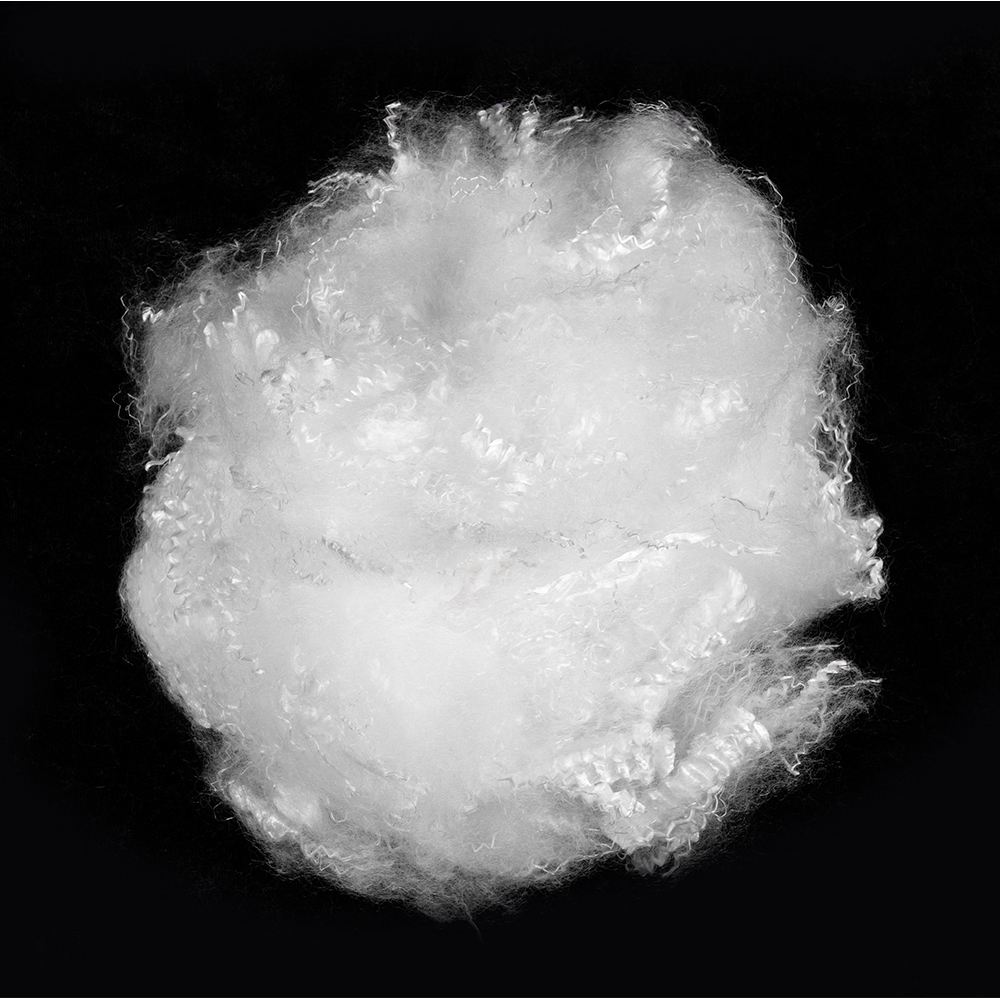 4D 64mm Low-Melt Polyester Staple Fiber for Thermal BondingA low-melt staple fiber for thermal bonding in nonwovens, large sofa and mattress filling, and automotive interiors, supporting strong bonded structures and efficient production.View Product →
Finishing helps but stops short of a cure. Singeing and shearing remove surface fibers mechanically, bio-polishing works on cellulose, and anti-pilling agents reduce friction at the fiber surface. None of them rescues a fiber specification with unmanaged tenacity.
Verify With the Buyer's Own Method
A datasheet is not evidence. Fix the test method, the cycle count and the acceptance grade before the order is placed, because a grade 4 result under one method can read as grade 3 under another.
| Method | Standard | Typical conditions | Result scale |
|---|---|---|---|
| Martindale | ISO 12945-2 / GB/T 4802.2 | 2,000 cycles for knitwear; 5,000-7,000 for bedding | Grade 1-5 |
| ICI pilling box | ISO 12945-1 / GB/T 4802.3 | 2 h, 4 h or 6 h tumbling in a cork-lined box | Grade 1-5 |
| Random tumble | ASTM D3512 | 30 min in a rotating drum with cotton lint | Grade 1-5 |
Thresholds we commonly see in buying specifications: grade 3-4 after 2,000 Martindale cycles for knitwear, grade 4 after 5,000 cycles for flat bedding, and grade 3-4 after 4 hours in the ICI box for socks.
- Fiber specification 40%
- Yarn structure 25%
- Dyeing and finishing 20%
- Care and use 15%
Fiber specification dominates pilling claims, but yarn structure and finishing still account for nearly half of the failures, which is why changing the fiber alone rarely closes a claim.
Frequently Asked Questions
Does a higher polyester content improve pilling resistance?
Usually not. In cotton-polyester blends, raising the polyester share above about 40% tends to lower pilling resistance, because the polyester fibers hold the pills in place while the cotton creates the fuzz.
Can an anti-pilling finish fix a fiber that anchors pills?
Only partially. Anti-pilling agents reduce surface friction and may improve a grade by half a point. They do not change fiber tenacity and elongation, which decide whether a pill stays on the surface.
Do micro fibers pill more or less than standard denier?
They behave differently rather than simply better or worse. Fine denier gives more fibers per yarn cross-section and less room for migration, but pills are also smaller and harder to see. Spin finish and yarn twist must be adjusted to match.
How can I check a supplier claim without a full lab test?
Ask for the fiber test certificate first, then for a knitted sample from the same lot. A 2,000-cycle Martindale result on the actual fabric is the number that matters. More answers on fiber selection and order handling are collected on our FAQ page.
What to Write on the Purchase Order
High pilling resistance fiber is a specification, not a label. State the denier range, the tenacity and elongation window, crimp, cut length and spin finish with tolerances; name the test method and the acceptance grade; and keep the blend ratio inside a range that suits the end use.
If you are sourcing polyester staple, micro fiber, low-melt binder or POY for an anti-pilling program, our technical team can review your current specification against your target grade. Contact us with your fabric construction and test requirement, and we will tell you which parameters need to change.
Ningbo Huaxing Technology Co., Ltd.
-
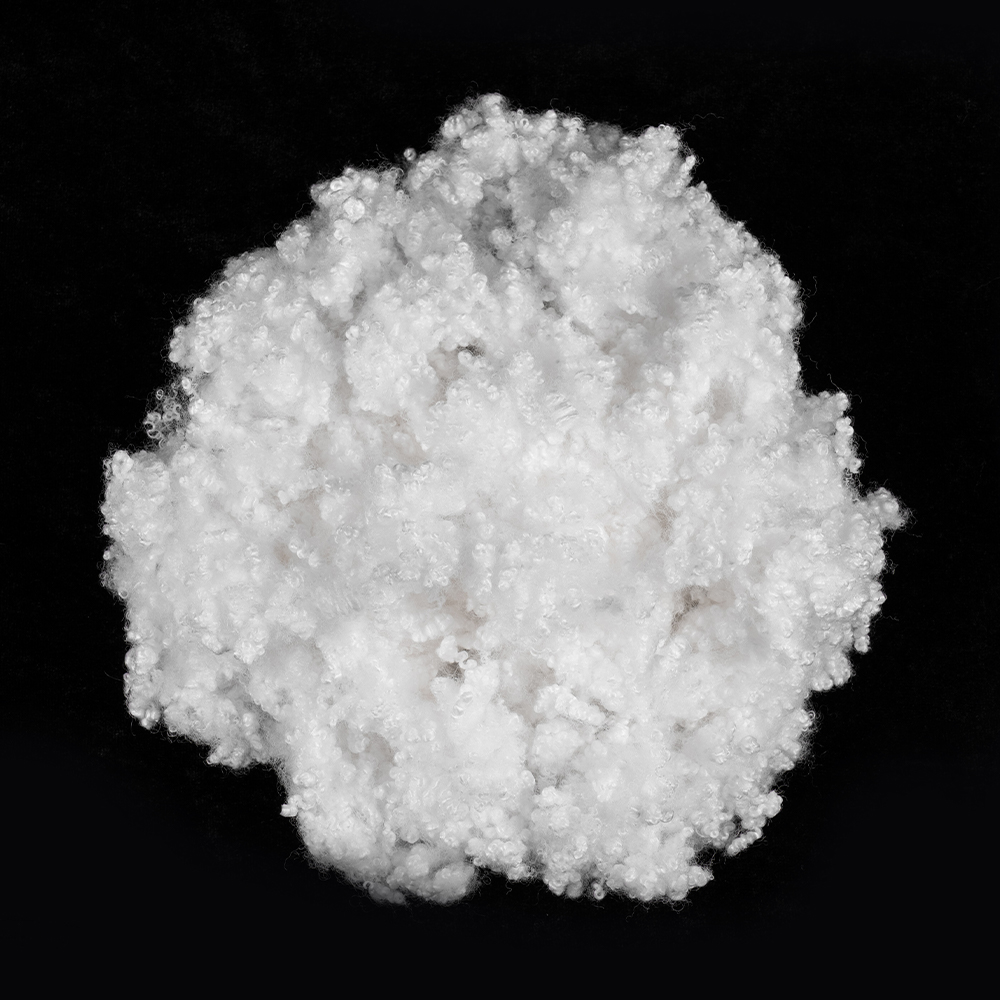
3D HCS Polyester Staple Fiber
-
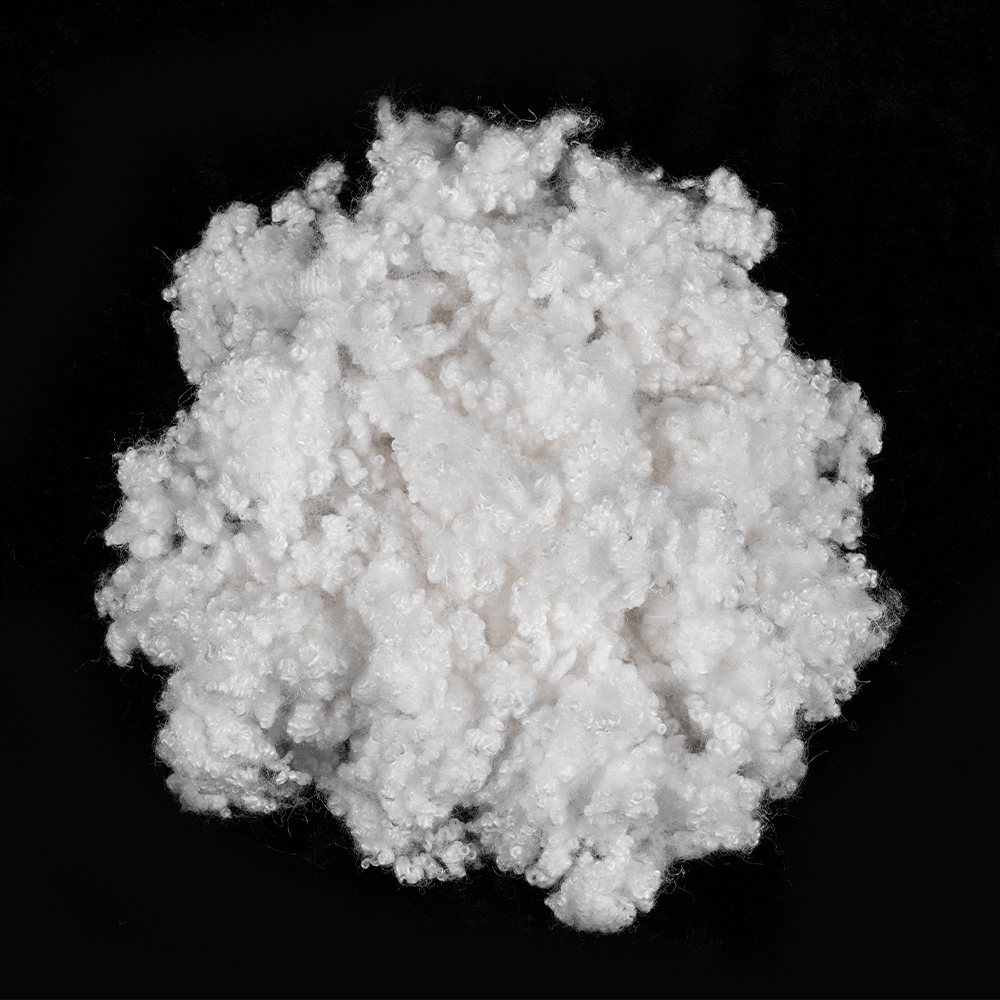
7D HCS Polyester Staple Fiber
-
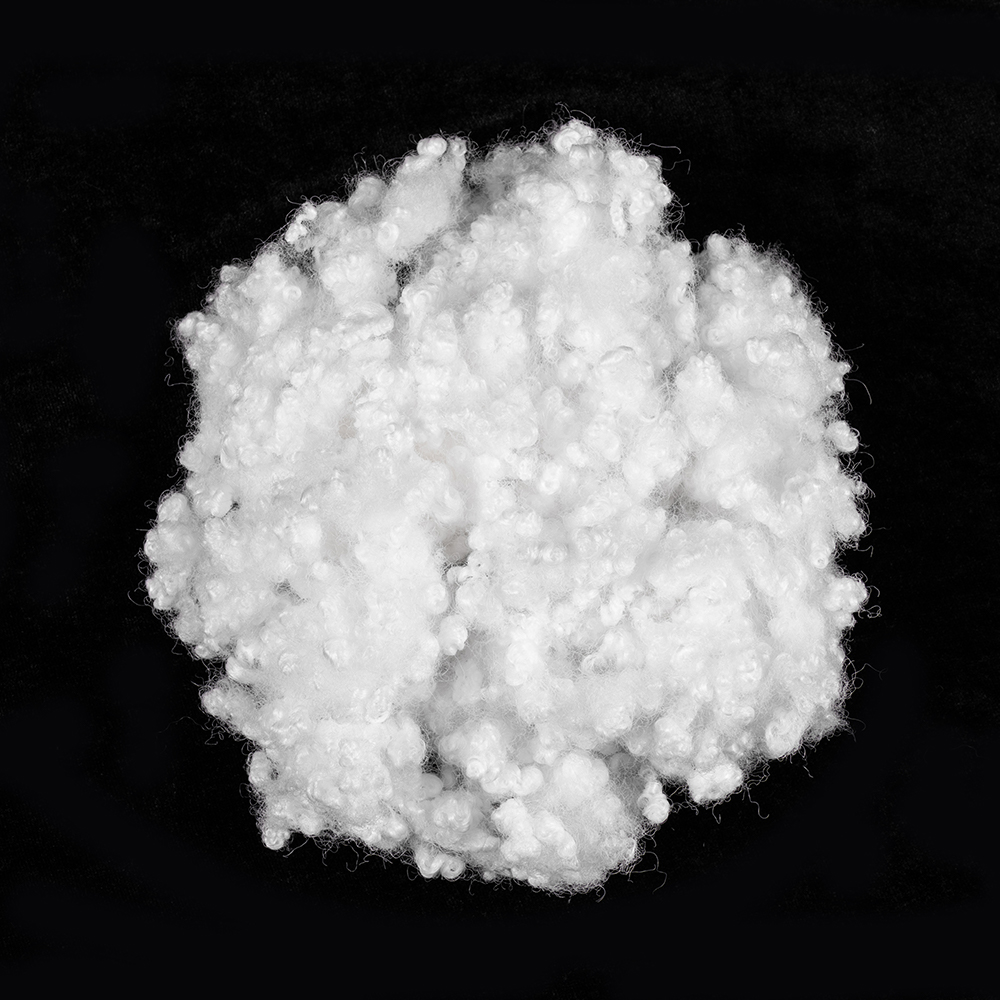
15D HCS Polyester Staple Fiber
-
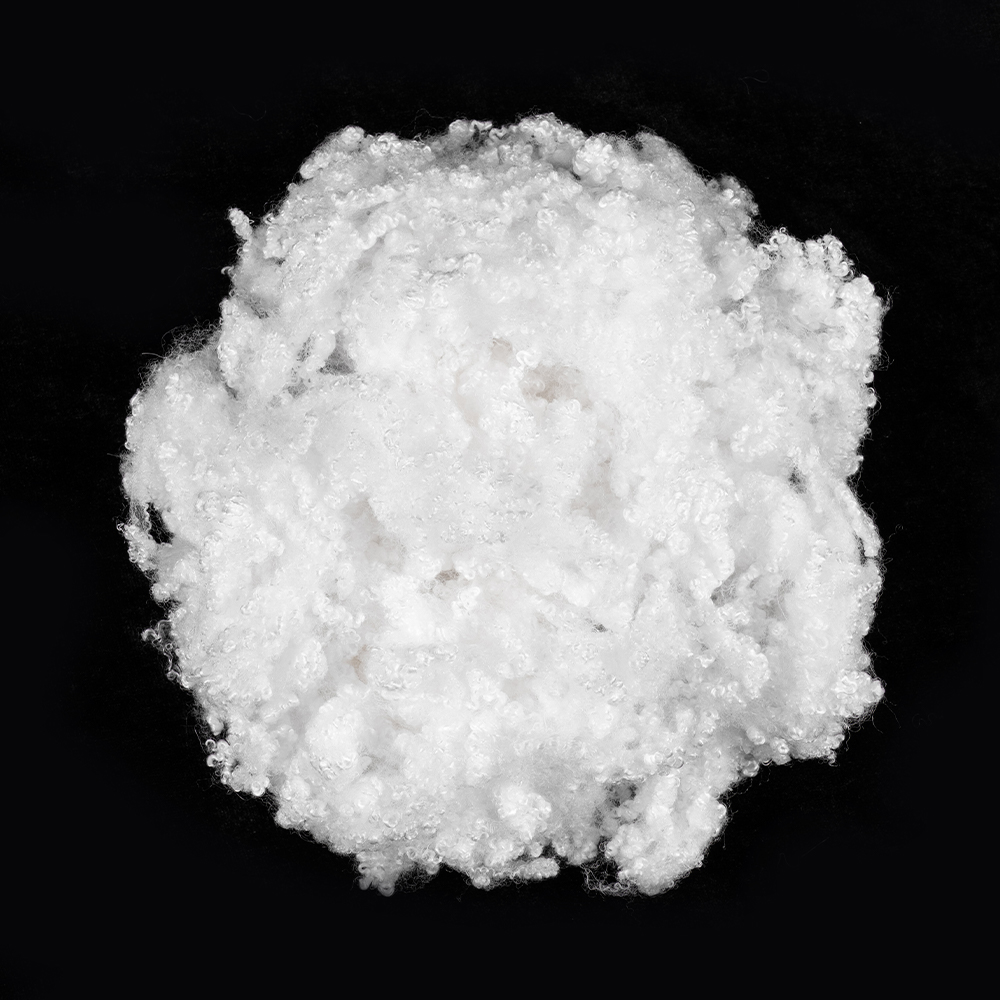
3D*64MM HC Polyester Staple Fiber
-
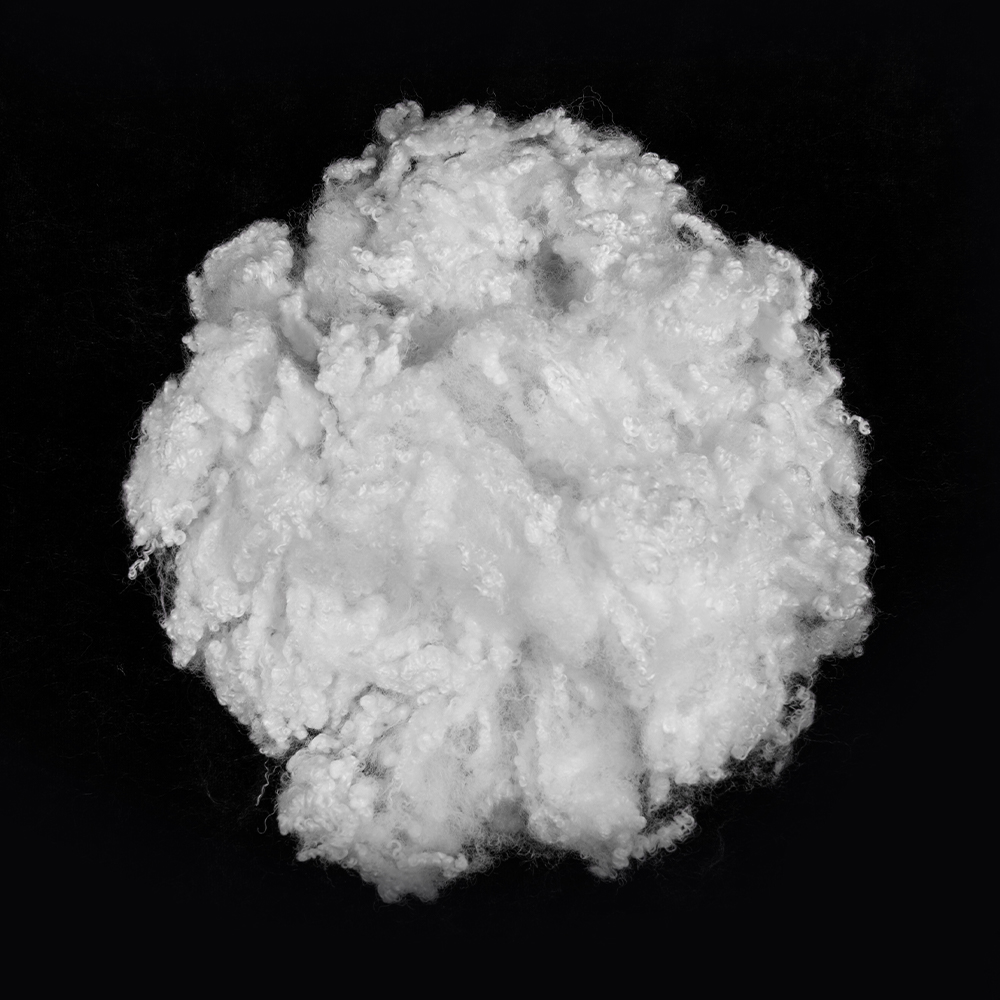
7D*64MM HC Polyester Staple Fiber
-
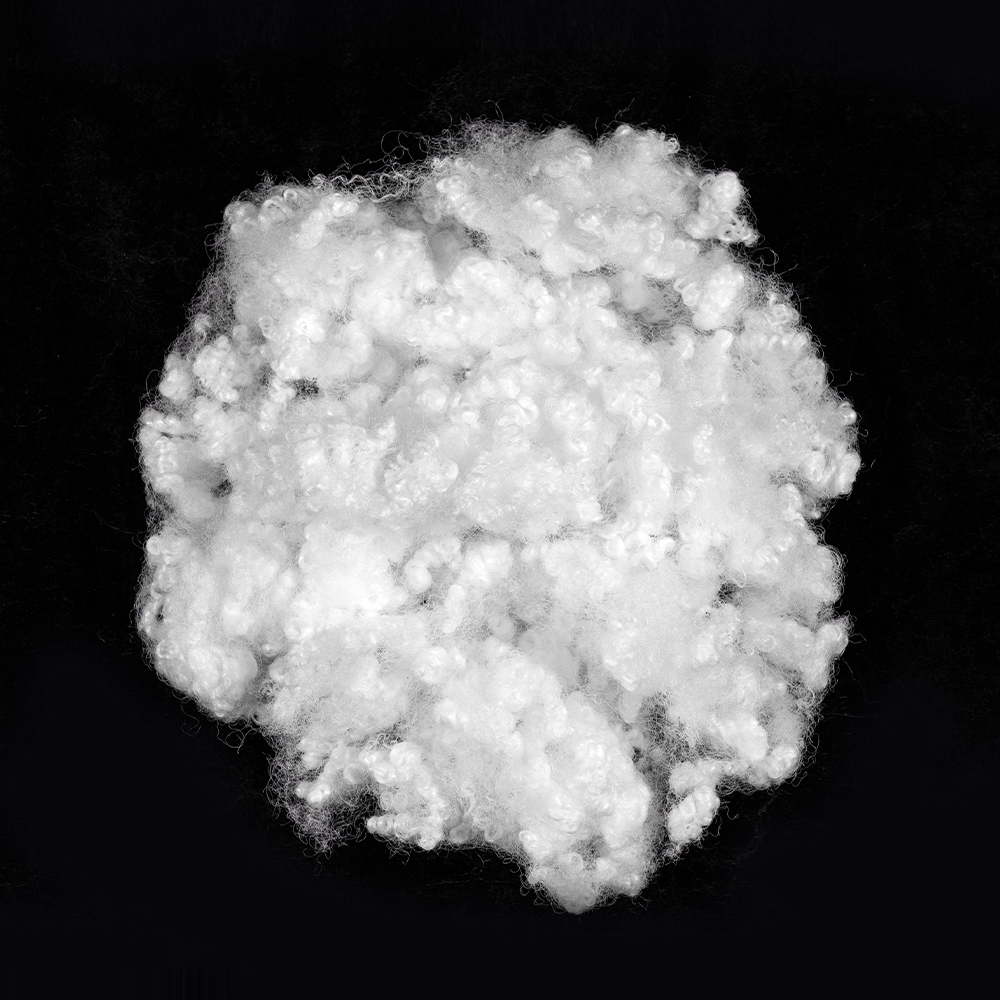
15D*64MM HC Polyester Staple Fiber
-
Quick Links
Home About Us Products FAQ News Contact Us -
Product Links
Polyester Staple Fiber Pre-oriented Yarn/POY Polyester Chip/PET Chip -
About Us
About Us Factory Honor FAQ -
Get In Touch
E-mail:
[email protected]Phone:
+86-130 8198 6637Tel:
+86-0574-63732888Address:
Haidianrong Village, Longshan Town, Cixi City, Ningbo, Zhejiang Province, China.
