-
 Welcome to Huaxing Technology
-
 Email us: [email protected]


 中文简体
中文简体

Eco-Friendly Filling Material: How to Specify Polyester Fiber Fill That Lasts
Content
- 1 What Makes a Filling Material Genuinely Eco-Friendly
- 2 Why Hollow Conjugate Fiber Carries Most Eco Claims
- 3 Silicone-Treated vs Non-Silicone Hollow Conjugate Fiber
- 4 Denier and Cut Length: The Levers You Actually Specify
- 5 Low-Melt Fiber and Microfiber: Two Useful Special Cases
- 6 A Short Procurement Checklist Before You Order
- 7 Frequently Asked Questions
- 8 The One-Line Summary
Most filling specifications are one line long: 7D hollow conjugate, 64 mm cut, silicone treated. When a bedding or furniture brand replaces that line with a recycled-content equivalent, loft, hand feel and compression recovery barely move. What changes is the documentation sitting behind the material. That is where an eco-friendly filling material earns its name.
The short answer: hollow conjugate polyester staple fiber made from recycled PET is the most practical eco-friendly filling material for pillows, cushions, duvets and plush toys, with low-melt binder fiber added wherever the fill has to hold a shape. Denier, cut length, crimp and finish decide whether the fill performs. Recycled content decides whether it qualifies as eco-friendly at all.
What Makes a Filling Material Genuinely Eco-Friendly
The word "green" appears on a lot of bales. In practice, eco-friendly filling comes down to four measurable things, and a supplier should be able to answer all four in writing:
- Feedstock: recycled PET content, bio-based polymer, or a documented blend ratio rather than a vague "recycled" claim.
- Durability: loft retention after repeated compression and washing. Fill that collapses in two years is not environmentally better than fill that lasts eight.
- Additive profile: finishing oils, antistatic agents and dyes, plus current safety certification such as OEKO-TEX Standard 100 or an equivalent test report.
- End of life: whether the fill can be re-fluffed and reused, mechanically recycled, or bonded into a single-material structure so the whole product avoids mixed-material disposal.
Those four criteria separate materials far more sharply than any label does. The table below sets out how the usual filling options compare on the points that matter to a buyer.
| Filling material | Typical recycled content | Loft after repeated compression | Wash behaviour | Main limitation |
|---|---|---|---|---|
| Recycled hollow conjugate fiber (rPET) | 30 to 100 percent, depending on blend | Very good | Holds loft up to about 60 degrees C | Quality depends on flake consistency |
| Virgin hollow polyester fiber | None | Very good | Same as above | No recycled-content claim available |
| Low-melt bonded fill | Up to 100 percent in the carrier fiber | Excellent, because the structure is fixed | Retains shape well | Firmer, less airy hand |
| Foam crumb | Varies widely | Fair | Slow to dry | Difficult to recycle downstream |
| Natural down and feather | Not applicable | Excellent | Slow drying, needs special care | Cost, supply volatility, allergen handling |
Why Hollow Conjugate Fiber Carries Most Eco Claims
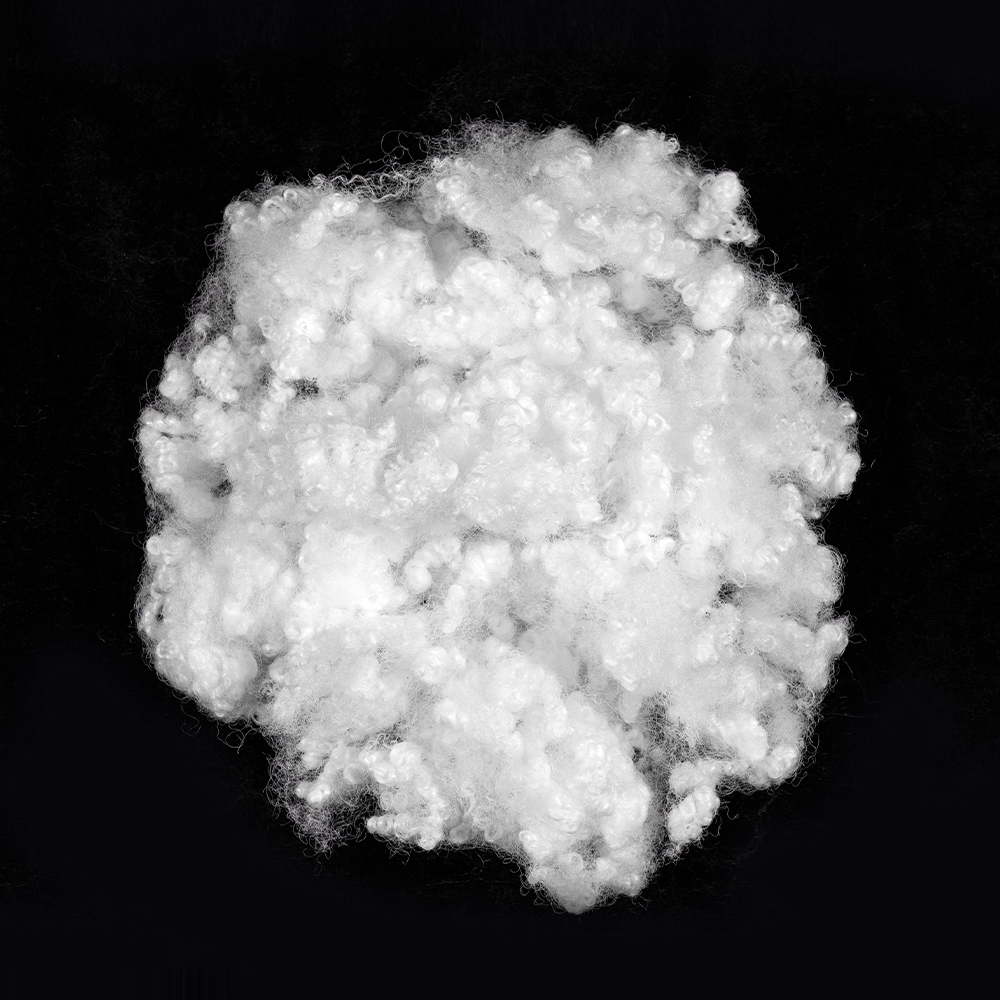
Hollow conjugate fiber dominates eco-friendly fill for three structural reasons. The hollow cross-section traps still air, so a given weight delivers more loft than a solid fiber of the same denier. The crimp is conjugate, meaning two polymers with different shrinkage sit side by side in each filament, so the spiral crimp is built into the fiber instead of being stamped in mechanically. That crimp survives washing, tumble drying and thousands of compression cycles far better than a mechanically crimped fiber. A silicone finish then makes the fiber open cleanly on the carding line, which keeps the fill uniform and reduces the weight needed per unit of volume.
Recycled PET fits into that structure without much compromise. Bottle flake is sorted, washed, melt-filtered and re-polymerised, then spun into filament on the same type of line used for virgin polymer. The technical risk is rarely the polymer itself; it is variability in flake quality, which shows up as inconsistent crimp, uneven denier and colour drift between batches. A supplier that controls polymerisation and spinning in one plant, rather than trading bales bought on the spot market, removes most of that risk.
Loft retention index after repeated compression and wash cycles, with the best performer set at 100. Indicative values from converter trials, not a specification guarantee.
If you are comparing grades, the practical differences usually appear at the third wash rather than on the certificate. Our guide on how to choose hollow conjugate fiber filling materials sets out the tests worth running before you commit to a bulk order.
Silicone-Treated vs Non-Silicone Hollow Conjugate Fiber
Both come off the same hollow conjugate base. The difference is the finish applied at the end of the line, and it changes how the fiber behaves on your equipment and in the finished product.
Silicone-treated hollow conjugate fiber
A silicone finish lowers surface friction, so the fiber opens and blends with far less energy on the carding line. The result is a fill with fewer neps, more even distribution and better resilience in the first weeks after filling. For pillow and cushion programs where consistency between production lots matters, silicone-treated hollow conjugate fiber is the default choice. The trade-off is that the finish can migrate slightly under sustained heat, and some brands prefer a finish-free specification for sensitive applications.
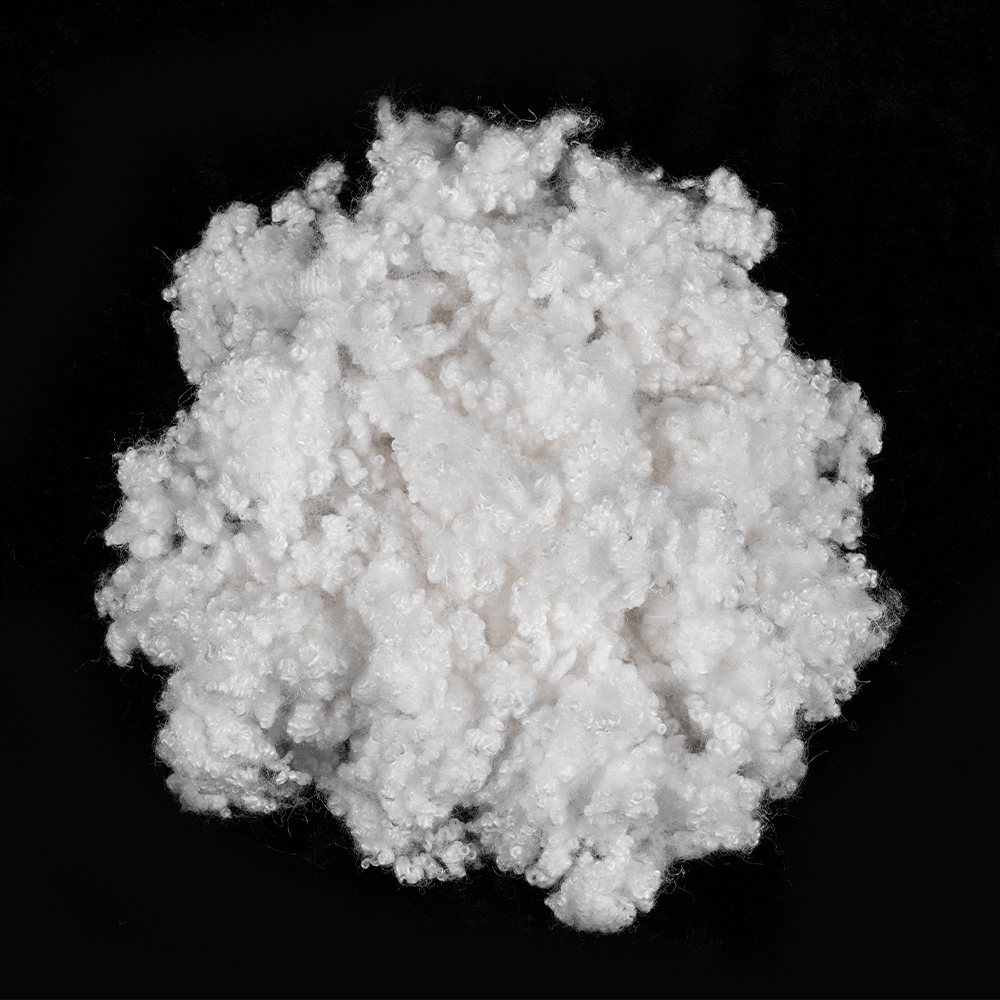 7D HCS Polyester Staple Fiber7D HCS polyester staple fiber is a commonly used filling material in the polyester fiber system. Compared to 3D HCS polyester staple fiber, its fiber thickness is mode...View Product →
Non-silicone hollow conjugate fiber
Without the silicone coating, the fiber has a slightly drier hand and better compatibility with downstream bonding and lamination steps, because there is no finish residue interfering with adhesion. It is the safer option when the fill sits next to a coated fabric, when the finished product will be thermally bonded, or when the customer specification excludes silicone for regulatory reasons. Expect to adjust carding settings: without the slip agent, the same fiber will process at a different rate.
| Property | Silicone-treated | Non-silicone |
|---|---|---|
| Surface friction | Low, easy opening | Higher, needs carding adjustment |
| Fill uniformity | Very good | Good |
| Bonding and lamination | Finish residue can interfere | Preferred |
| Best fit | Pillows, cushions, plush toys | Bonded fill, technical nonwovens |
Denier and Cut Length: The Levers You Actually Specify
Two numbers control almost everything a customer feels when they press a pillow. Denier sets the fineness of the filament and therefore the softness of the hand. Cut length sets how the fiber drafts, blends and stays in place inside the ticking. Get those two right and the recycled-content question becomes a formality.
| Denier | Typical cut length | Usual fill application | Notes |
|---|---|---|---|
| 3D | 64 mm | Soft pillows, plush toy fill | Finest hand, highest cost per kilogram |
| 7D | 64 mm | Standard pillow and cushion fill | The workhorse specification in most programs |
| 15D | 64 mm | Thick cushions, mattress pads, pet bedding | Maximum loft, coarser surface feel |
When you write the purchase order, put tolerances in writing rather than assuming them. Denier within plus or minus five percent, cut length within plus or minus two millimetres, a stated crimp count, oil pick-up in the range your line can handle, and moisture content below one percent. These five lines prevent almost every dispute that follows a first bulk shipment, because a fiber that opens well in a sample but mats in production is nearly always a crimp or oil issue rather than a polymer issue.
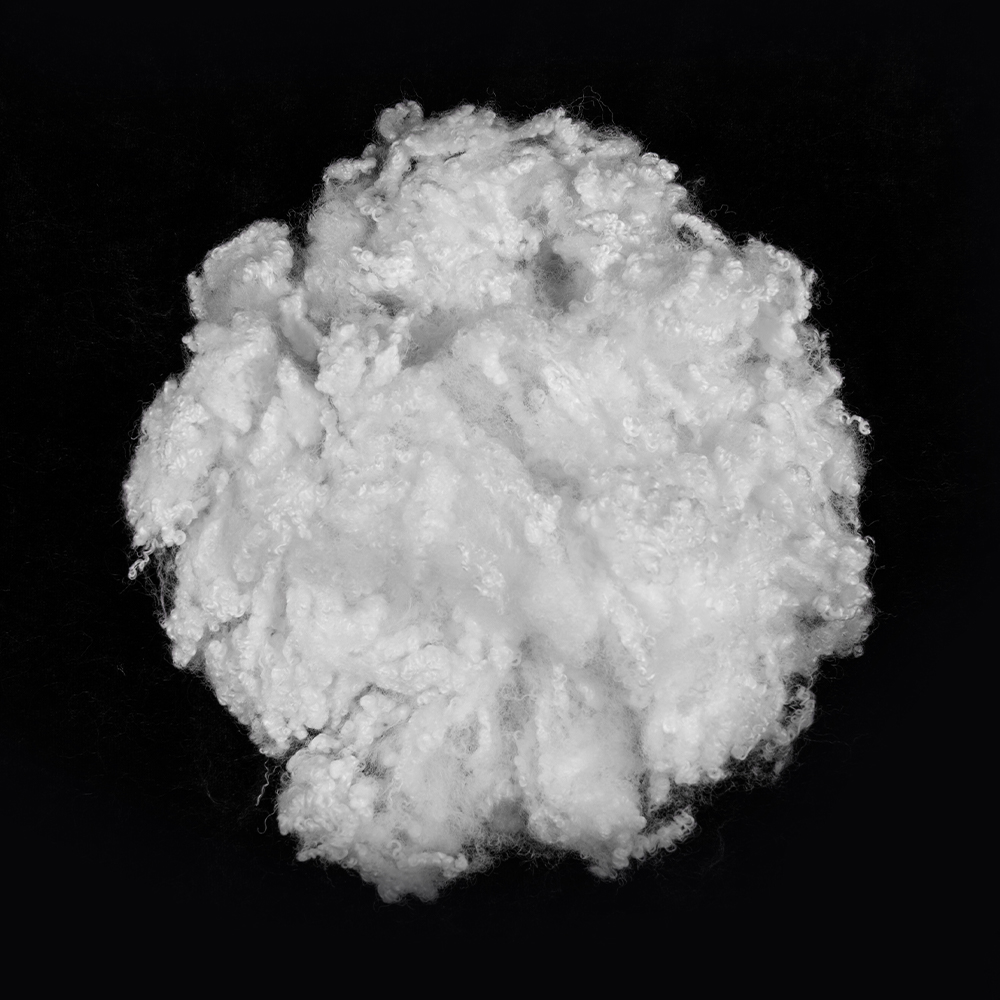 7D*64MM HC Polyester Staple Fiber7D*64MM HC polyester staple fiber is a conventional filling material that balances practicality and stability. With a moderate fiber thickness, it offers better cohesi...View Product →
Low-Melt Fiber and Microfiber: Two Useful Special Cases
Not every eco-friendly fill can be loose. Where a product needs a defined shape, a low-melt polyester staple fiber acts as an internal adhesive: its sheath softens at roughly 110 to 130 degrees C while the core stays intact, bonding the fiber network into a stable, single-material structure. A typical blend uses 15 to 25 percent low-melt fiber with the balance in hollow conjugate fiber. The advantage is recyclability, because the finished fill is still polyester rather than a mix of polyester and a separate binder resin.
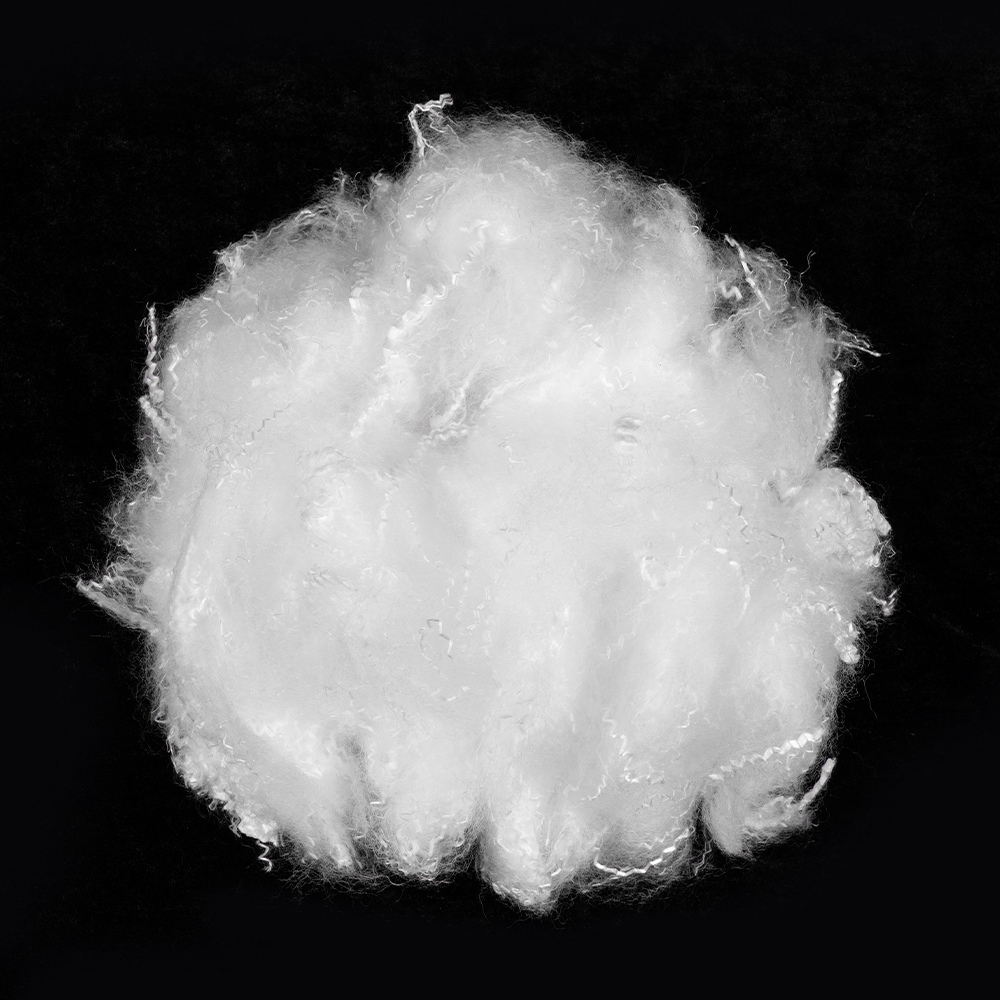 4D*51MM H Polyester Staple Fiber4D*51MM H polyester staple fiber, while maintaining the moderate thickness of the 4D specification, has optimized thermal bonding reaction characteristics, resulting i...View Product →
Microfiber is the other end of the scale. At 1.2 denier with a 25 or 32 mm cut, it gives a dense, down-like hand that suits premium duvet fill and soft-touch plush. It is more expensive per kilogram and it drafts differently from a 7D fiber, so it is normally used as a blend component rather than the whole fill.
- Silicone hollow conjugate 38%
- Non-silicone hollow conjugate 24%
- Microfiber 20%
- Low-melt binder 18%
Indicative composition of a blended eco-friendly fill for bedding and furniture. Adjust the ratio to the loft and firmness your product needs.
A Short Procurement Checklist Before You Order
Most filling problems are traceable to something that was never agreed in writing. Run through these points before releasing a purchase order:
- Ask for the recycled-content percentage per batch, and the documentation behind it, rather than a single figure for the whole year.
- Confirm denier, cut length, crimp count and oil pick-up with stated tolerances.
- Request a current safety test report covering the finished fiber, not just the raw polymer.
- Run a pilot fill on your own equipment for at least three production lots, and check loft recovery after five wash cycles.
- Check batch-to-batch colour and crimp consistency if you blend more than one delivery in the same product.
- Confirm the finish type against any downstream bonding or coating process.
Skipping the pilot is the single most expensive shortcut in this category. A fiber can pass every laboratory number and still mat inside a pillow if the crimp does not match your filling machine.
Frequently Asked Questions
Is recycled polyester filling actually eco-friendly?
It is when the recycled content is verified, the fiber lasts, and the finished product can be recycled again. Recycled PET reduces demand for virgin polymer and keeps bottles out of landfill, but a fill that fails after a year loses most of that benefit. Durability is part of the environmental case, not separate from it.
Does eco-friendly fill feel different from virgin fill?
At the same denier, cut length and crimp, the difference is minimal in normal use. The variation customers notice usually comes from flake quality rather than from the recycled content itself, which is why supplier control over polymerisation and spinning matters more than the percentage printed on the bag.
Which denier is best for pillow filling?
Seven denier with a 64 mm cut remains the standard for most pillow programs. Move to 3D for a softer, more premium hand, and to 15D where maximum loft matters more than surface softness, such as mattress pads and pet bedding.
Can filling be recycled at the end of a product's life?
Yes, if the fill is a single-material polyester structure. Using low-melt fiber as the binder keeps the whole fill polyester, so it can re-enter mechanical recycling instead of being landfilled with a mixed-material core. If you need order, sampling or specification details, the FAQ page covers the common questions directly.
The One-Line Summary
An eco-friendly filling material is a specification, not a slogan. Choose hollow conjugate polyester staple fiber with verified recycled content, confirm silicone or non-silicone finish against your process, fix denier and cut length with real tolerances, and add low-melt binder where the fill must hold its shape. Do that and the recycled version will match the virgin version in every way a customer can feel, while giving the brand a claim it can actually defend.
Ningbo Huaxing Technology Co., Ltd.
-
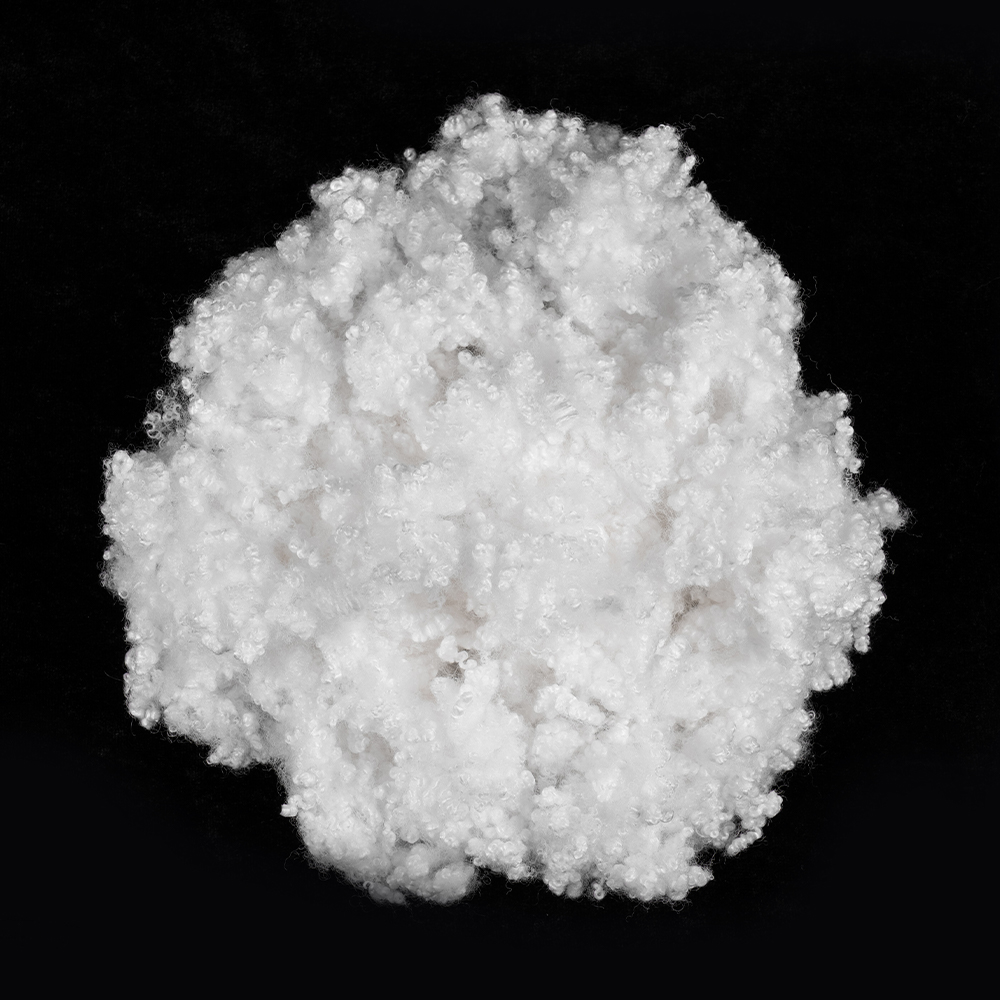
3D HCS Polyester Staple Fiber
-
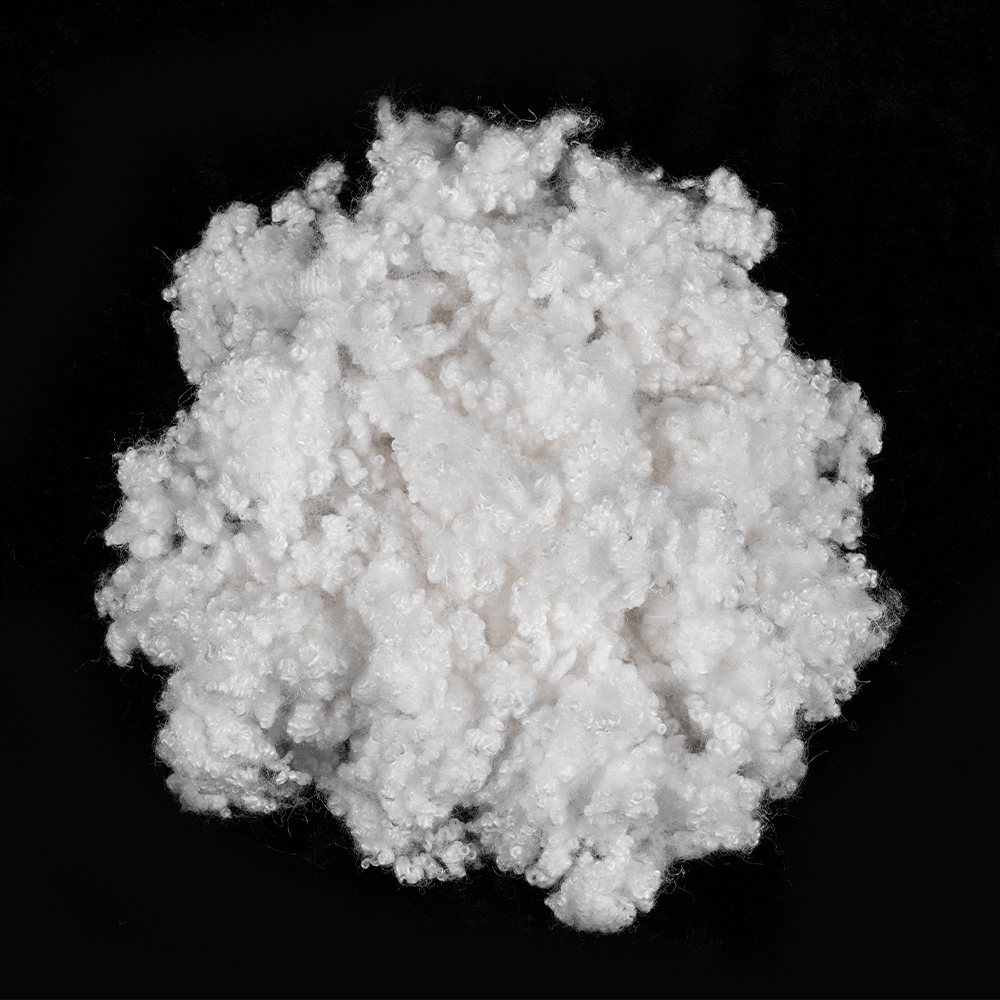
7D HCS Polyester Staple Fiber
-
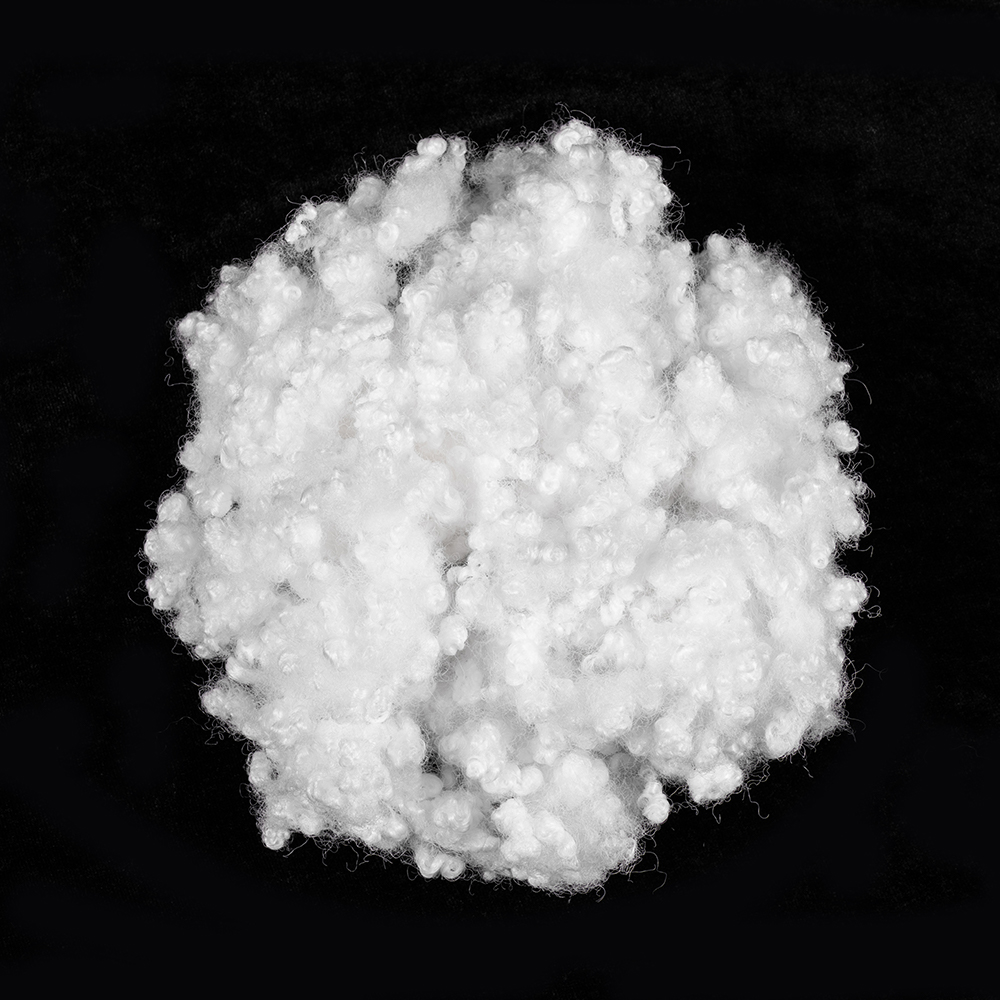
15D HCS Polyester Staple Fiber
-
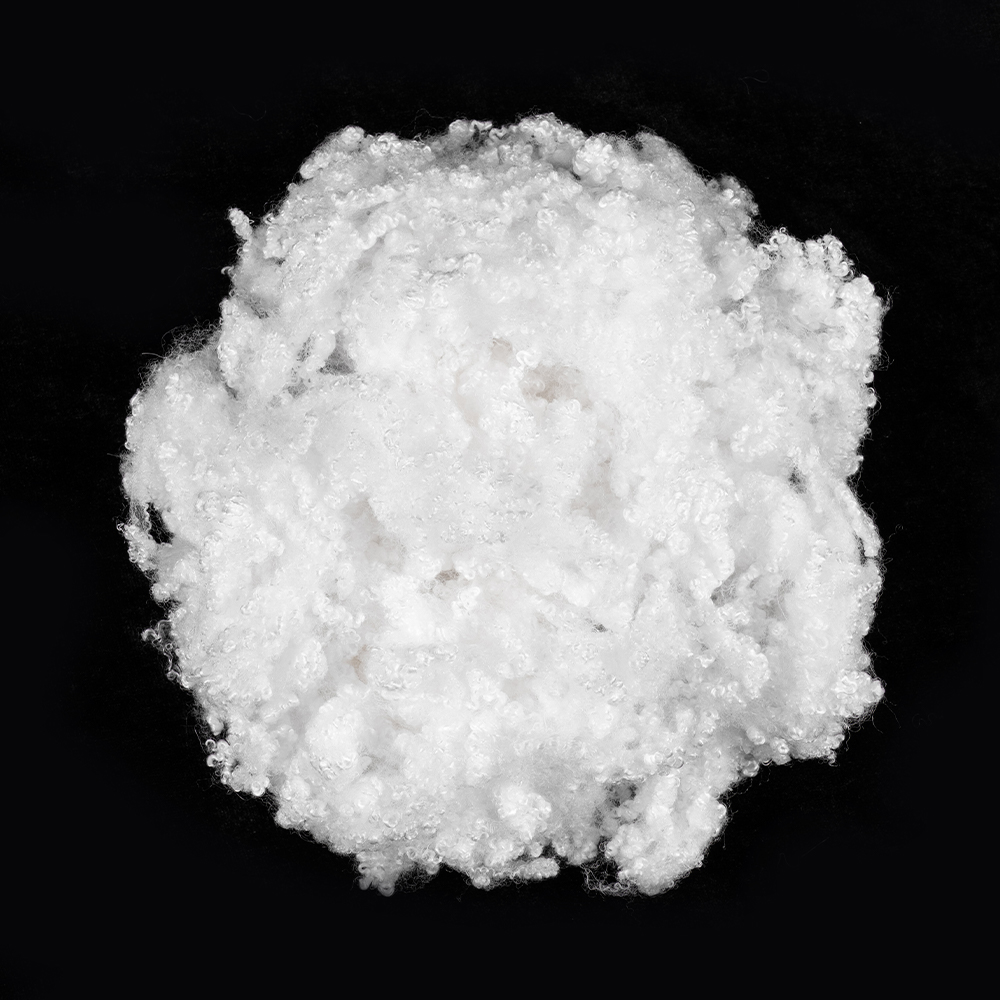
3D*64MM HC Polyester Staple Fiber
-
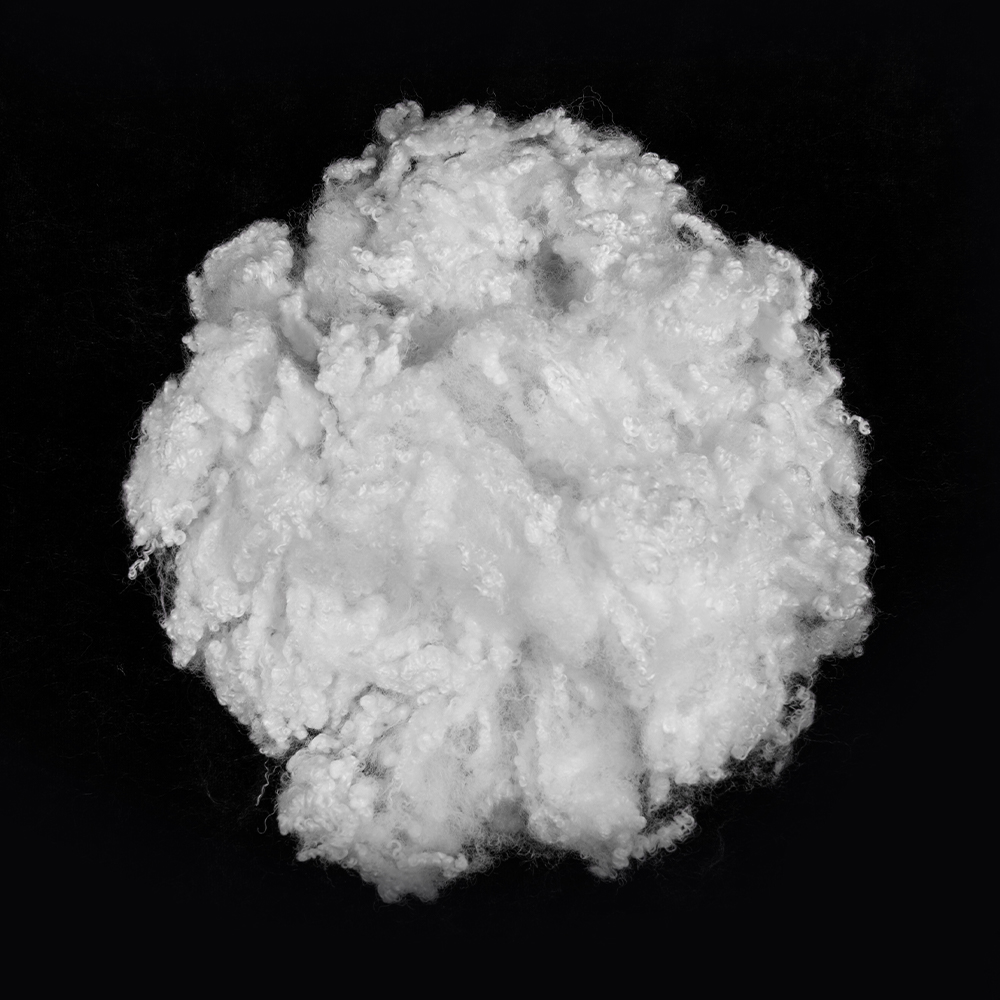
7D*64MM HC Polyester Staple Fiber
-
15D*64MM HC Polyester Staple Fiber
-
Quick Links
Home About Us Products FAQ News Contact Us -
Product Links
Polyester Staple Fiber Pre-oriented Yarn/POY Polyester Chip/PET Chip -
About Us
About Us Factory Honor FAQ -
Get In Touch
E-mail:
[email protected]Phone:
+86-130 8198 6637Tel:
+86-0574-63732888Address:
Haidianrong Village, Longshan Town, Cixi City, Ningbo, Zhejiang Province, China.
