-
 Welcome to Huaxing Technology
-
 Email us: [email protected]


 中文简体
中文简体

Down-Like Tactile Fiber: Specs, Blends, and Sourcing Guide for Polyester Fillings
Content
- 1 What Down-Like Tactile Fiber Means in Physical Terms
- 2 The Three Fiber Roles Behind a Down-Like Hand
- 3 Specification Matrix: Denier, Cut Length and Blend Share
- 4 Siliconized or Non-Silicone: The Choice That Decides Wash Durability
- 5 Process Window and Quality Checks Before a Bulk Order
- 6 Sourcing Risks and the Questions Worth Asking
- 7 Frequently Asked Questions
Squeeze a quilted comforter between both hands. If the surface feels slick and the batt returns slowly and flat, the filling was chosen on price rather than on tactile performance. Most polyester fillings lose a blind hand test against down for three predictable reasons: the fibers are too thick to bend softly, the hollow structure collapses under compression, or nothing holds the batt together after the first wash.
The short answer: down-like tactile fiber is a construction, not a coating. It comes from a fine-denier surface layer, a spiral-crimped hollow conjugate core, and a low-melt binder that fuses the batt at fiber cross points. Specify all three and a 100% polyester filling can pass a retail hand-squeeze test and hold its loft through repeated laundering.
Below: what each fiber role contributes, the numbers behind words like soft and fluffy, and the sourcing checks that keep a good sample from becoming a disappointing bulk order.
What Down-Like Tactile Fiber Means in Physical Terms
Down feels the way it does because of geometry, not chemistry. A down cluster is roughly 90% air by volume, its filaments measure a few microns across, and it regains most of its thickness within seconds after compression. Polyester can copy all three behaviours, but only when each is engineered separately. Words like soft or fluffy cannot be written into a purchase order, so the first step is translating hand feel into measurable targets.
| Tactile attribute | Dominant fiber factor | Working target |
|---|---|---|
| Soft initial touch | Single fiber denier in the surface layer | 0.9–1.5 D micro fiber |
| Loft and bulk | Hollow ratio plus spiral crimp | 25–35% hollow, 8–12 crimps per 25 mm |
| Compression recovery | Bond points and crimp memory | At least 90% thickness recovery within 60 seconds |
| Wash durability | Bonding quality rather than finish | At least 90% loft retention after 5 wash cycles |
| Dry, non-slick surface | Silicone finish level | 0.2–0.5% on fiber weight |
These numbers interact rather than add up. Raising the micro fiber share improves softness but lifts packing density, which pulls loft down unless hollow conjugate fiber stays the majority of the blend. A higher hollow ratio adds bulk but thins the fiber wall, so 3D hollow grades handle compression better than 15D grades at the same void content. Heavier silicone makes the batt feel silkier immediately while lowering the bond strength that wash durability depends on.
The Three Fiber Roles Behind a Down-Like Hand
Almost every workable down-like filling splits the job in three: one fiber supplies air volume, one controls what the customer's hand touches, one stops the structure from collapsing.
Siliconized Hollow Conjugate Fiber: The Loft Engine
Spiral-crimped hollow conjugate fiber provides the bulk. The side-by-side bicomponent structure curls permanently, so overlapping fibers push against each other instead of lying flat, and the central void adds air space without weight. A silicone finish then lowers surface friction so fibers slide during carding and spring back after compression.
In filling work, 3D siliconized hollow conjugate grades give the crispest recovery, 7D grades balance recovery with cost, and 15D grades build bulk quickly for heavier quilts and mattress pads. The common failure is over-finishing: the batt feels wonderful in the sample room, but the slick surface stops the low-melt binder from gripping and the comforter goes flat after two washes.
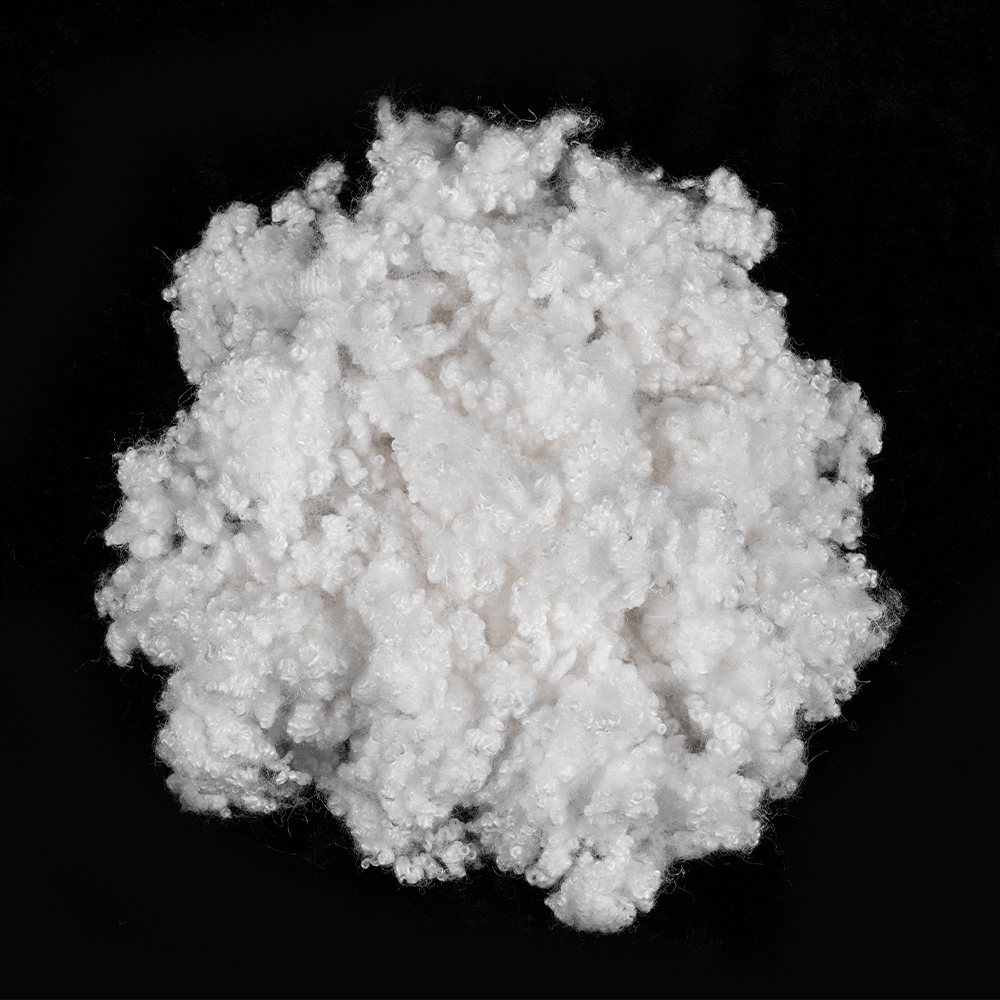 7D HCS Polyester Staple Fiber7D HCS polyester staple fiber is a commonly used filling material in the polyester fiber system. Compared to 3D HCS polyester staple fiber, its fiber thickness is mode...View Product →
Micro Fiber: The Surface the Customer Touches
Micro fiber at 1.2 D puts far more filaments into every gram, and thinner filaments bend with less force, which is what a hand reads as softness. Used as a surface layer or blended at 20–30%, it removes the slightly wiry feel that coarse hollow fiber leaves on quilted shells and pillow covers.
The limit is packing. A batt made entirely of 1.2 D fiber feels luxurious at 2 cm thickness and dense at 6 cm, because the same weight of finer fiber occupies less volume. Keep micro fiber in the outer layers or at a modest blend share, and let hollow conjugate fiber carry the bulk.
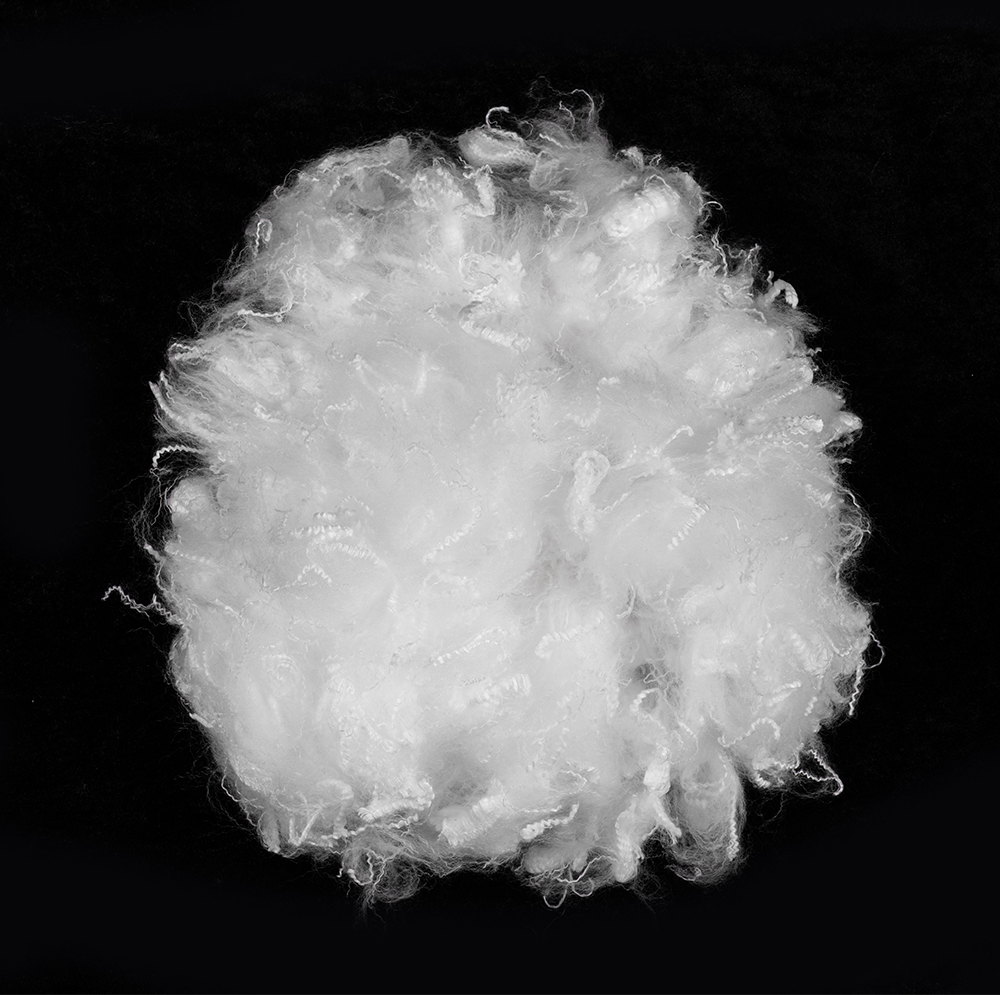 1.2D*32MM Polyester Staple FiberThe 1.2D*32MM polyester staple fiber retains the soft and smooth characteristics of 1.2D microfiber, providing a significantly down-like feel. Meanwhile, the 32MM fibe...View Product →
Low-Melt Fiber: The Structural Memory
Low-melt polyester staple fiber has a sheath that softens at 110–130 °C while the core stays solid. Pass the carded batt through a bonding oven and the sheath welds the crossing points into a three-dimensional web. Those welds replace resin sprays and stitching, and they are the main reason a bonded batt keeps loft after laundering instead of migrating into the corners of a duvet.
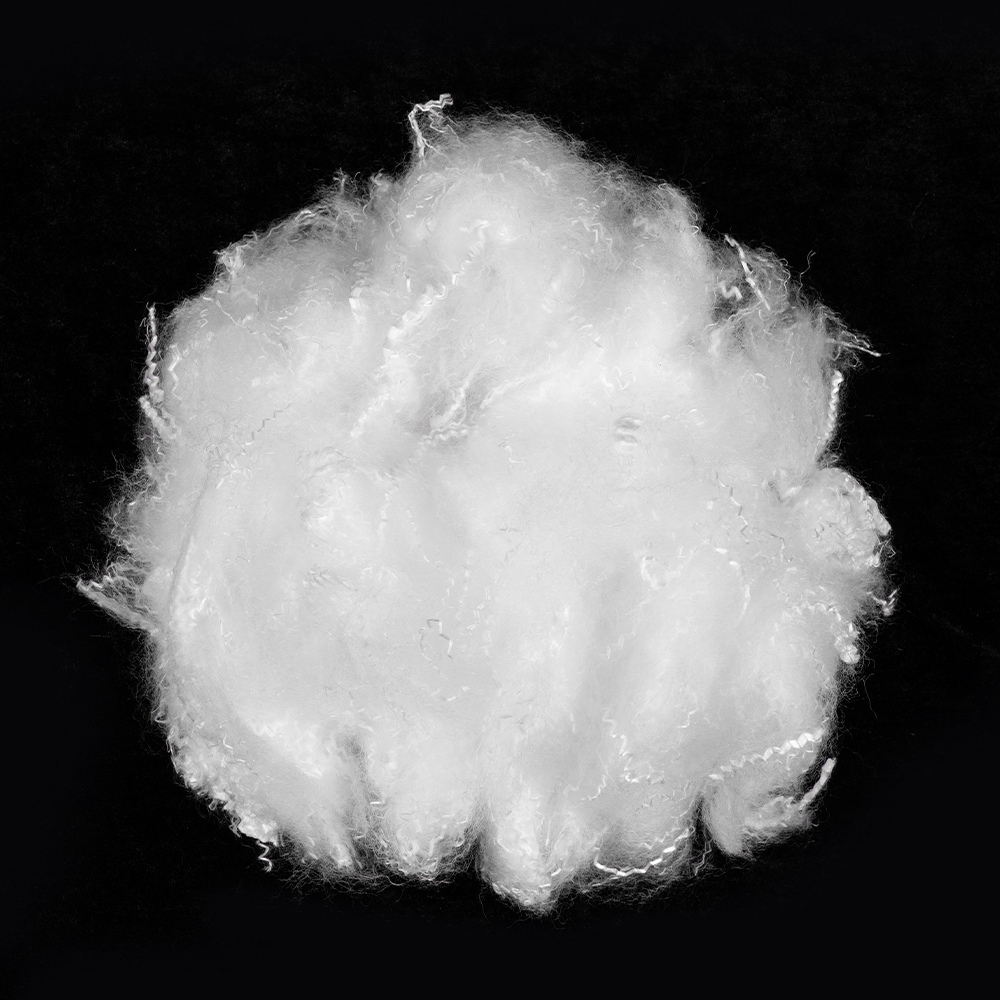 4D*51MM H Polyester Staple Fiber4D*51MM H polyester staple fiber, while maintaining the moderate thickness of the 4D specification, has optimized thermal bonding reaction characteristics, resulting i...View Product →
A Blend That Works
For washable bedding, a starting point of roughly 58% siliconized hollow conjugate fiber, 27% micro fiber and 15% low-melt fiber covers loft, touch and durability in one pass. Shift any share by more than ten points and one of the three properties usually suffers.
- 58% Siliconized hollow conjugate (loft)
- 27% Micro fiber (surface feel)
- 15% Low-melt fiber (bonding)
Once the roles are clear, the purchase order needs numbers. Denier sets softness and bulk, cut length sets how the fiber behaves in carding or air-laid forming, and blend share sets which property dominates the finished batt.
| Fiber role | Typical denier | Cut length | Blend share | Primary function |
|---|---|---|---|---|
| Siliconized hollow conjugate (HCS) | 3D, 7D, 15D | 51 or 64 mm | 45–65% | Loft, recovery, slick hand |
| Non-silicone hollow conjugate (HC) | 3D, 7D, 15D | 64 mm | 30–60% | Loft where thermal bonding follows |
| Micro fiber | 1.2D | 25 or 32 mm | 15–30% | Soft touch, fine surface |
| Low-melt fiber | 2D, 4D | 51 or 64 mm | 10–20% | Bond points, wash durability |
Cut length deserves more attention than it usually gets. For carded and cross-lapped batts, 51–64 mm staple opens cleanly and forms an even web; below about 38 mm, short fibers create fly, uneven batt weight and dust in the plant. Air-laid filling lines handle shorter fiber better, which is why 25 mm and 32 mm micro fiber grades exist. If a line runs both processes, standardising on 51 mm and 64 mm cuts reduces changeover time and inventory complexity.
Siliconized or Non-Silicone: The Choice That Decides Wash Durability
Silicone finish is not decoration. It controls static during carding, reduces fiber-to-fiber friction, and produces the dry, slippery touch customers associate with down. Non-silicone hollow conjugate fiber is rougher in the card and feels slightly firmer in the hand, but it bonds more reliably when the batt is thermally fused or flame laminated to a shell fabric.
The practical rule: if the filling relies on low-melt bonding or adhesive lamination, keep silicone levels modest and check bond strength after conditioning. If the filling is a loose, unbonded batt inside a stitched shell, a full silicone finish does no harm and improves initial hand feel. A middle path often wins — a siliconized hollow conjugate core with a lightly finished surface layer.
Wash testing is the only honest way to compare. Five cycles at 40 °C followed by low-heat tumble drying separates a batt that keeps its thickness from one that collapses into a thin pad. Our notes on choosing hollow conjugate fiber for filling materials walk through the same evaluation from the buying side.
Process Window and Quality Checks Before a Bulk Order
Most down-like complaints trace back to the bonding step, not the fiber. A few settings decide whether the batt keeps its structure:
- Bonding oven temperature: 15–25 °C above the measured melting onset of the low-melt sheath, typically 125–145 °C. Too low and the welds never form; too high and the batt stiffens into felt.
- Dwell time: 60–90 seconds for a 20–40 mm batt. Thicker batts need a longer dwell or two-sided heating.
- Carding humidity: keep the plant at 55–65% relative humidity. Dry air turns silicone-finished fiber into a static tangle that forms laps and thin spots.
- Batt weight control: aim for a coefficient of variation of about ±3% across the width. Weight variation shows up as cold spots in a comforter long before it shows up in a lab report.
- Migration test: wrap the finished batt in the actual shell fabric, run five wash cycles, and check whether fiber has poked through the weave.
- Recovery timing: measure thickness recovery at 60 seconds and again at 24 hours. A batt reaching 85% in a minute and 95% overnight is normally acceptable.
Run these checks on the sample that convinced you, on your own line, before agreeing to bulk terms. A supplier's hand sample and your production batt are rarely the same object.
Sourcing Risks and the Questions Worth Asking
Polyester filling fiber is sold on specifications that are easy to state and harder to verify. Four checks catch most of the gap between a quotation and a delivered bale:
- Denier tolerance: get the accepted range in writing, typically ±5% to ±8%. A 7D fiber delivered at 8D feels noticeably coarser and builds less loft per kilogram.
- Hollow ratio: request the cross-section verification method, not just a figure. A microscope slide shows whether a claimed 30% void is a real hollow core or a small hole in a thick wall.
- Silicone content: extraction testing settles finish claims. Over-finished fiber cards beautifully and bonds poorly, which is exactly the failure that appears after the first wash.
- Moisture and short fiber: moisture above 1% causes clumping in storage, and short fiber content above a few percent creates dust and uneven batts.
Also confirm bale compression and packaging. Fiber compressed hard for months recovers slowly, and the first metres off a bale can behave differently from the middle. Sample across the bale, not just from the surface.
Frequently Asked Questions
Is down-like tactile fiber the same as down alternative?
Not exactly. Down alternative describes a market position and often a solid, low-cost polyester filling. Down-like tactile fiber describes a specification: fine denier surface fibers, spiral-crimped hollow conjugate cores, and a bonded structure chosen so the batt recovers after compression. Two products sold under the same phrase can differ by ten percentage points in loft retention after washing.
Which denier gives the softest touch?
For the surface layer, 1.2 D micro fiber is the practical minimum for volume production; finer deniers exist but card poorly at high speed. For the core, 3D and 7D hollow conjugate fibers feel softer than 15D at equal batt weight. If a comforter feels wiry, the fastest fix is usually replacing part of the coarse core with micro fiber rather than changing every fiber.
Does the silicone finish wash out?
Partially, and that is expected. Most of the finish survives the first few cycles, but surface friction rises, which is why a purely silicone-dependent batt feels flatter after a year of use. Bonded structures hold their shape regardless of finish loss, because the low-melt welds carry the load.
Can down-like polyester be blended with real down?
It is done, usually at 20–40% polyester, to control cost and improve recovery in humid climates. Two cautions: the polyester must be fine enough not to poke through down-proof shells, and blending changes the fill power calculation, so the label value has to be retested rather than averaged.
Down-like tactile fiber rewards decisions made early: pick the denier for softness, the hollow ratio and crimp for loft, the cut length for your forming line, and the bonding window for wash durability. Get those four right and the fiber becomes almost invisible in the finished product, which is exactly what a customer should feel. Get one wrong and the comforter announces itself as polyester the moment it is squeezed.
Ningbo Huaxing Technology runs polyester staple fiber lines covering siliconized and non-silicone hollow conjugate grades, low-melt fiber and 1.2 D micro fiber, backed by a polyester platform with 160,000 tonnes of annual POY capacity. If you are building a filling specification from scratch, start with the answers to common fiber selection questions, or send us your target batt weight and wash standard and we will suggest a starting blend.
Ningbo Huaxing Technology Co., Ltd.
-
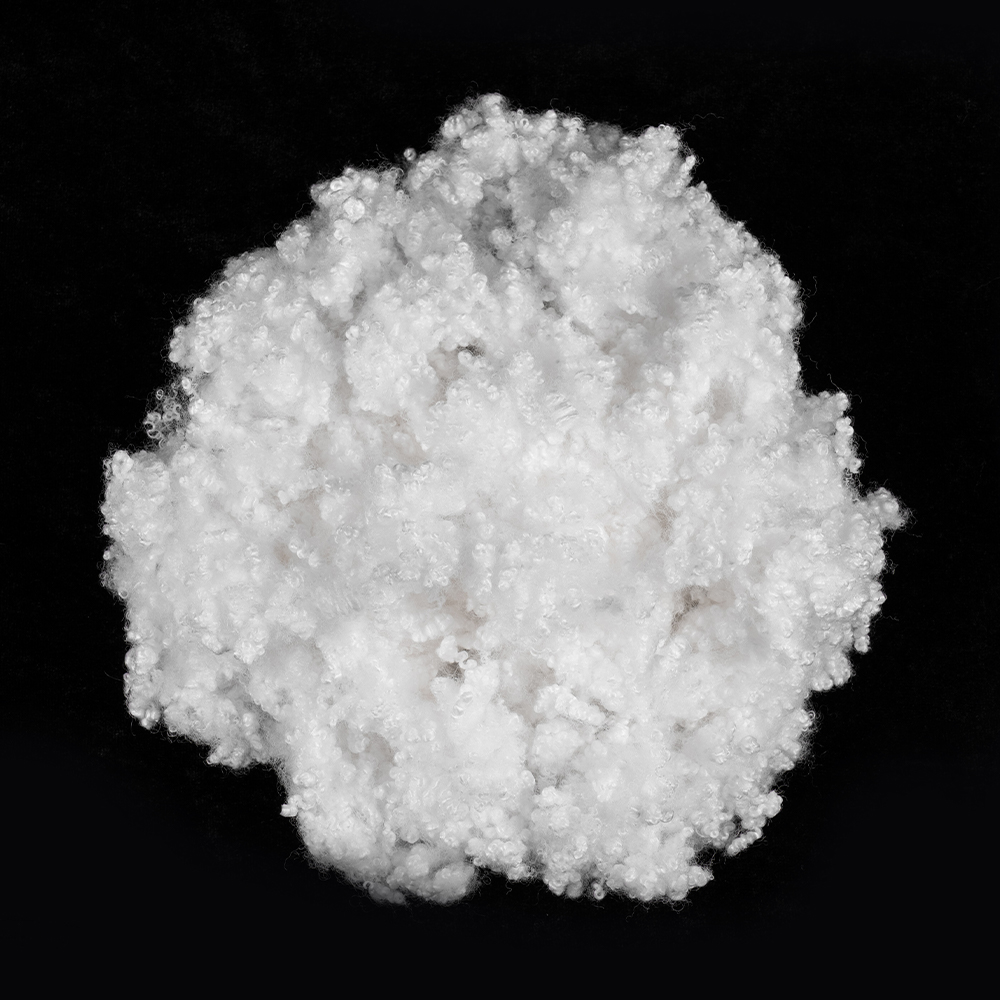
3D HCS Polyester Staple Fiber
-
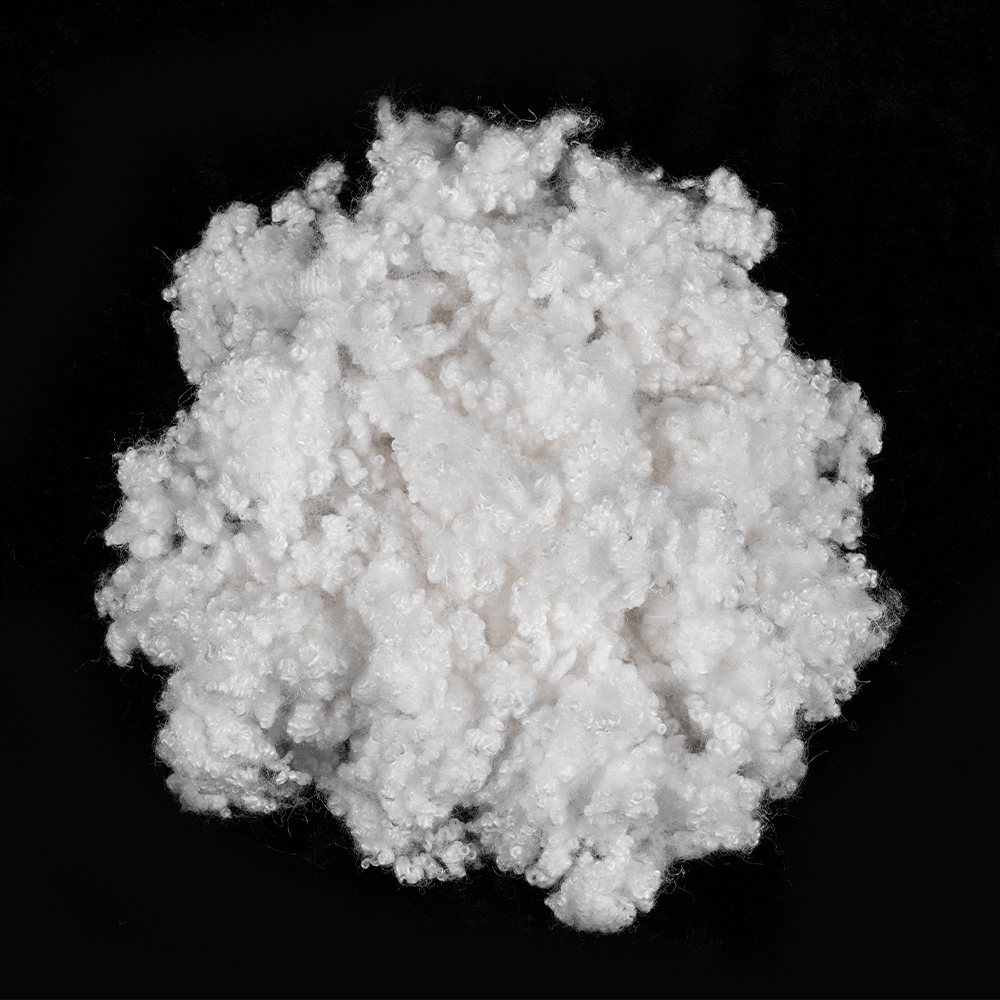
7D HCS Polyester Staple Fiber
-
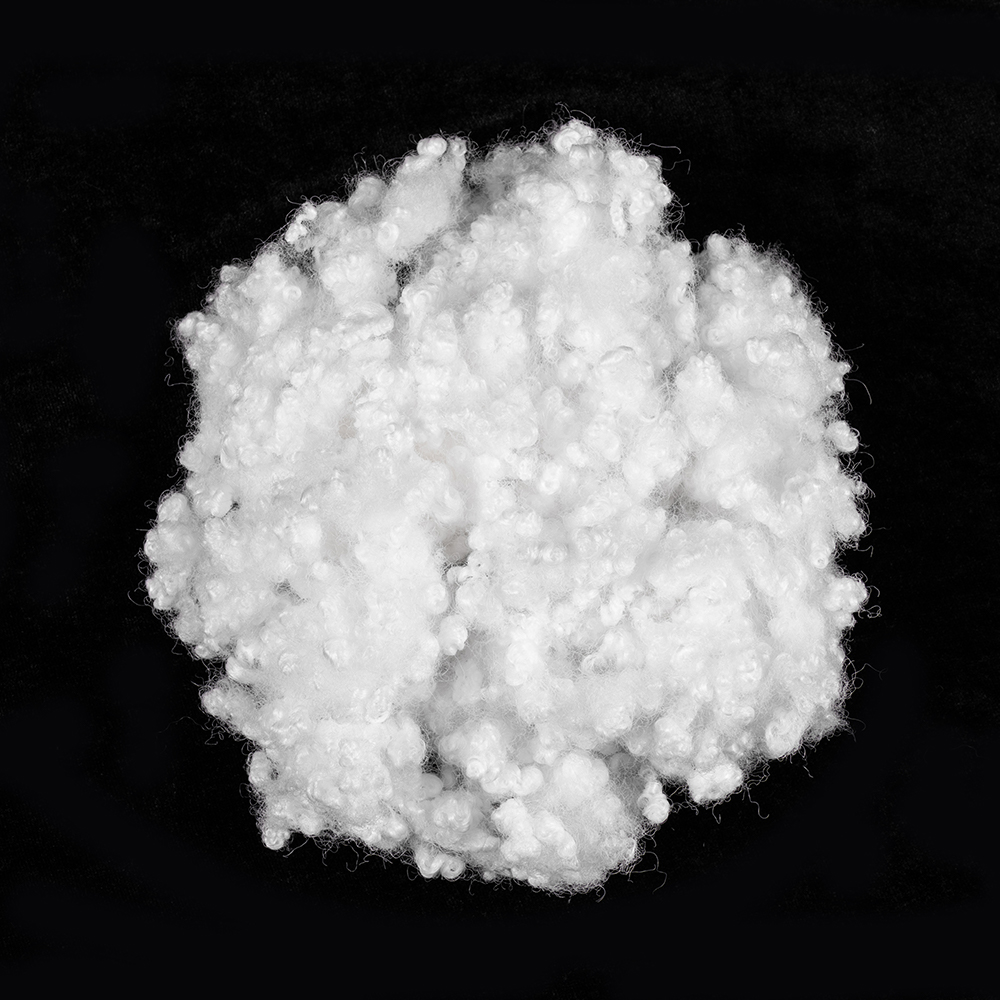
15D HCS Polyester Staple Fiber
-
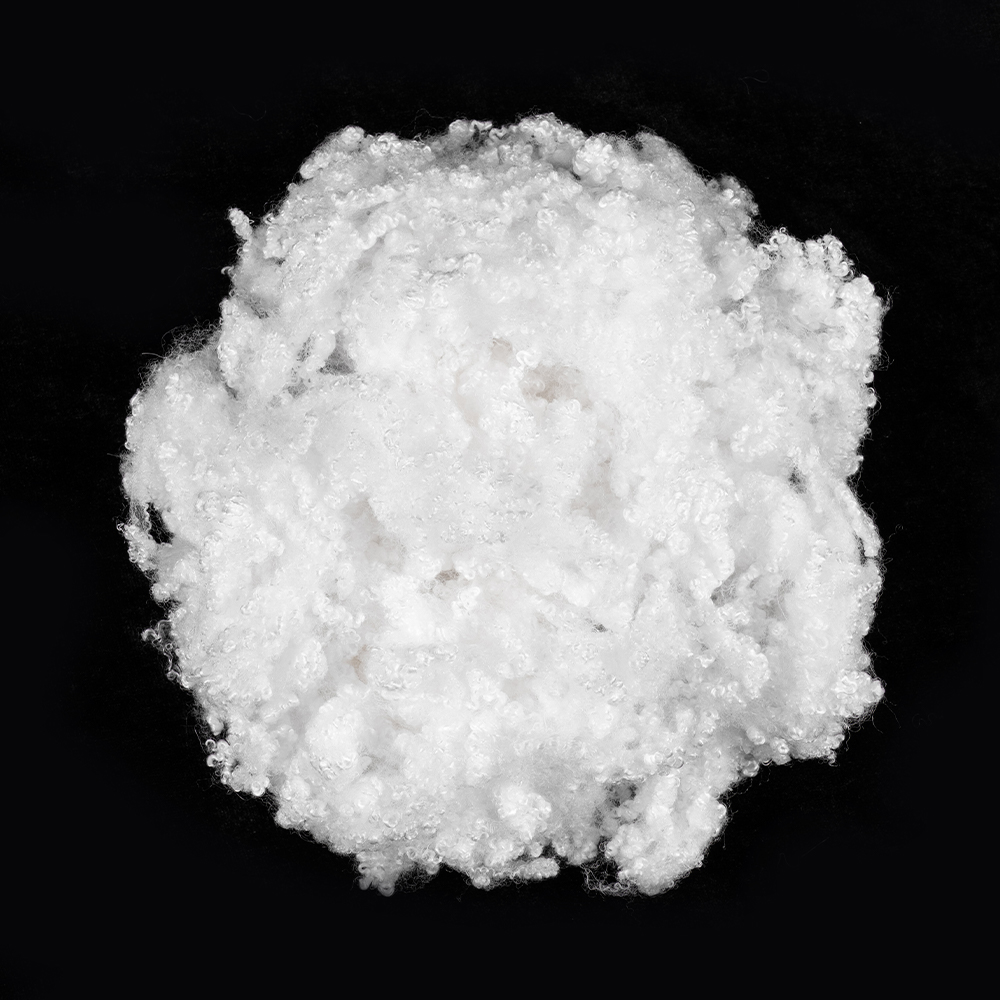
3D*64MM HC Polyester Staple Fiber
-
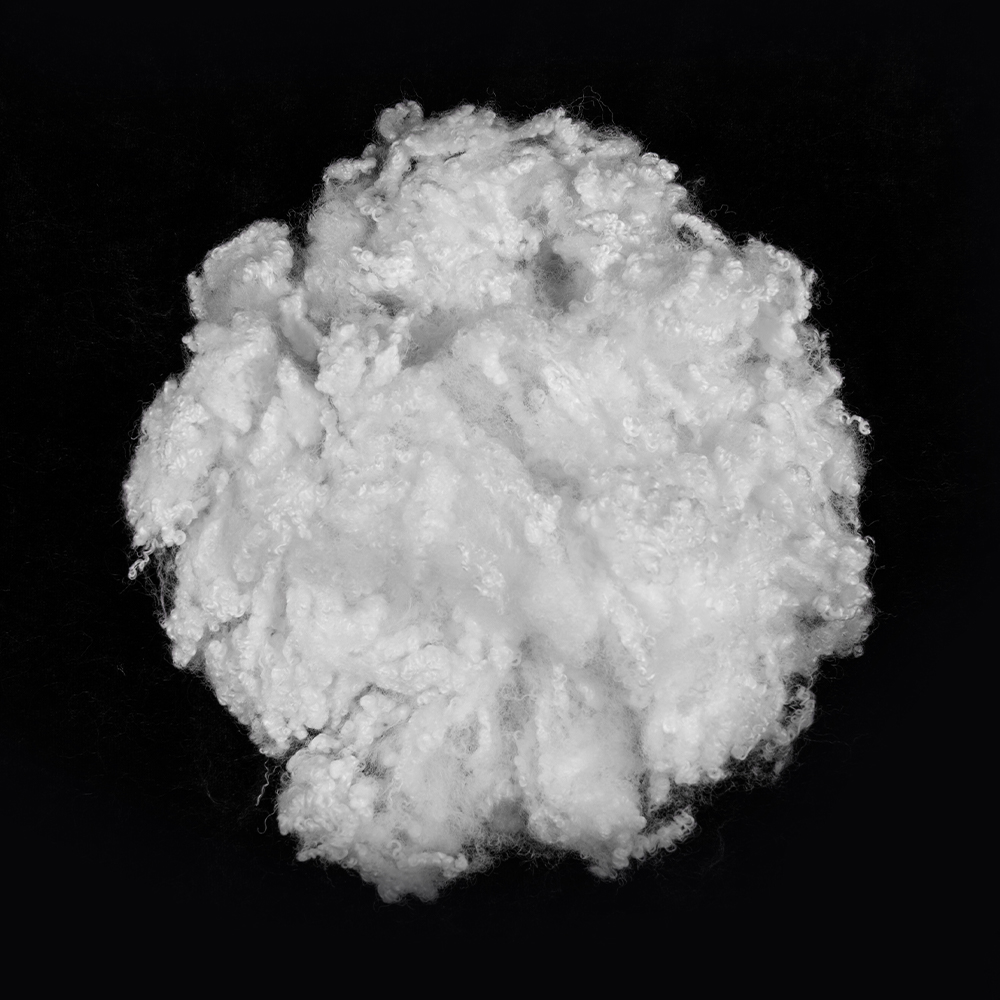
7D*64MM HC Polyester Staple Fiber
-
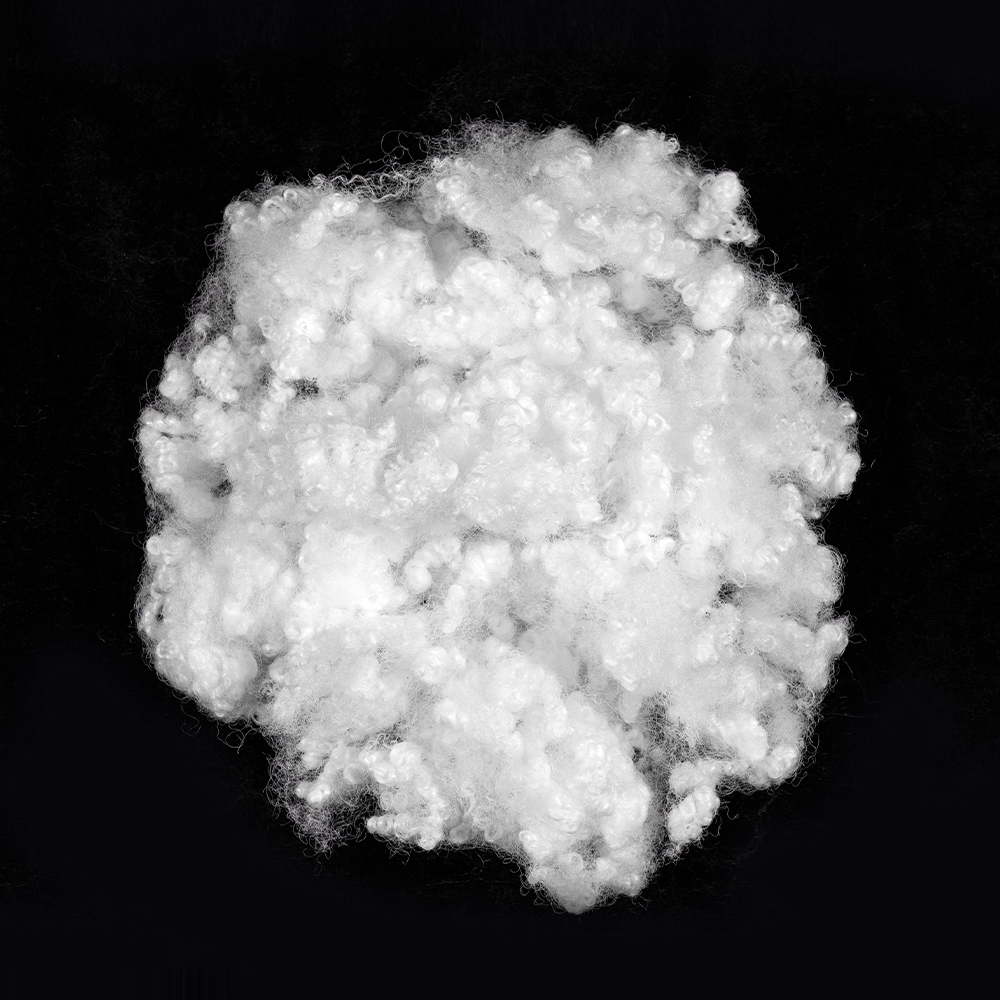
15D*64MM HC Polyester Staple Fiber
-
Quick Links
Home About Us Products FAQ News Contact Us -
Product Links
Polyester Staple Fiber Pre-oriented Yarn/POY Polyester Chip/PET Chip -
About Us
About Us Factory Honor FAQ -
Get In Touch
E-mail:
[email protected]Phone:
+86-130 8198 6637Tel:
+86-0574-63732888Address:
Haidianrong Village, Longshan Town, Cixi City, Ningbo, Zhejiang Province, China.
