-
 Welcome to Huaxing Technology
-
 Email us: [email protected]


 中文简体
中文简体

Automotive Interior Materials: Polyester Fiber Solutions for Seat, Carpet & Trim
Content
When a global automaker's interior team gathers to approve materials for a new model platform, the conversation rarely opens with the word "polyester." It starts with abrasion targets, cabin-odor limits, and cost per square meter. Yet by the time those requirements are translated into seat covers, headliners, floor carpet, and door trim, polyester fibers have been specified across nearly every soft surface in the vehicle. For OEMs and tier-one suppliers alike, knowing which polyester fiber forms to specify — hollow conjugate, low melt, or micro fiber — and how they perform under real automotive loads has become a core engineering skill.
Why Polyester Has Become the Default Automotive Interior Material
Polyester is rarely the most expensive fiber in an automotive interior, and it is never the most exotic. It dominates because it delivers what automakers actually test: tensile strength, dimensional stability, color fastness, UV resistance, and predictable processing at scale. In a typical mid-size sedan, polyester accounts for an estimated 45% of the fiber weight in soft trim — ahead of leather, vinyl, and nylon.
Leather is reserved for premium seating surfaces, vinyl for low-cost trim, and nylon for high-wear zones such as floor carpet. Polyester, by contrast, appears in every interior zone, often in several forms at once. That versatility is exactly why material engineers treat polyester as the default substrate and then modify it — through fiber shape, denier, finish, or blend ratio — to meet the requirements of each component.
- Polyester 45%
- Leather 20%
- Vinyl 15%
- Nylon 10%
- Other 10%
Key Polyester Fiber Types Used in Automotive Interiors
Polyester interior materials are not a single product line. Fiber geometry, denier, and melt behavior differ from one interior zone to the next. Three polyester fiber types matter most in automotive trim: hollow conjugate fiber, low melt fiber, and micro fiber.
Hollow Conjugate Fiber for Cushioning and Insulation
Hollow conjugate polyester fibers contain a continuous air channel along the filament axis. That channel lowers fiber density and traps still air, which improves thermal insulation and compression recovery. Automotive molders use hollow conjugate fibers in seat back padding, armrest cores, and head restraint fillings, where the material must keep its shape through years of cyclic loading. The 7D/64mm specification, supplied in a non-silicone finish, is a practical compromise between cushioning support and bonding compatibility with adjacent nonwoven layers.
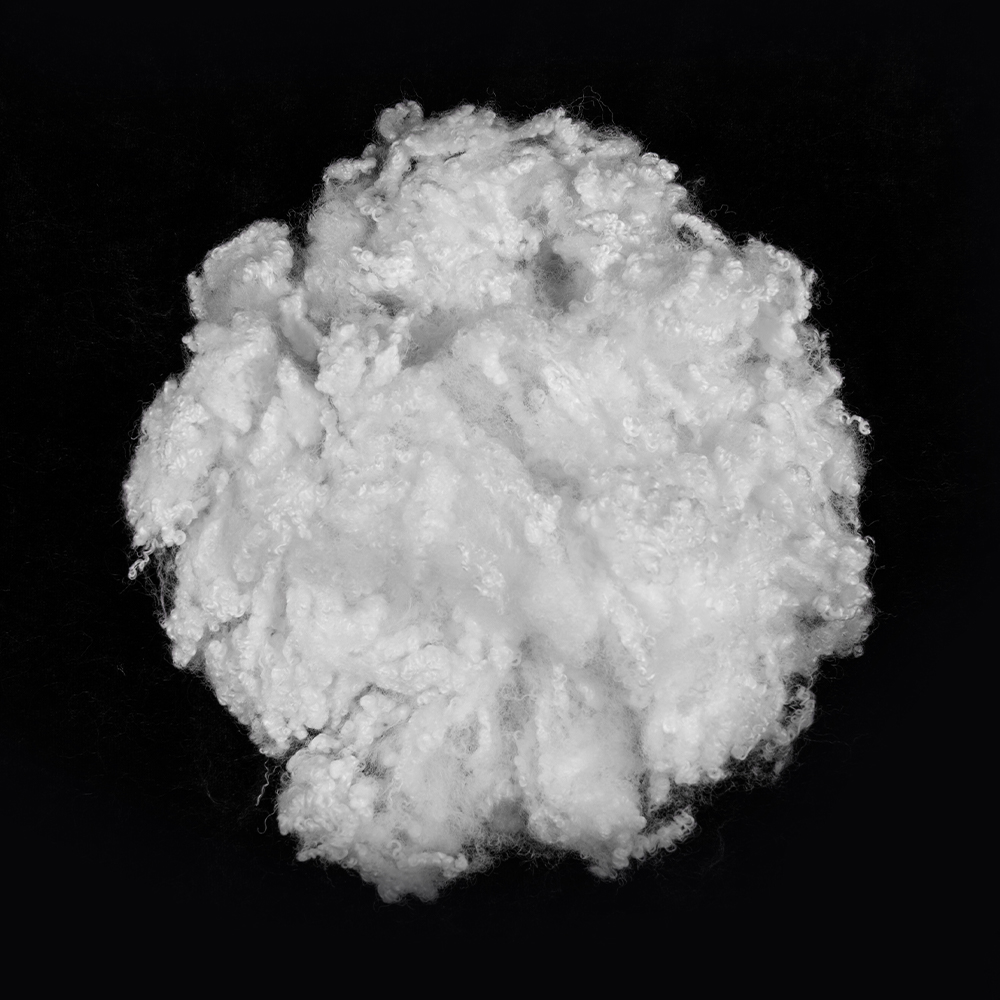 7D*64MM HC Polyester Staple Fiber7D*64MM HC polyester staple fiber is a conventional filling material that balances practicality and stability. With a moderate fiber thickness, it offers better cohesi...View Product →
Low Melt Fiber for Structural Bonding
Low melt polyester fiber is engineered to behave as a thermoplastic adhesive. When heated above its activation range — typically 110°C to 130°C — the outer layer flows and fuses the surrounding fibers, then re-solidifies on cooling. This characteristic makes low melt fiber essential in headliners, package trays, acoustic panels, and trunk liners, where nonwoven layers need stiffness and delamination resistance without chemical adhesives. The 4D/51mm low melt fiber is widely selected for compressed panels because it disperses evenly and generates consistent bond points across the web.
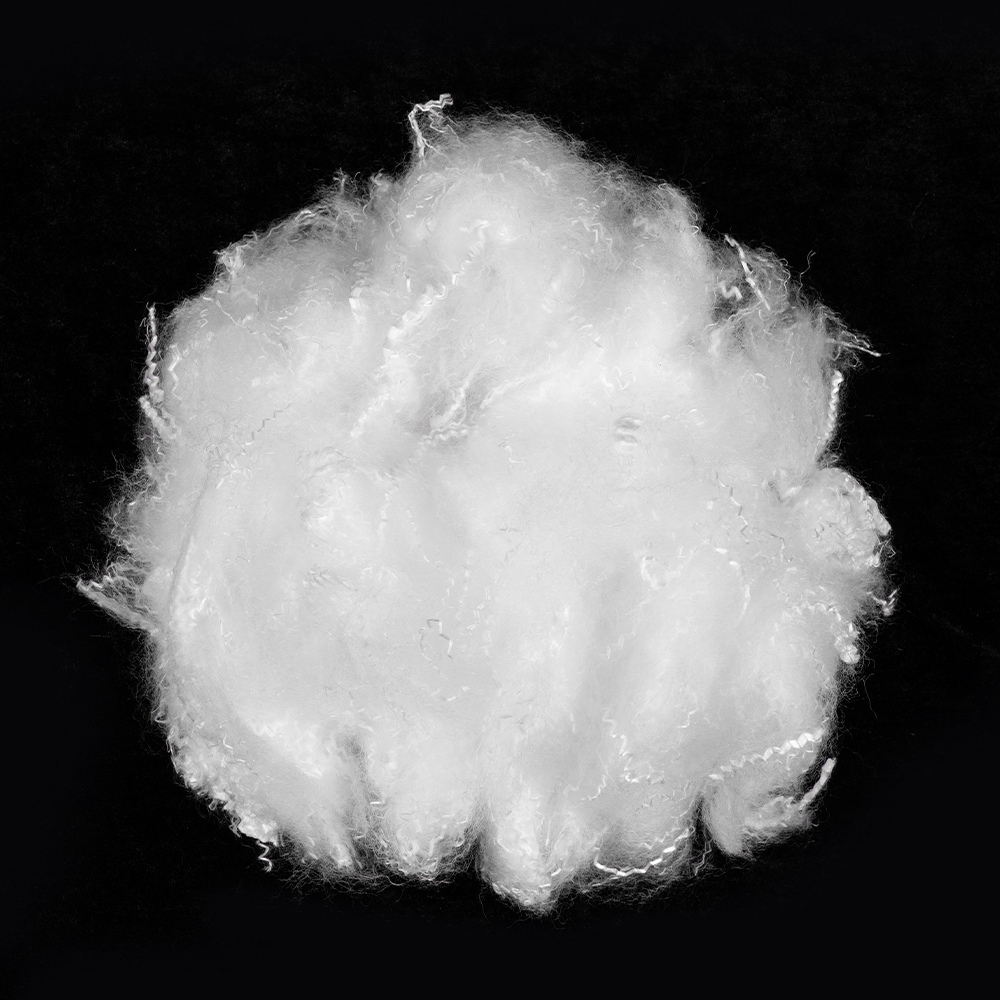 4D*51MM H Polyester Staple Fiber4D*51MM H polyester staple fiber, while maintaining the moderate thickness of the 4D specification, has optimized thermal bonding reaction characteristics, resulting i...View Product →
Micro Fiber for Tactile Surface Quality
Micro fibers finer than 1.5 denier per filament produce fabric surfaces with a dense, soft hand feel that approaches natural suede. Automotive designers use micro fiber polyester for seat covers, door armrests, and trim panels that require a premium surface without the weight or cost of leather. The 1.2D/32mm micro fiber is a common specification for spun-laid and needle-punched fabrics, where surface density and uniform coverage are critical.
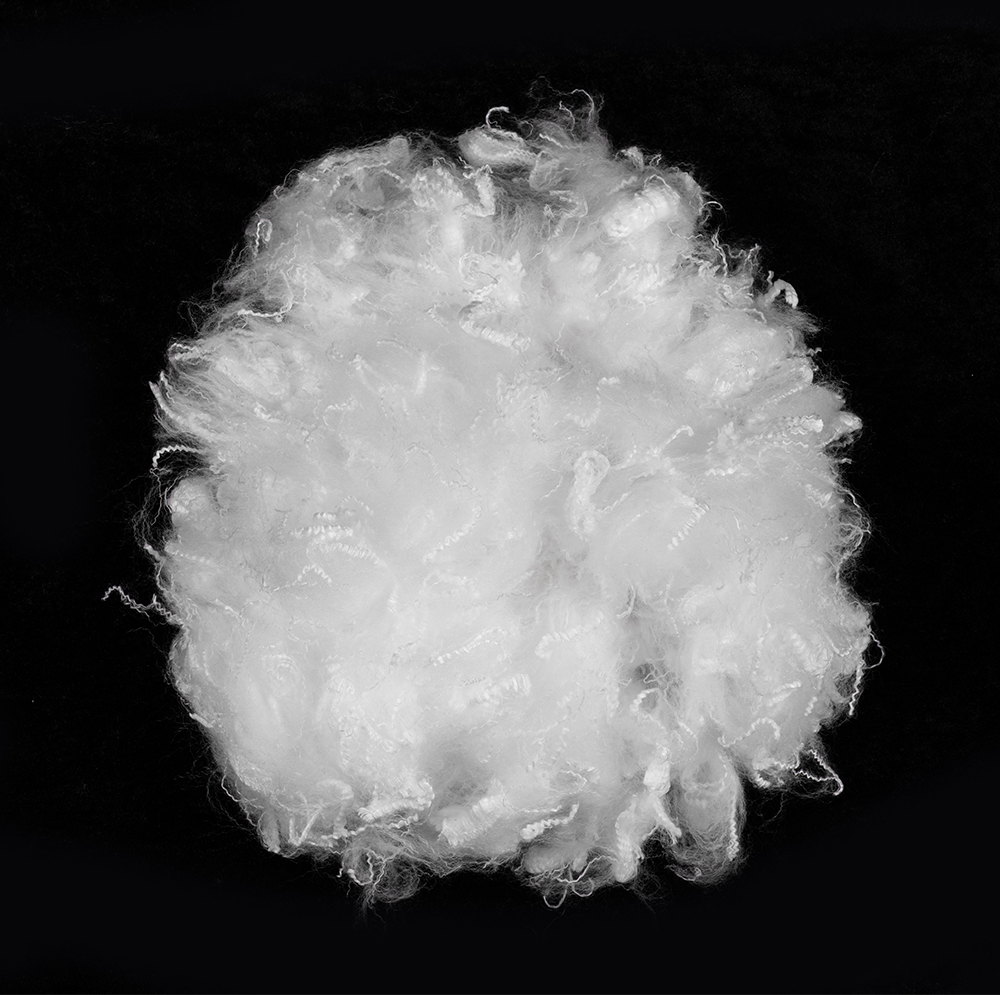 1.2D*32MM Polyester Staple FiberThe 1.2D*32MM polyester staple fiber retains the soft and smooth characteristics of 1.2D microfiber, providing a significantly down-like feel. Meanwhile, the 32MM fibe...View Product →
| Fiber Type | Typical Denier | Primary Function | Common Interior Application |
|---|---|---|---|
| Hollow Conjugate | 3D–15D | Cushioning and thermal insulation | Seat padding, armrests, head restraints |
| Low Melt | 2D–4D | Thermoplastic binder for nonwovens | Headliners, package trays, acoustic panels |
| Micro Fiber | 1.2D–1.5D | Soft-touch fabric surfaces | Seat covers, door trim, suede-like finishes |
Performance Requirements That Drive Material Selection
Before any interior material can be approved for series production, it must pass a defined set of standardized tests. Buyers who know these tests can compare fiber options more effectively and avoid costly re-qualification cycles.
- FMVSS 302 / ISO 3795: horizontal burn rate limited to 100 mm/min.
- Taber abrasion: seat fabrics commonly target 50,000+ cycles; headliner fabrics about 25,000.
- VDA 270 for odor and VDA 278 for VOC emissions, both critical for cabin air quality.
- Xenon arc weathering: colorfastness after 500+ hours of UV exposure.
In practice, these tests separate commodity polyester from automotive-grade polyester. An apparel-grade fiber may pass basic tensile checks yet fail the flammability or UV requirement. That is why automakers require lot-level certification at the fiber stage, not just on the finished component.
A fiber that performs well in abrasion but poorly in odor will fail interior sign-off. A fiber that meets burn-rate limits but shows uneven dye uptake will be rejected by the seat cover supplier. Material selection for automotive interiors is therefore a multi-criteria decision, not a single-test pass.
How to Evaluate an Automotive Interior Fiber Supplier
Qualifying a fiber supplier for automotive programs takes longer than qualifying one for general textiles, because the cost of failure — a recall, a production stop, a missed launch — is far higher. Three factors deserve the most attention.
- Lot-to-lot consistency. High-speed interior lines cannot tolerate batch variation. Verify that the supplier can document uniform denier, crimp, and finish across multi-ton lots, and that its quality system includes lot traceability.
- Production capacity. A single model program can consume hundreds of tons of fiber per year. Suppliers using direct-esterification polymerization rather than chip re-melting generally deliver better melt uniformity and steadier output. Ningbo Huaxing Technology, for example, runs 160,000 tons of annual POY capacity, which is sufficient to support large interior programs without supply bottlenecks.
- Technical support. Fiber specifications must be adapted to the buyer's nonwoven, knitting, or weaving process. A supplier with an in-house engineering team and patents in fiber chemistry can resolve process issues faster than a trading company.
When evaluating candidates, request samples from the same production line that would serve your order, and review the test methods used in their in-house quality control. A supplier that cannot describe its process control in detail is unlikely to hold up under an OEM audit. You can reach Huaxing's engineering team through the contact page to discuss your application and testing requirements.
Polyester's share of interior materials will keep growing as recyclability requirements tighten, because polyester already has an established mechanical recycling infrastructure — an advantage that leather and vinyl cannot match.
Frequently Asked Questions
Can polyester fibers meet automotive flame-retardant requirements?
Yes. Polyester can pass FMVSS 302 when formulated with flame-retardant additives. In nonwoven structures, low melt fibers blended with FR additives retain both bonding strength and burn resistance, so panels meet the horizontal burn-rate requirement without sacrificing structural integrity.
What denier is best for automotive seat fabric?
For woven seat fabrics, micro fibers in the 1.2D to 3D range create a dense, smooth surface with good abrasion performance. For knit seat covers, 1.5D to 3D fibers are common. The final choice depends on the target hand feel, seam slippage, and the abrasion cycles specified by the OEM.
How do hollow conjugate and low melt fibers work together?
Hollow conjugate fibers provide bulk, resilience, and thermal insulation, while low melt fibers act as the adhesive that locks the structure together. Blended at 10–30% low melt by weight, the combination is widely used in molded seat cushions, door trim, and acoustic panels.
How can I get samples for automotive material testing?
Contact the supplier with your application, target property range, and the test standards you need to meet. A fiber maker can usually supply 1–2 kg samples for lab-scale trials, including the technical data sheet and lot-specific test results. You can also check the FAQ page for more guidance on fiber specifications and ordering.
Ningbo Huaxing Technology Co., Ltd.
-
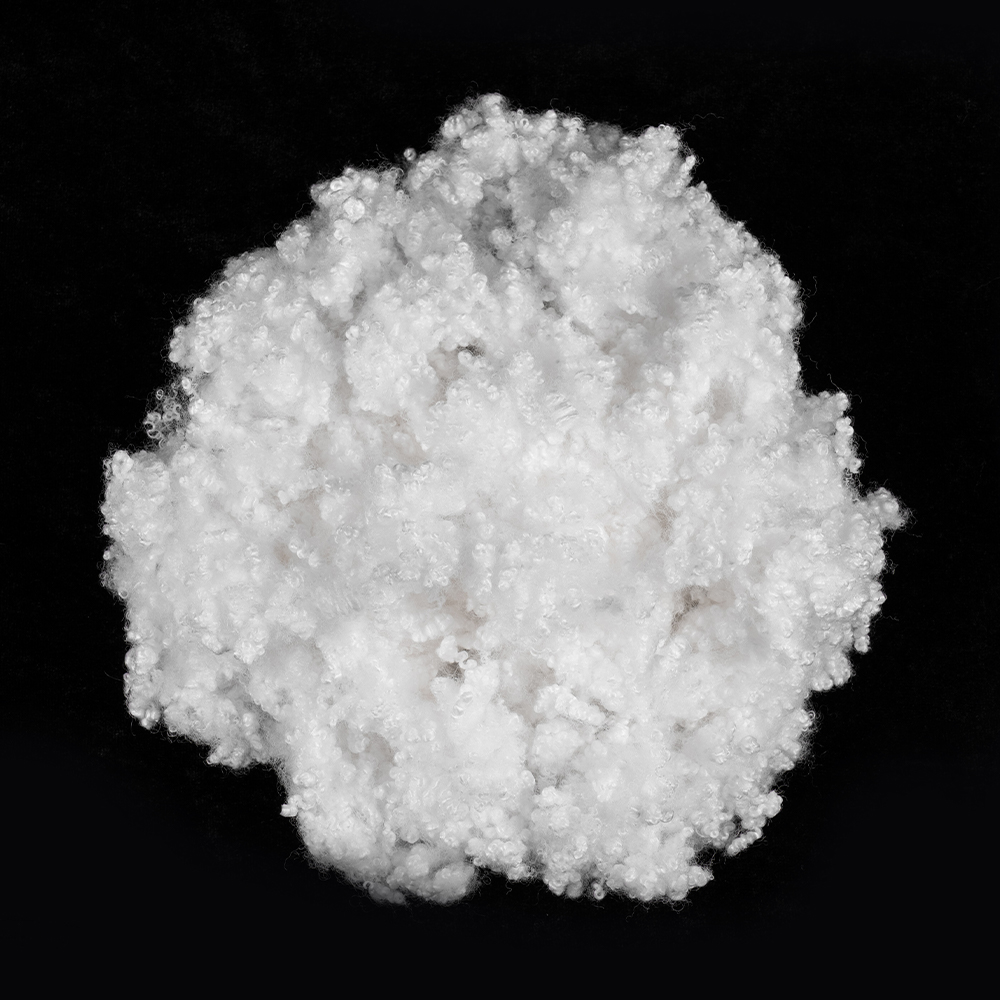
3D HCS Polyester Staple Fiber
-
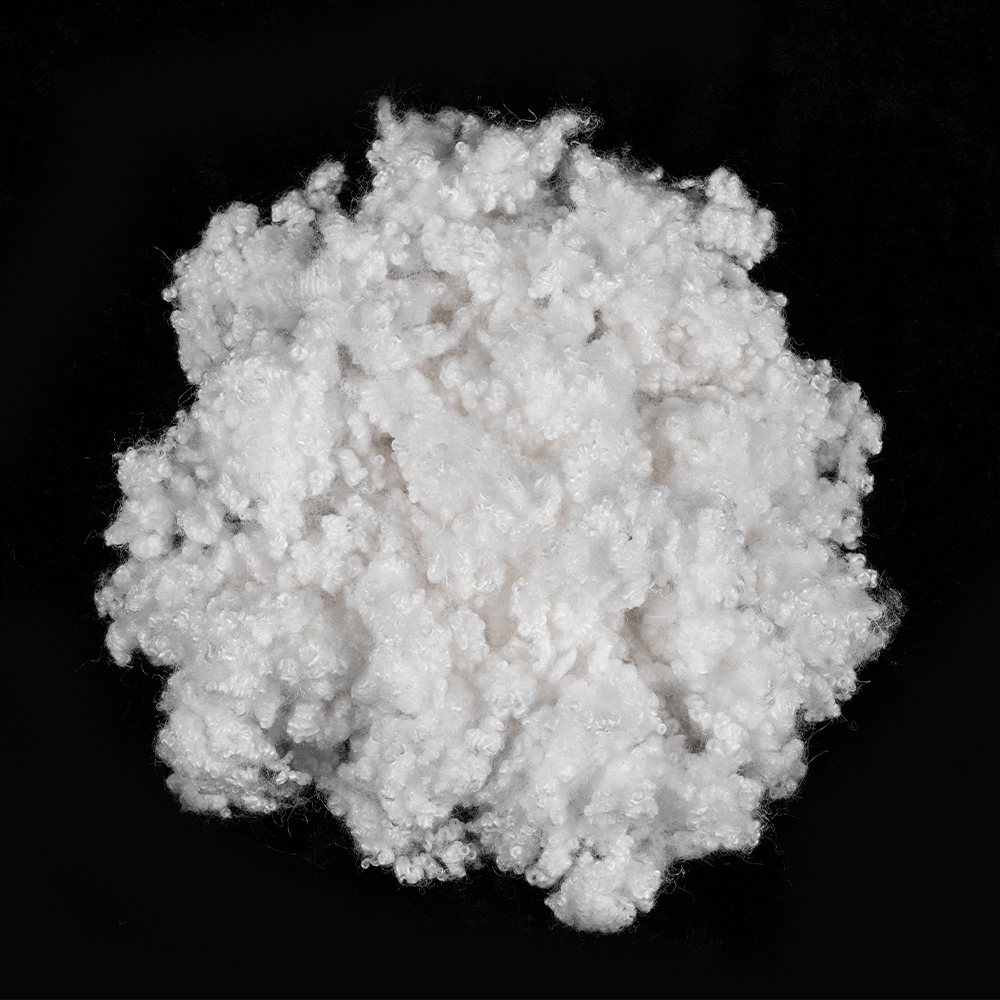
7D HCS Polyester Staple Fiber
-
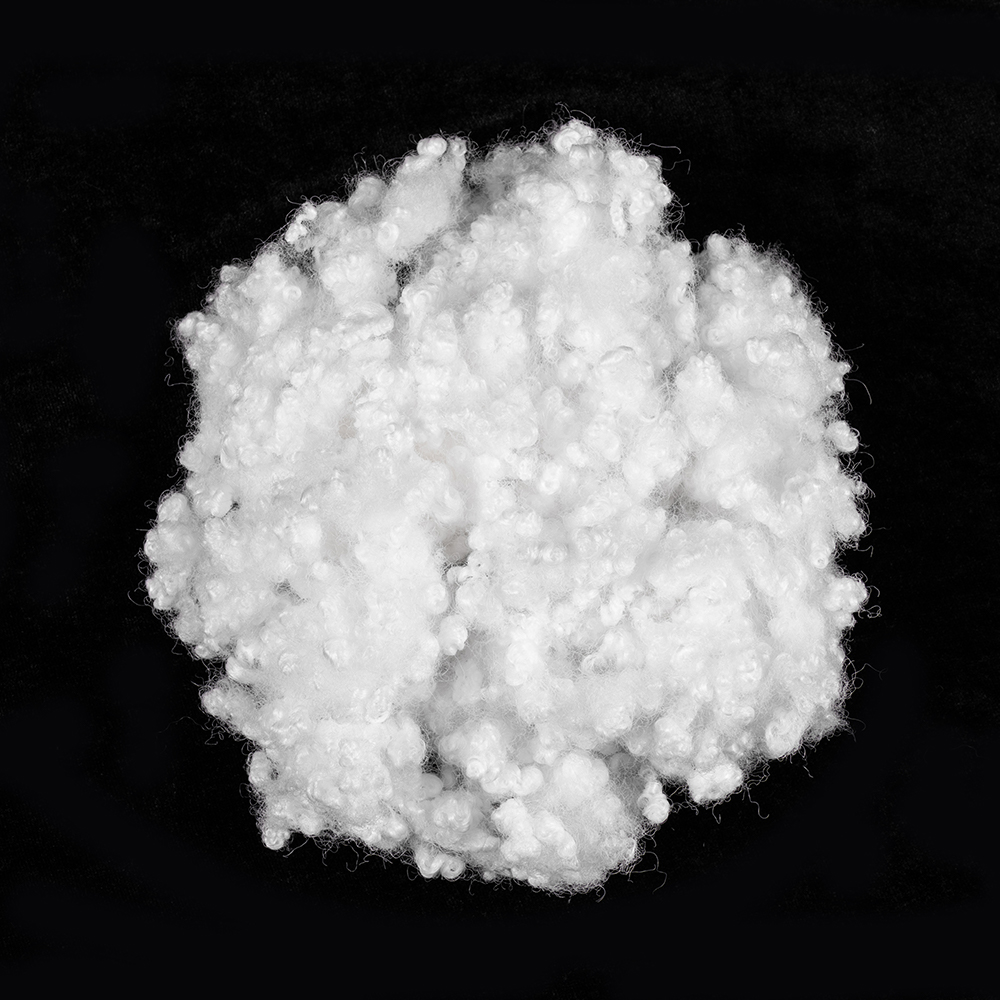
15D HCS Polyester Staple Fiber
-
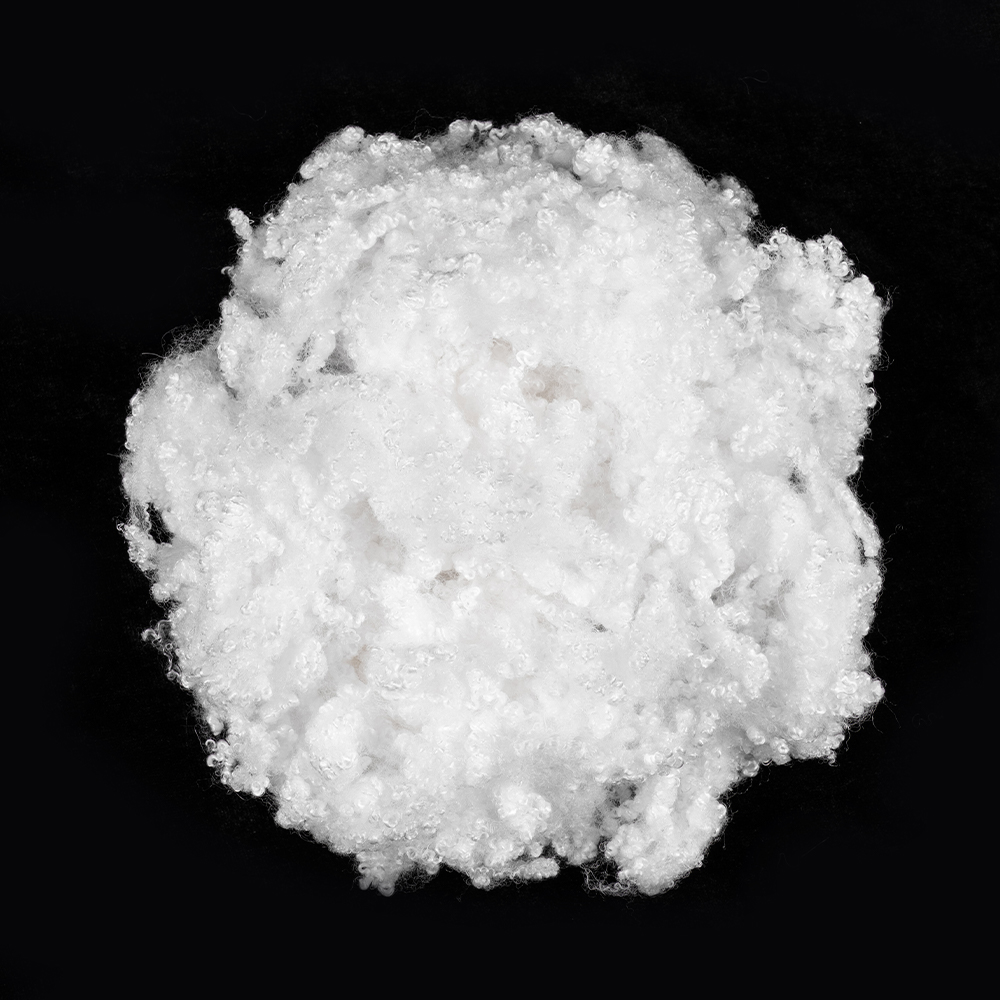
3D*64MM HC Polyester Staple Fiber
-
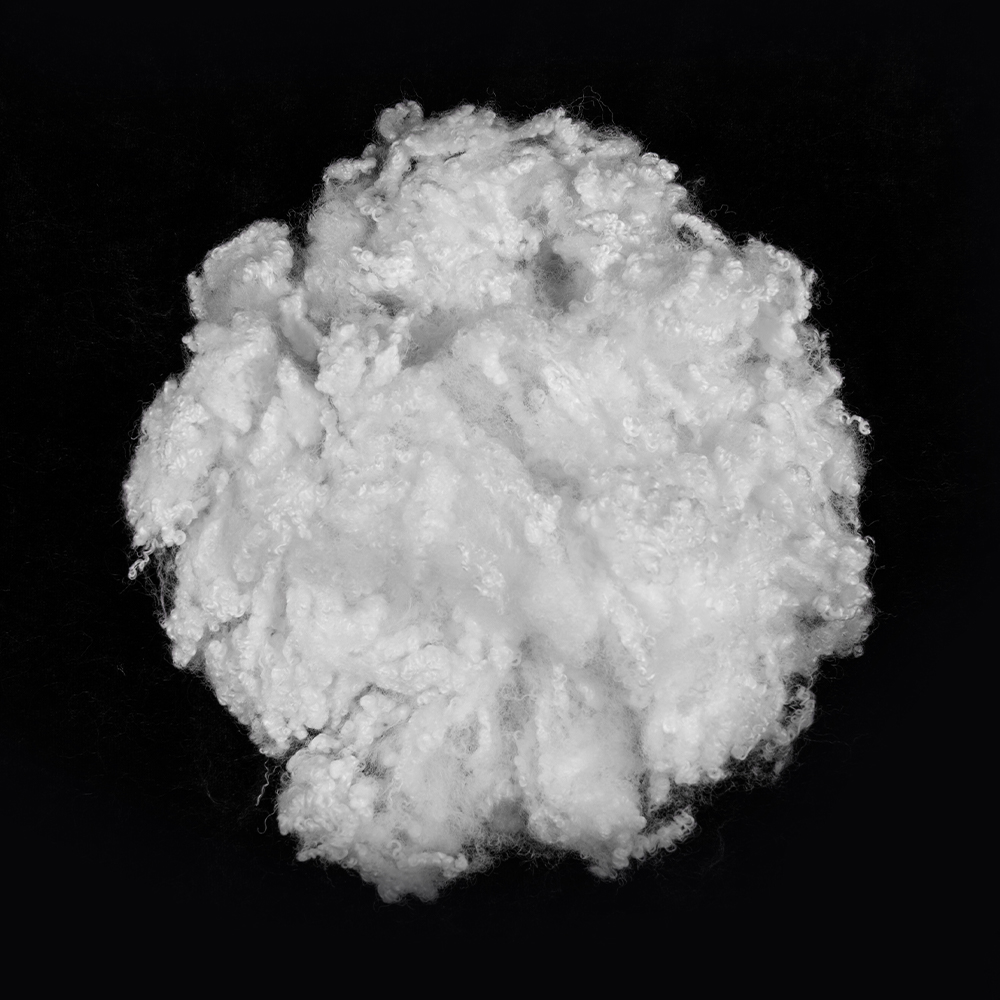
7D*64MM HC Polyester Staple Fiber
-
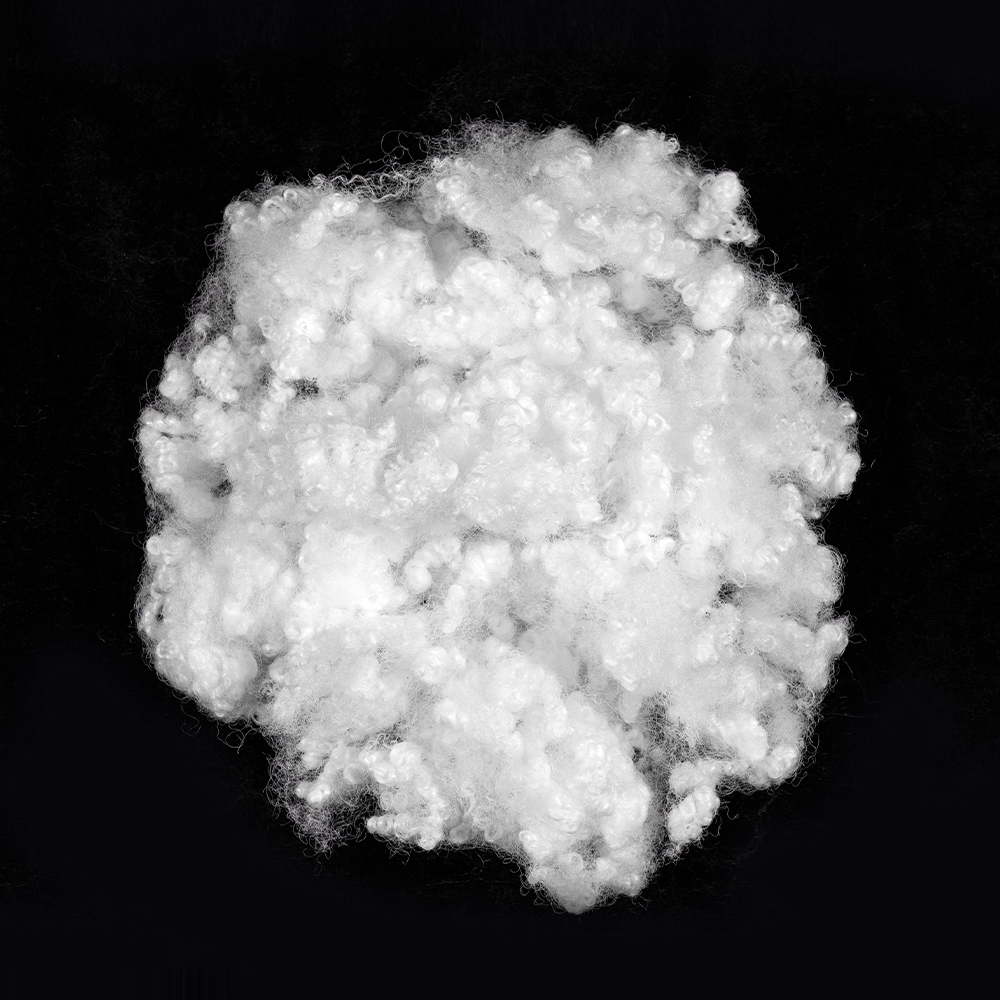
15D*64MM HC Polyester Staple Fiber
-
Quick Links
Home About Us Products FAQ News Contact Us -
Product Links
Polyester Staple Fiber Pre-oriented Yarn/POY Polyester Chip/PET Chip -
About Us
About Us Factory Honor FAQ -
Get In Touch
E-mail:
[email protected]Phone:
+86-130 8198 6637Tel:
+86-0574-63732888Address:
Haidianrong Village, Longshan Town, Cixi City, Ningbo, Zhejiang Province, China.
