中文简体


Short answer: For most bedding and everyday insulated products, down alternative fiber is the lower-risk choice. It handles moisture, allergens, and washing more predictably, and it usually costs less upfront. Real down still wins when warmth-to-weight, compressibility, and long-term loft matter most, especially in cold, dry conditions where pack size and weight are critical.
“Down alternative” is not one material. It is a family of synthetic fills, usually polyester, engineered to mimic down’s loft. Fiber shape, denier, crimp, and finish change how the product feels, washes, and ages. A 7D hollow fiber and a 1.2D microfiber can both be sold as down alternative, yet they behave like different products.
Down Alternative Fiber vs Real Down at a Glance
On a performance map, real down leads on warmth-to-weight and compression; down alternative fiber leads on moisture tolerance, allergen control, and care simplicity.
| Factor | Real down | Down alternative fiber |
|---|---|---|
| Warmth-to-weight | Highest; more air trapped per gram | Good; needs more fill weight for similar warmth |
| Loft and compression | Compresses small; rebounds well | Bulkier; recovers more slowly |
| Moisture | Loses loft when wet; slow to dry | Retains more loft when damp; dries faster |
| Allergens | Natural proteins may bother some sleepers | Usually lower allergy risk; not allergen-free |
| Care | Gentle wash; long low-heat dry | Often machine washable; quicker dry |
| Lifespan | 10 to 20 years with proper care | 3 to 7 years typical |
| Cost | Higher upfront | Lower to mid upfront |
| Ethics and supply | Animal welfare and traceability questions | Petrochemical supply; recyclability varies |
Fill weight and construction can override the fill label. A well-quilted down alternative comforter with a stable shell can feel warmer than a thin, poorly baffled down comforter.
What Down Alternative Fiber Actually Is
Down alternative fiber is a synthetic fill, most often polyester, built to create air pockets without using animal down. In bedding and apparel, the most common structures are hollow, conjugate, siliconized, and microfiber.
A hollow fiber has a void running through the center, which adds bulk without much weight. A conjugate fiber bonds two or more polymers side by side; the resulting crimp gives the fill more spring and resilience. Siliconized versions add a slick finish that helps the fill recover after compression. Microfiber uses finer filaments for a denser, softer hand.
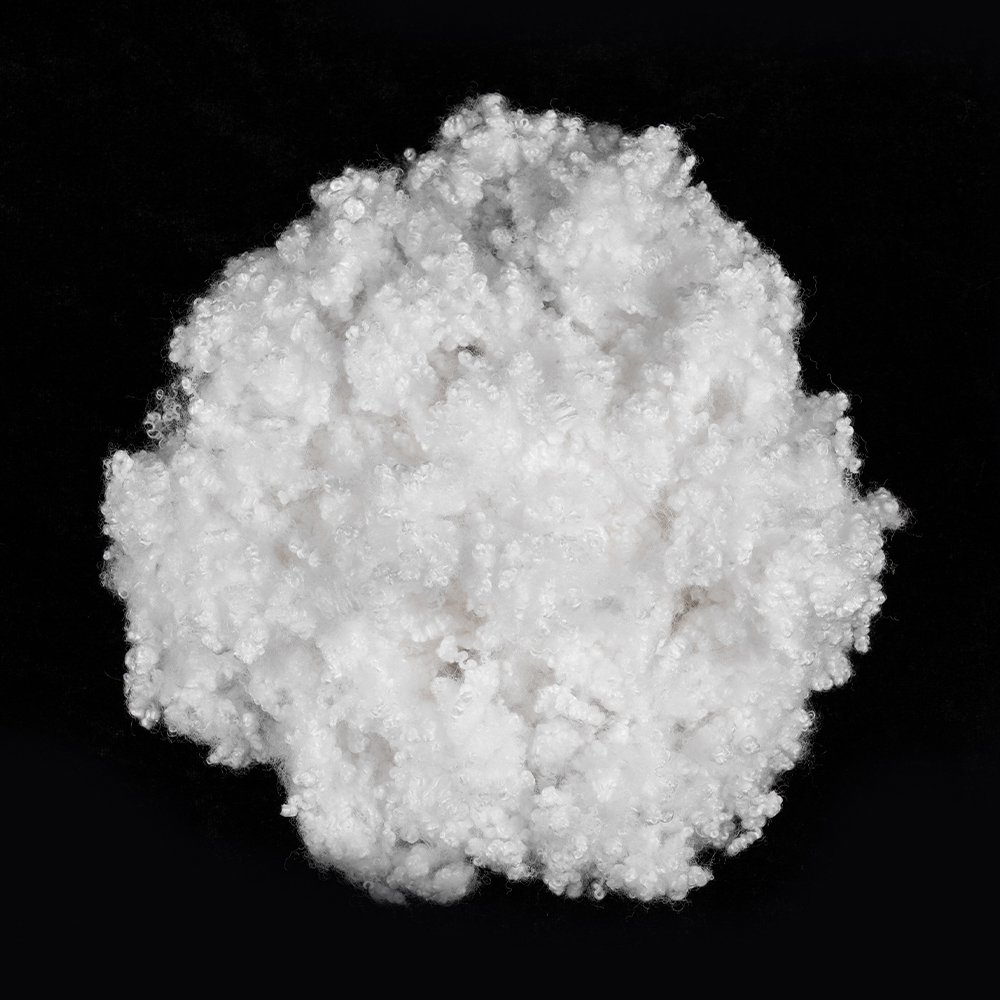
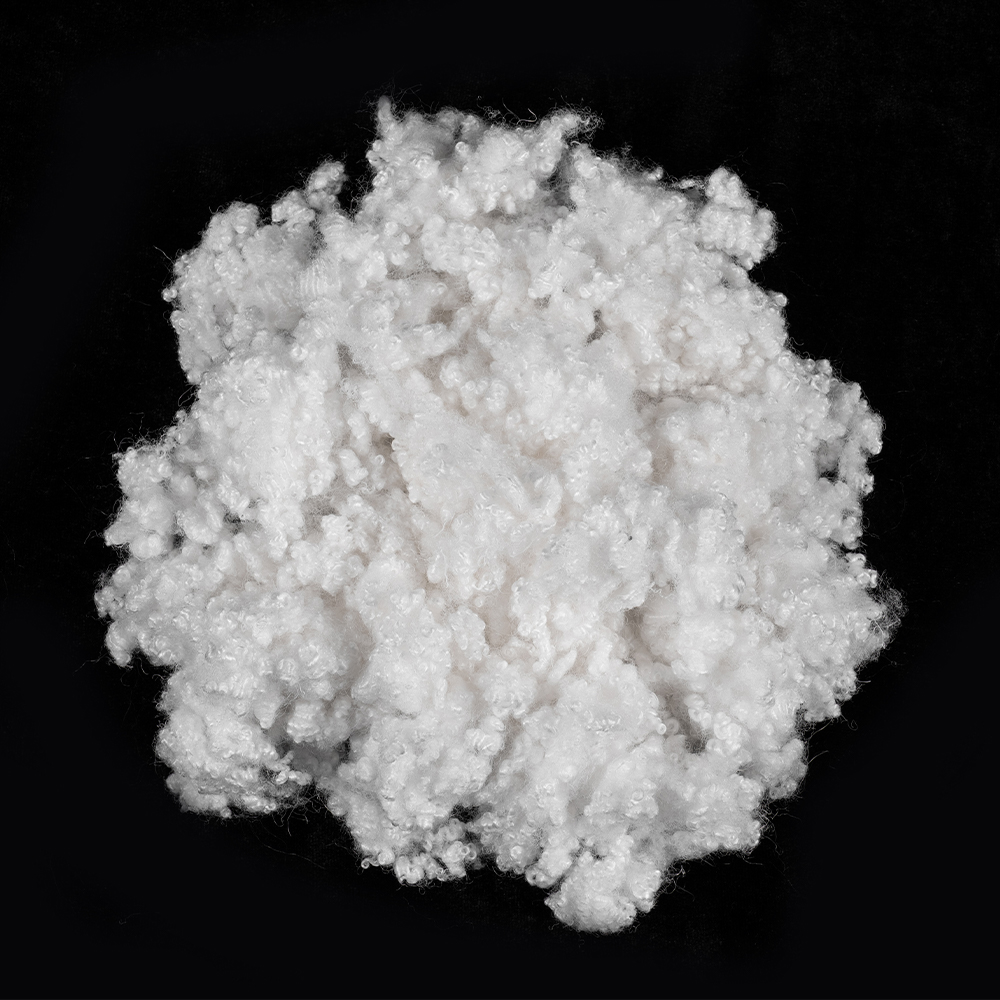
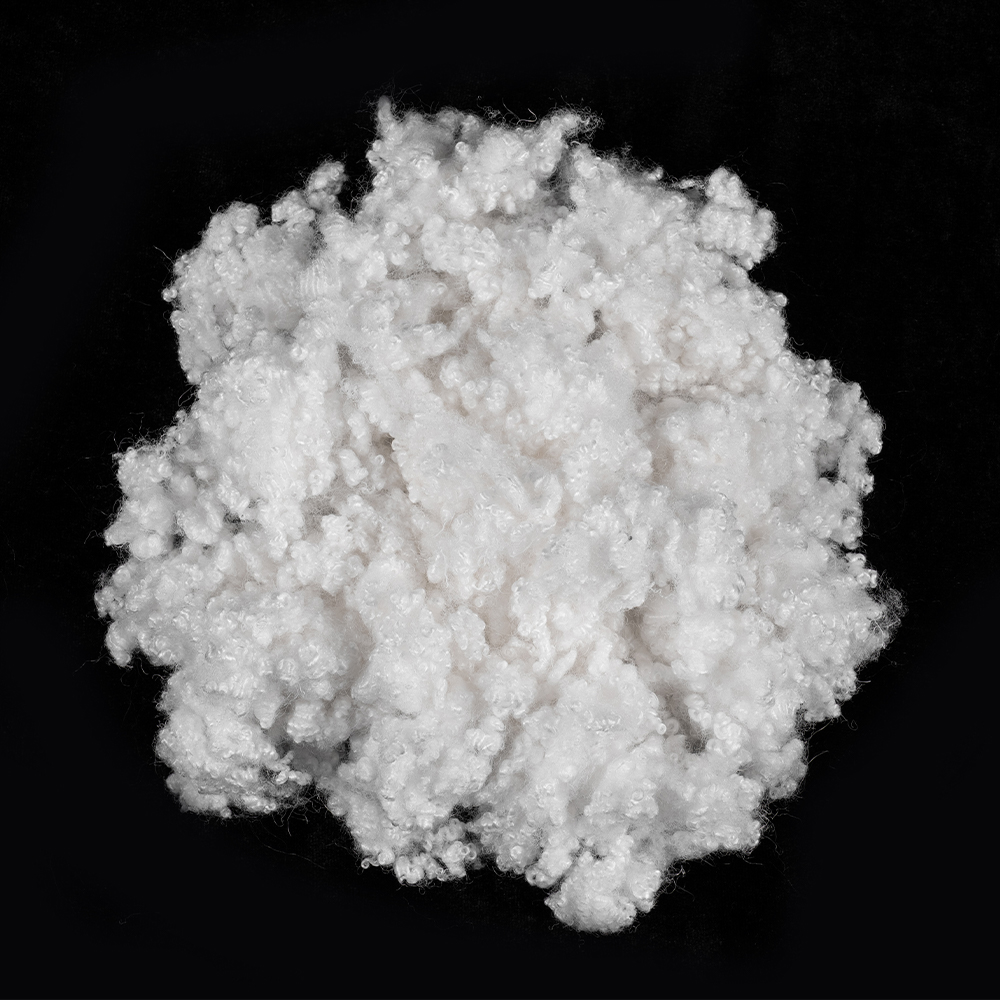 7D HCS Polyester Staple Fiber for General FillingA 7D HCS staple fiber for quilts, pillows, sofas, and plush toys, offering moderate thickness, durability, softness, and loft for general filling.View Product →
For a softer, more down-like hand, finer denier matters. A 1.2D microfiber gives a smoother surface and a denser loft than a 7D hollow fiber, but it may not rebound as aggressively in heavy-use products. Buyers should match denier and cut length to the end product.
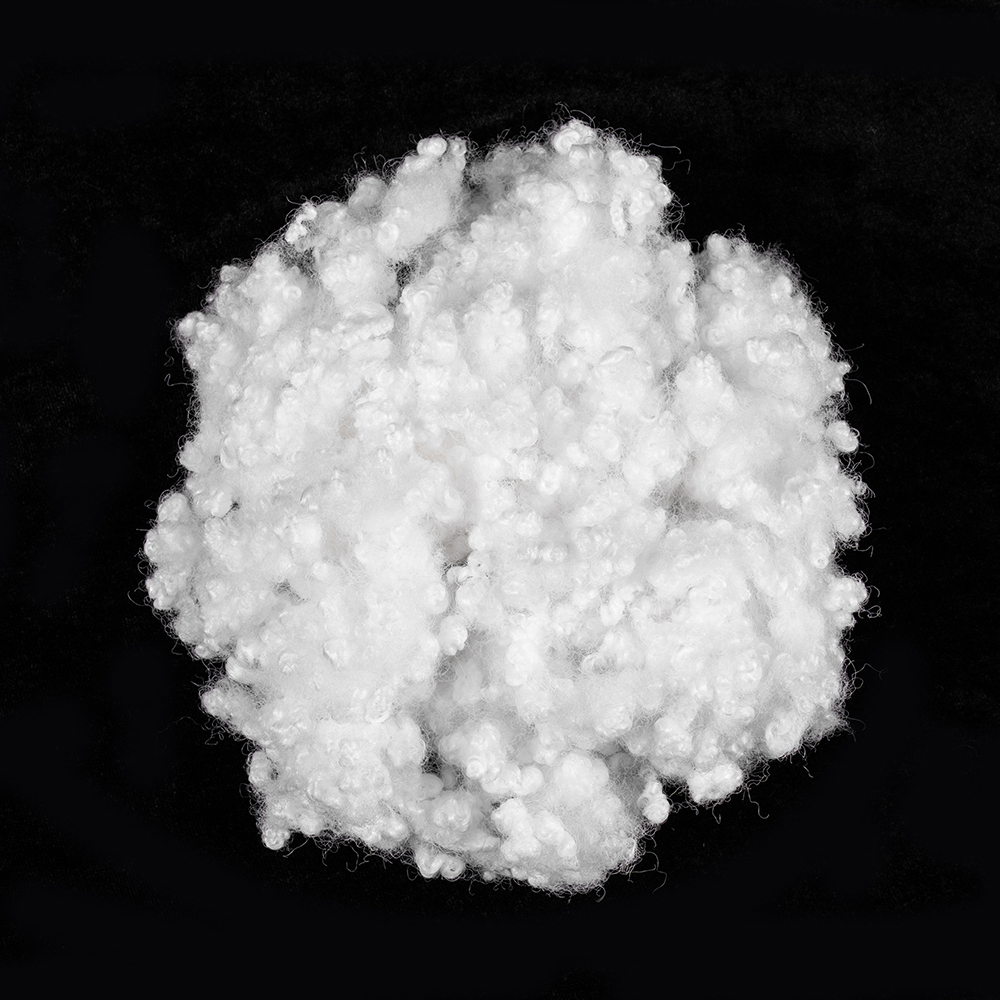
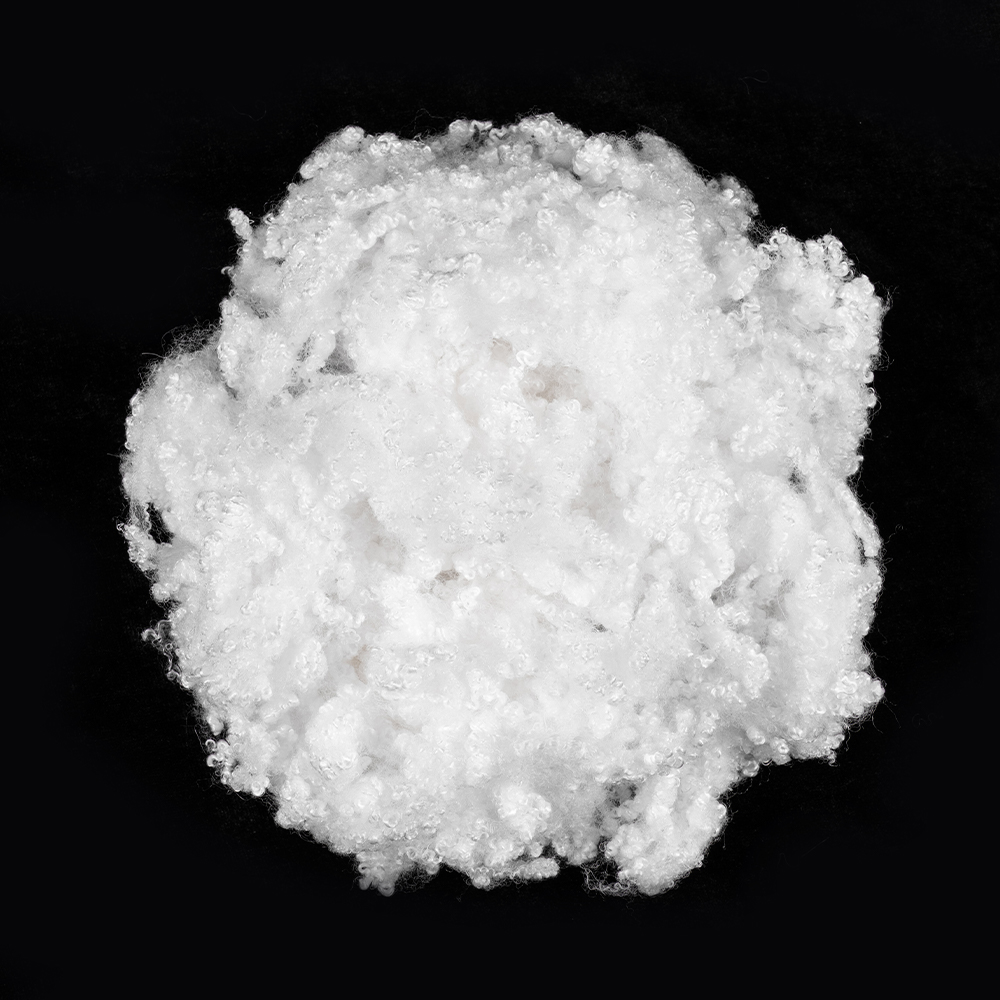
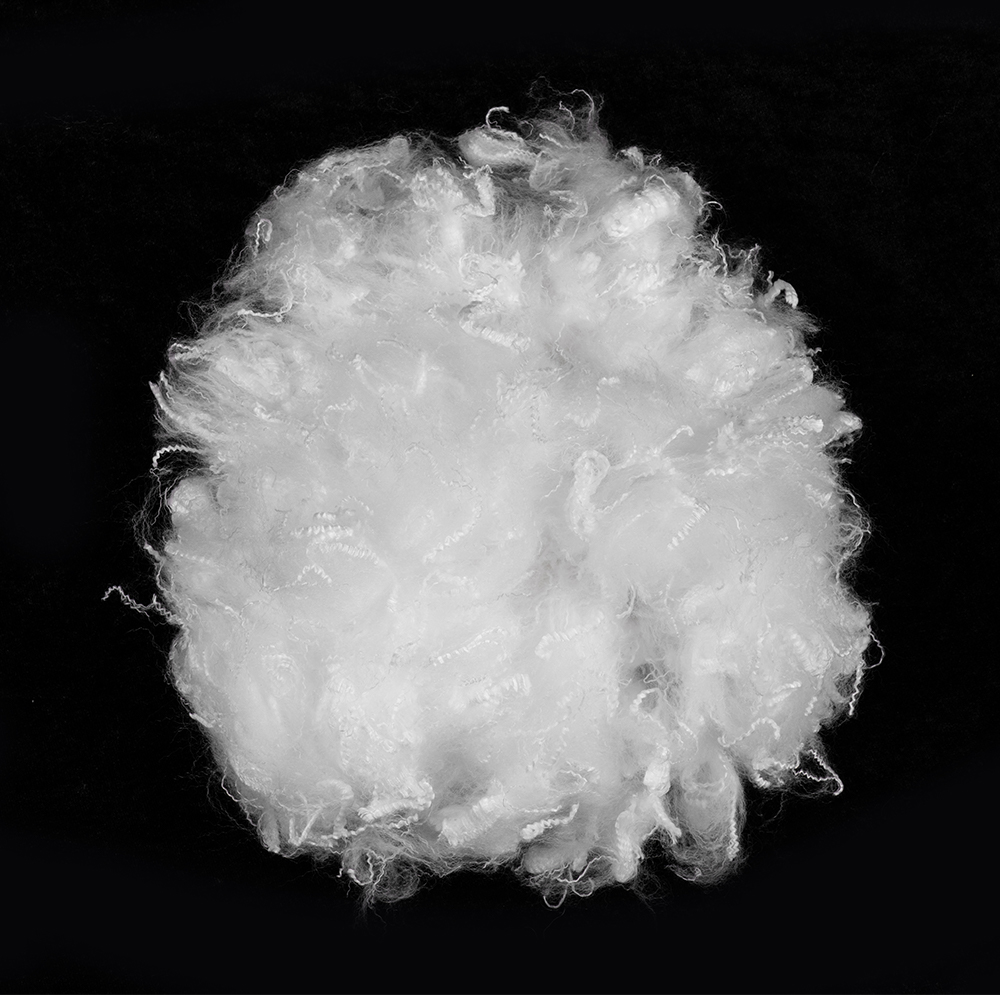 1.2D Microfiber Polyester Staple Fiber for Premium FillingA fine-denier microfiber filling for down jackets, comforters, and pillows, giving a soft down-like hand and more uniform warmth with reduced clumping.View Product →
Our polyester staple fiber range includes hollow conjugate, low-melt, and microfiber options. For a specification checklist, see the guide to choosing hollow conjugate fiber filling materials.
Warmth, Loft, and Weight: Where Real Down Still Wins
Real down still has the best warmth-to-weight ratio of any common fill. A high fill-power down cluster traps more air per gram than polyester fiber, so a down product can be lighter and pack smaller for the same warmth.
For a sleeping bag or packable jacket, that difference changes pack volume and carried weight. For a bed comforter, the difference is less dramatic, but it still affects drape and the “cloud” feel. Down alternative can match down in warmth, usually at a higher fill weight.
Moisture, Allergens, and Sleep Climate
In damp or allergy-sensitive settings, down alternative fiber is usually the safer choice. Real down loses loft when wet, and a damp down product can take a long time to dry. Polyester fills absorb little water, so they retain more loft when damp and dry faster.
Allergen concerns are more nuanced. Natural down can trigger reactions in people sensitive to feather or down proteins, and dust mites can be a concern in any bedding that holds moisture. Down alternative is usually described as hypoallergenic, but no fill is allergen-free. A washable shell and regular hot-water washing matter more than the fill label alone.
In dry cold, down’s warmth-to-weight advantage is hard to beat. In humid heat or a home with high indoor moisture, a synthetic fill is more forgiving and easier to dry.
Durability, Care, and Real-World Lifespan
A well-made down product can outlast a cheap synthetic fill, but the gap narrows when care is poor. Quality down can keep its loft for 10 to 20 years; many polyester fills last about 3 to 7 years.
- Down alternative: machine wash gentle, mild detergent, low heat; high heat can clump the fiber.
- Real down: front-loading machine, gentle detergent, long low-heat dry with dryer balls.
- Both: a tight shell and good quilting reduce fiber migration and cold spots.
If you will wash the item often for kids, pets, allergies, or rental use, the synthetic option is usually more practical.
Cost, Ethics, and Supply Risk
Down usually costs more upfront, but the better value depends on how long you keep the product and how you wash it. A high-quality down comforter can have a lower cost per year than a cheap synthetic comforter that clumps after a few washes.
Ethics and traceability are real buying criteria for down. Ask whether the down is a byproduct of the food industry, whether it is certified for animal welfare, and whether the supply chain is documented. Synthetic fills avoid animal welfare questions, but they raise different issues: petrochemical feedstock, microplastic shedding during washing, and end-of-life recyclability.
Supply risk also differs. Down supply depends on agricultural cycles and processing capacity. Polyester staple fiber supply is industrial and generally more predictable, but resin prices and energy costs can still move.
How to Choose: A Practical Buyer's Checklist
Match the fill to the use case, then check the specification, not just the marketing label. Use the checklist below before comparing prices.
- Define the use case. Jackets need warmth-to-weight; bedding needs washability and loft recovery.
- Check the climate. Dry cold favors down. Humid or wet conditions favor down alternative.
- Confirm washability. If the item will be washed often, choose a fill and shell that can handle repeated cleaning.
- Review allergen needs. Down alternative is usually the lower-risk choice for sensitive sleepers, but regular washing still matters.
- Read the fiber spec. Ask for denier, cut length, hollow or conjugate structure, and finish. A 3D to 7D hollow fiber gives bulk; a 1.2D microfiber gives a softer hand.
- Check fill weight and construction. Baffles, quilting, and shell tightness control warmth and fiber migration.
- Calculate cost per year. Divide the purchase price by expected lifespan. A higher upfront price can be cheaper over time if the item keeps its loft.
| Use case | Better fit | Why |
|---|---|---|
| Everyday comforter, humid home | Down alternative | Washes easily, dries faster, lower upfront cost |
| Cold-weather quilt, dry climate | Real down | Best warmth-to-weight and compression |
| Allergy-sensitive sleeper | Down alternative | Lower risk from natural down proteins; easier hot washing |
| Kids, pets, rental use | Down alternative | Frequent washing and replacement cost matter |
| Luxury hand-feel, long-term use | High-quality down or fine microfiber | Down for loft; microfiber for softness without animal fill |
FAQ
Is down alternative warmer than real down?
Not gram for gram. Real down is warmer per unit weight; down alternative can be equally warm if the fill weight and loft are higher.
Is down alternative hypoallergenic?
Usually it is less likely to trigger natural down allergies, but no fill is allergen-free. Dust mites and dust can still accumulate, so washable shells and regular cleaning matter.
Does down alternative last as long as down?
Typically no. Expect about 3 to 7 years for many synthetic fills versus 10 to 20 years for well-cared-for down, though quality varies widely.
The practical answer: Choose down alternative fiber for washability, lower upfront cost, and moisture tolerance. Choose real down when warmth-to-weight and compressibility are the deciding factors. Then verify the fill specification, because denier, hollow or conjugate structure, finish, and fill weight decide performance more than the word “down” on the label.